| Mémoire RAM | 512 MB DRAM, 256 MB flash |
| Antenne | Wi-Fi; ● 2.4 GHz: two built-in omnidirectional antennas, with peak antenna gain of 5.4 dBi.; ● 5 GHz: two built-in omnidirectional antennas, with peak antenna gain of 5.2 dBi.; ● 6 GHz: four built-in omnidirectional antennas, with peak antenna gain of 5.4 dBi.; Bluetooth; ● One integrated vertically polarized omnidirectional antenna, with peak antenna gain of 4.6 dBi. |
| Applicable Software Version | RGOS11.9(6)W3B4 or later |
| Application management | Application identification |
| ARP | ARP entry aging, gratuitous ARP learning, and proxy ARP; Identification of IP address conflict among downlink users; Maximum number of ARP entries: 2,048; ARP check |
| Authentication and encryption | Remote Authentication Dial-In User Service (RADIUS); PSK, UPSK and web authentication; QR code-based guest authentication, SMS authentication, and MAC address bypass (MAB) authentication; Data encryption: WEP (64/128 bits), WPA-Personal, WPA-Enterprise, WPA2-Personal (PSK, TKIP, CCMP), WPA2-Enterprise, WPA3-Personal (SAE, WPA2/WPA3 transition mode), WPA3-Enterprise (CCMP, GCMP), WPA3-OWE |
| Authentication mode | SMS authentication, fixed account authentication, one-click authentication, Facebook authentication, Instagram authentication, voucher authentication, and other authentication modes; Authentication implemented in the cloud, without the need to deploy the local authentication server |
| Bandwidth limiting | STA/SSID/AP-based rate limiting |
| Big data | Baseline analysis – recording the configuration, version, and other changes, and tracking network KPI changes; Time capsule – analyzing the device version and configuration change history |
| Big data capabilities | Mainstream persistence solutions based on Hadoop, MongoDB, and MySQL, providing distributed storage capabilities; Spark-based big data computing capabilities; Data warehouse building based on Hive, and data model conversion, integration, and other functions |
| Bouton | 1 x Reset button; ● Press the button for shorter than 2 seconds. Then the device restarts.; ● Press the button for longer than 5 seconds. Then the device restores to factory settings. |
| CAPWAP | IPv4/IPv6 CAPWAP; Layer 2 and Layer 3 topology between an AP and an AC; An AP can automatically discover the accessible AC.; An AP can be automatically upgraded through the AC.; An AP can automatically download the configuration file from the AC.; CAPWAP through NAT |
| CPP | CPU Protect Policy (CPP) |
| Customized portal | Customized Portal authentication page for mobile phones and PCs |
| Data forwarding | Centralized and local forwarding |
| Data frame filtering | Allowlist, static blocklist, and dynamic blocklist |
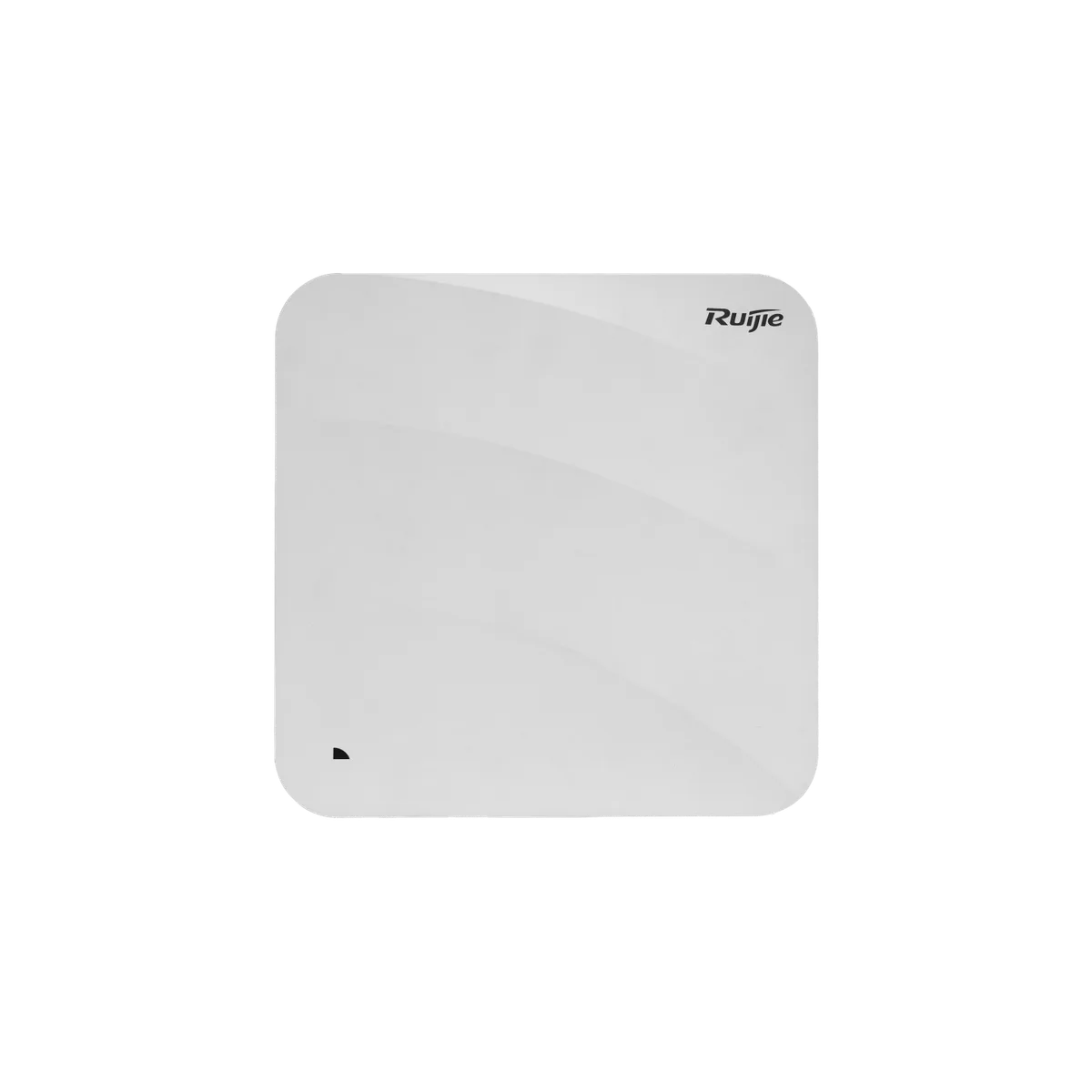
| Dimensions (W x D x H) | Main unit: 230 mm x 230 mm x 51 mm (9.06 in. x 9.06 in. x 2.01 in.); Shipping: 284 mm x 262 mm x 124 mm (11.18 in. x 10.31 in. x 4.88 in.) |
| Dynamic Policy | IP standard ACL, MAC extended ACL, IP extended ACL, and expert-level ACL; IPv6 ACL; Time range-based ACL; ACL based on a Layer 2 interface; ACL based on a Layer 3 interface; Ingress ACL based on a wireless interface; Dynamic ACL assignment based on 802.1X authentication (used with the AC); CoA/DM |
| Ethernet | Jumbo frame length: 1,518; Full-duplex and half-duplex modes of interfaces; IEEE802.1p and IEEE802.1Q; Optical module information display, alarms about faults, and diagnosis parameter measurement (QSFP+/SFP+/SFP) |
| External Power Supply | When powered by 802.3bt (PoE++), the AP can supply power to an external device.; ● The USB port can source 1 A/5 W power to an attached device.; ● The LAN 2 port can source 48 V/12.95 W power to an IoT unit. |
| Frequency Band and Protocol | Data Rate |
| Hardware Specifications | RG-AP880-E |
| Hierarchy and decentralization | Authorizing different applications for different users to meet service needs of different departments; Granting operation permissions to administrators in different scenarios |
| Input power supply | The AP supports the following two power supply modes:; ● 54 V DC/1.1 A power input over DC connector: The DC connector accepts 2.1 mm/5.5 mm center-positive circular plug. A DC power supply needs to be purchased independently.; ● PoE input over LAN 1: The power source equipment (PSE) complies with IEEE 802.3af/at/bt standard (PoE/PoE+/PoE++).; Note: If both DC power and PoE are available, DC power is preferred. |
| IP Routing | IPv4/IPv6 static route; Maximum number of static IPv4 routes: 1,024; Maximum number of static IPv6 routes: 1,000 |
| IPv4 services | Static and DHCP-assigned IPv4 addresses; NAT, FTP ALG and DNS ALG |
| IPv6 services | IPv6 addressing, Neighbor Discovery (ND), ICMPv6, IPv6 ping; IPv6 DHCP client; DNSv6 client; TFTPv6 client |
| Lock option | Kensington lock and securing latch |
| MAC | Static and filtered MAC addresses; MAC address table size: 2,048; Maximum number of static MAC addresses: 2,048; Maximum number of filtered MAC addresses: 2,048 |
| Management and maintenance | Uniformly connecting, managing, and maintaining APs, ACs, and other devices, batch device configuration and upgrade, and other functions; Deployment through Zero Touch Provisioning (ZTP) – creating configuration templates and automatically applying configured templates; One-click discovery of the wired and wireless network topology and topology generation |
| Maximum number of associated STAs | 1,536 (up to 512 STAs per radio) |
| Maximum number of BSSIDs | 45 (up to 15 BSSIDs per radio) |
| Mean Time Between Failure (MTBF) | 200,000 hours (22 years) at the operating temperature of 25°C (77°F) |
| Montage | Wall/Ceiling-mount (a mounting bracket is delivered with the main unit) |
| Multidiffusion | Multicast-to-unicast conversion |
| Network Management | NTP server and NTP client; SNTP client; SNMPv1/v2c/v3; Fault detection and alarm; Information statistics and logging |
| Network management platform | Web management (Eweb) |
| Network optimization | Network performance optimization, including one-click network optimization and scenario-based optimization; Client steering to cope with roaming stickiness, and experience indicator comparison; Client steering to cope with remote association, and experience indicator comparison; One-click diagnosis – analyzing problems and providing suggestions |
| NFPP | Network Foundation Protection Policy (NFPP) |
| One-click report | One-click health report – generating a report on the overall operation of a network |
| Port | 1 x 100/1000/2.5G/5GBase-T port; 1 x 5GE SFP/RJ45 combo port, compatibility with 1GE and 2.5GE modules, shared with one 100/1000/2.5G/5GBASE-T port; 1 x 10/100/1000Base-T port; 1 x RJ45 console port (serial console port); 1 x USB 3.0 (Type-A connector); 1 x Bluetooth 5.1 |
| Regional analysis | Batch generation of building floor information – uploading floor plans, and dragging and dropping AP positions |
| Regulatory Compliance | RG-AP880-E |
| Security radar | Unauthorized Wi-Fi signal location, presentation by category, and containment |
| SMS gateway | Interconnection with SMS gateways of GUODULINK and Alibaba Cloud |
| Software Specifications | RG-AP880-E |
| STA limiting | SSID-based STA limiting; Radio-based STA limiting |
| STA management | SSID hiding; Each SSID can be configured with the authentication mode, encryption mechanism, and VLAN attributes independently.; Remote Intelligent Perception Technology (RIPT); Intelligent STA identification technology; Intelligent load balancing based on the STA quantity or traffic |
| STATUS_LED | 1 x multi-color system status LED; ● AP power-on status; ● Software initialization status and upgrade status; ● Uplink service interface status; ● Wireless user online status; ● CAPWAP tunnel timeout; ● Specific AP locating |
| Switchover among Fat, Fit, and cloud modes | When the AP works in Fit mode, it can be switched to Fat mode through an AC.; When the AP works in Fat mode, it can be switched to Fit mode through the console port or Telnet mode.; When the AP works in cloud mode, it can be managed through WIS Cloud. |
| System management | Account operation, authorization configuration, email configuration, configuration backup, exception alarms, and other system management functions |
| User access management | Console, Telnet, SSH, FTP client, FTP server, and TFTP client |
| Value-added Software | RG-AP880-E |
| VLAN | Interface-based VLAN assignment; Maximum number of SVIs: 200; Maximum number of VLANs: 4,094; VLAN ID range: 1–4,094 |
| VPN | PPPoE client; IPsec VPN |
| Poids | Main unit: 1.0 kg (2.20 lbs); Mounting bracket: 0.1 kg (0.22 lbs); Shipping: 1.25 kg (2.76 lbs) |
| WIDS | Wireless Intrusion Detection System(WIDS); Wireless Intrusion Protection System(WIPS); User isolation; Rogue AP detection and containment |
| Wireless locating | MU and TAG device locating |
| Wireless Roaming | Layer 2 and Layer 3 roaming |