RG-AP880-E
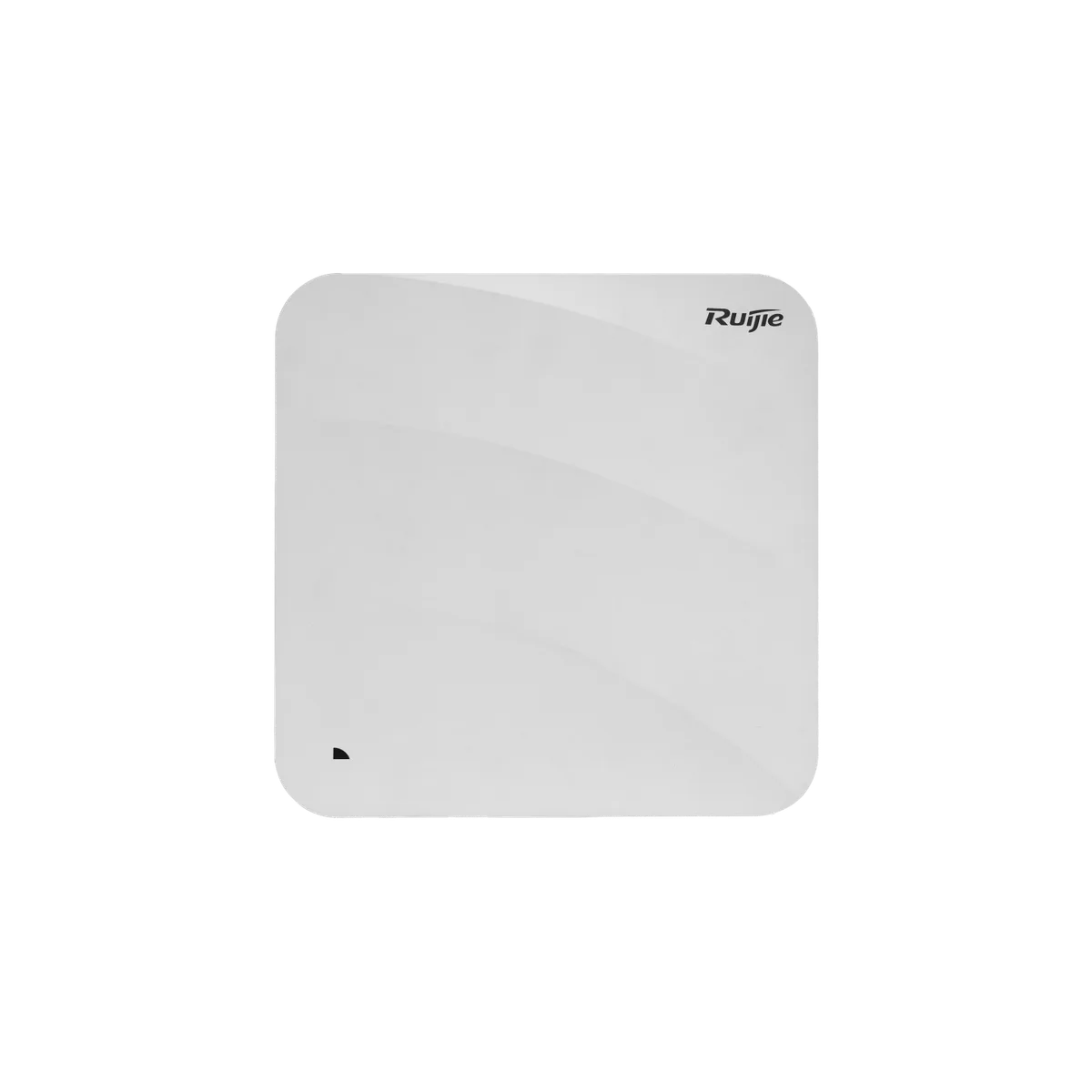
Tri-Radio Wi-Fi 6E Indoor Access Point 7.780 Gbps
- Frequency Band and Protocol
- Data Rate
- RAM
- 512 MB DRAM, 256 MB flash
- Applicable Software Version
- RGOS11.9(6)W3B4 or later
- Application management
- Application identification
Tri-Radio Wi-Fi 6E Indoor Access Point 7.780 Gbps
The RG-AP880-E is a tri-radio Wi-Fi 6E indoor access point with a combined data rate of up to 7.780 Gbps, offering local or cloud management for high-density wireless networks.
Ruijie RG-AP880-E. tri-radio Wi-Fi 6E indoor access point for indoor installation. This Wi-Fi access point is designed for high-density networks and high-quality wireless service.
Radio performance. Three radio bands (2.4 GHz, 5 GHz and 6 GHz) with six spatial streams and 1024-QAM modulation provide a combined peak data rate of up to 7.780 Gbps, including up to 4.804 Gbps on the 6 GHz radio. RF power adjustment and intelligent channel allocation reduce co-channel and adjacent-channel interference.
Antennas. Two built-in omnidirectional antennas for 2.4 GHz (peak gain 5.4 dBi), two for 5 GHz (peak gain 5.2 dBi) and four for 6 GHz (peak gain 5.4 dBi). One integrated vertically polarized omnidirectional Bluetooth antenna (peak gain 4.6 dBi) is also fitted.
Connectivity. One 100/1000/2.5G/5GBase-T port, one 5GE SFP/RJ45 combo port compatible with 1GE and 2.5GE modules, one 10/100/1000Base-T port, one RJ45 serial console port, one USB 3.0 port and Bluetooth 5.1. Optical and Ethernet uplinks support high-speed backhaul over 5 Gbps wired links.
Power and environment. Powered by DC 54 V/1.1 A or by PoE compliant with IEEE 802.3af/at/bt (PoE++). DC power is preferred when both sources are available. The USB port can source 1 A/5 W, and the LAN 2 port can source 48 V/12.95 W to an IoT unit when powered by 802.3bt. Wall or ceiling mounting, with a mounting bracket supplied.
Management and operation. Local management through the Web interface (Eweb) or through the WIS cloud platform, with Fit, Fat and cloud mode operation, Zero Touch Provisioning deployment and one-click network diagnosis. Layer 2 and Layer 3 roaming, IEEE 802.11k/v/r support, and WPA3 security (SAE, OWE, Enterprise), with rogue AP detection and containment.
Typical uses. Classrooms, student residences and large venues in education, outpatient clinics and mobile ward rounds in healthcare, and large conference centers in government and commerce.
Integration. Up to 1,536 associated STAs (512 per radio) and 45 BSSIDs. Compatible with AC controllers in Fit mode and with cloud management. Available on quotation from Atlas Electronics.
No published question about this part yet. Questions are reviewed before publication.
Every characteristic recorded for RG-AP880-E, with where it comes from. Use the filters to find one quickly.
| Characteristic | Value |
|---|---|
| RAM | 512 MB DRAM, 256 MB flash |
| Antenna | Wi-Fi; ● 2.4 GHz: two built-in omnidirectional antennas, with peak antenna gain of 5.4 dBi.; ● 5 GHz: two built-in omnidirectional antennas, with peak antenna gain of 5.2 dBi.; ● 6 GHz: four built-in omnidirectional antennas, with peak antenna gain of 5.4 dBi.; Bluetooth; ● One integrated vertically polarized omnidirectional antenna, with peak antenna gain of 4.6 dBi. |
| Applicable Software Version | RGOS11.9(6)W3B4 or later |
| Application management | Application identification |
| ARP | ARP entry aging, gratuitous ARP learning, and proxy ARP; Identification of IP address conflict among downlink users; Maximum number of ARP entries: 2,048; ARP check |
| Authentication and encryption | Remote Authentication Dial-In User Service (RADIUS); PSK, UPSK and web authentication; QR code-based guest authentication, SMS authentication, and MAC address bypass (MAB) authentication; Data encryption: WEP (64/128 bits), WPA-Personal, WPA-Enterprise, WPA2-Personal (PSK, TKIP, CCMP), WPA2-Enterprise, WPA3-Personal (SAE, WPA2/WPA3 transition mode), WPA3-Enterprise (CCMP, GCMP), WPA3-OWE |
| Authentication mode | SMS authentication, fixed account authentication, one-click authentication, Facebook authentication, Instagram authentication, voucher authentication, and other authentication modes; Authentication implemented in the cloud, without the need to deploy the local authentication server |
| Bandwidth limiting | STA/SSID/AP-based rate limiting |
| Big data | Baseline analysis – recording the configuration, version, and other changes, and tracking network KPI changes; Time capsule – analyzing the device version and configuration change history |
| Big data capabilities | Mainstream persistence solutions based on Hadoop, MongoDB, and MySQL, providing distributed storage capabilities; Spark-based big data computing capabilities; Data warehouse building based on Hive, and data model conversion, integration, and other functions |
| Button | 1 x Reset button; ● Press the button for shorter than 2 seconds. Then the device restarts.; ● Press the button for longer than 5 seconds. Then the device restores to factory settings. |
| CAPWAP | IPv4/IPv6 CAPWAP; Layer 2 and Layer 3 topology between an AP and an AC; An AP can automatically discover the accessible AC.; An AP can be automatically upgraded through the AC.; An AP can automatically download the configuration file from the AC.; CAPWAP through NAT |
| CPP | CPU Protect Policy (CPP) |
| Customized portal | Customized Portal authentication page for mobile phones and PCs |
| Data forwarding | Centralized and local forwarding |
| Data frame filtering | Allowlist, static blocklist, and dynamic blocklist |
| Dimensions (W x D x H) | Main unit: 230 mm x 230 mm x 51 mm (9.06 in. x 9.06 in. x 2.01 in.); Shipping: 284 mm x 262 mm x 124 mm (11.18 in. x 10.31 in. x 4.88 in.) |
| Dynamic Policy | IP standard ACL, MAC extended ACL, IP extended ACL, and expert-level ACL; IPv6 ACL; Time range-based ACL; ACL based on a Layer 2 interface; ACL based on a Layer 3 interface; Ingress ACL based on a wireless interface; Dynamic ACL assignment based on 802.1X authentication (used with the AC); CoA/DM |
| Ethernet | Jumbo frame length: 1,518; Full-duplex and half-duplex modes of interfaces; IEEE802.1p and IEEE802.1Q; Optical module information display, alarms about faults, and diagnosis parameter measurement (QSFP+/SFP+/SFP) |
| External Power Supply | When powered by 802.3bt (PoE++), the AP can supply power to an external device.; ● The USB port can source 1 A/5 W power to an attached device.; ● The LAN 2 port can source 48 V/12.95 W power to an IoT unit. |
| Frequency Band and Protocol | Data Rate |
| Hardware Specifications | RG-AP880-E |
| Hierarchy and decentralization | Authorizing different applications for different users to meet service needs of different departments; Granting operation permissions to administrators in different scenarios |
| Input power supply | The AP supports the following two power supply modes:; ● 54 V DC/1.1 A power input over DC connector: The DC connector accepts 2.1 mm/5.5 mm center-positive circular plug. A DC power supply needs to be purchased independently.; ● PoE input over LAN 1: The power source equipment (PSE) complies with IEEE 802.3af/at/bt standard (PoE/PoE+/PoE++).; Note: If both DC power and PoE are available, DC power is preferred. |
| IP Routing | IPv4/IPv6 static route; Maximum number of static IPv4 routes: 1,024; Maximum number of static IPv6 routes: 1,000 |
| IPv4 services | Static and DHCP-assigned IPv4 addresses; NAT, FTP ALG and DNS ALG |
| IPv6 services | IPv6 addressing, Neighbor Discovery (ND), ICMPv6, IPv6 ping; IPv6 DHCP client; DNSv6 client; TFTPv6 client |
| Lock option | Kensington lock and securing latch |
| MAC | Static and filtered MAC addresses; MAC address table size: 2,048; Maximum number of static MAC addresses: 2,048; Maximum number of filtered MAC addresses: 2,048 |
| Management and maintenance | Uniformly connecting, managing, and maintaining APs, ACs, and other devices, batch device configuration and upgrade, and other functions; Deployment through Zero Touch Provisioning (ZTP) – creating configuration templates and automatically applying configured templates; One-click discovery of the wired and wireless network topology and topology generation |
| Maximum number of associated STAs | 1,536 (up to 512 STAs per radio) |
| Maximum number of BSSIDs | 45 (up to 15 BSSIDs per radio) |
| Mean Time Between Failure (MTBF) | 200,000 hours (22 years) at the operating temperature of 25°C (77°F) |
| Mounting | Wall/Ceiling-mount (a mounting bracket is delivered with the main unit) |
| Multicast | Multicast-to-unicast conversion |
| Network Management | NTP server and NTP client; SNTP client; SNMPv1/v2c/v3; Fault detection and alarm; Information statistics and logging |
| Network management platform | Web management (Eweb) |
| Network optimization | Network performance optimization, including one-click network optimization and scenario-based optimization; Client steering to cope with roaming stickiness, and experience indicator comparison; Client steering to cope with remote association, and experience indicator comparison; One-click diagnosis – analyzing problems and providing suggestions |
| NFPP | Network Foundation Protection Policy (NFPP) |
| One-click report | One-click health report – generating a report on the overall operation of a network |
| Port | 1 x 100/1000/2.5G/5GBase-T port; 1 x 5GE SFP/RJ45 combo port, compatibility with 1GE and 2.5GE modules, shared with one 100/1000/2.5G/5GBASE-T port; 1 x 10/100/1000Base-T port; 1 x RJ45 console port (serial console port); 1 x USB 3.0 (Type-A connector); 1 x Bluetooth 5.1 |
| Regional analysis | Batch generation of building floor information – uploading floor plans, and dragging and dropping AP positions |
| Regulatory Compliance | RG-AP880-E |
| Security radar | Unauthorized Wi-Fi signal location, presentation by category, and containment |
| SMS gateway | Interconnection with SMS gateways of GUODULINK and Alibaba Cloud |
| Software Specifications | RG-AP880-E |
| STA limiting | SSID-based STA limiting; Radio-based STA limiting |
| STA management | SSID hiding; Each SSID can be configured with the authentication mode, encryption mechanism, and VLAN attributes independently.; Remote Intelligent Perception Technology (RIPT); Intelligent STA identification technology; Intelligent load balancing based on the STA quantity or traffic |
| STATUS_LED | 1 x multi-color system status LED; ● AP power-on status; ● Software initialization status and upgrade status; ● Uplink service interface status; ● Wireless user online status; ● CAPWAP tunnel timeout; ● Specific AP locating |
| Switchover among Fat, Fit, and cloud modes | When the AP works in Fit mode, it can be switched to Fat mode through an AC.; When the AP works in Fat mode, it can be switched to Fit mode through the console port or Telnet mode.; When the AP works in cloud mode, it can be managed through WIS Cloud. |
| System management | Account operation, authorization configuration, email configuration, configuration backup, exception alarms, and other system management functions |
| User access management | Console, Telnet, SSH, FTP client, FTP server, and TFTP client |
| Value-added Software | RG-AP880-E |
| VLAN | Interface-based VLAN assignment; Maximum number of SVIs: 200; Maximum number of VLANs: 4,094; VLAN ID range: 1–4,094 |
| VPN | PPPoE client; IPsec VPN |
| Weight | Main unit: 1.0 kg (2.20 lbs); Mounting bracket: 0.1 kg (0.22 lbs); Shipping: 1.25 kg (2.76 lbs) |
| WIDS | Wireless Intrusion Detection System(WIDS); Wireless Intrusion Protection System(WIPS); User isolation; Rogue AP detection and containment |
| Wireless locating | MU and TAG device locating |
| Wireless Roaming | Layer 2 and Layer 3 roaming |
No specification matches.
Last verification : 2026-11-02
Official documents and the technical data recorded for RG-AP880-E. For a missing document or a specific revision, our experts send it to you.
The RG-AP880-E is a tri-radio Wi-Fi 6E indoor access point with a combined data rate of up to 7.780 Gbps, offering local or cloud management for high-density wireless networks.
| Parameter | Value |
|---|---|
| RAM | 512 MB DRAM, 256 MB flash |
| Antenna | Wi-Fi; ● 2.4 GHz: two built-in omnidirectional antennas, with peak antenna gain of 5.4 dBi.; ● 5 GHz: two built-in omnidirectional antennas, with peak antenna gain of 5.2 dBi.; ● 6 GHz: four built-in omnidirectional antennas, with peak antenna gain of 5.4 dBi.; Bluetooth; ● One integrated vertically polarized omnidirectional antenna, with peak antenna gain of 4.6 dBi. |
| Applicable Software Version | RGOS11.9(6)W3B4 or later |
| Application management | Application identification |
| ARP | ARP entry aging, gratuitous ARP learning, and proxy ARP; Identification of IP address conflict among downlink users; Maximum number of ARP entries: 2,048; ARP check |
| Authentication and encryption | Remote Authentication Dial-In User Service (RADIUS); PSK, UPSK and web authentication; QR code-based guest authentication, SMS authentication, and MAC address bypass (MAB) authentication; Data encryption: WEP (64/128 bits), WPA-Personal, WPA-Enterprise, WPA2-Personal (PSK, TKIP, CCMP), WPA2-Enterprise, WPA3-Personal (SAE, WPA2/WPA3 transition mode), WPA3-Enterprise (CCMP, GCMP), WPA3-OWE |
| Authentication mode | SMS authentication, fixed account authentication, one-click authentication, Facebook authentication, Instagram authentication, voucher authentication, and other authentication modes; Authentication implemented in the cloud, without the need to deploy the local authentication server |
| Bandwidth limiting | STA/SSID/AP-based rate limiting |
| Big data | Baseline analysis – recording the configuration, version, and other changes, and tracking network KPI changes; Time capsule – analyzing the device version and configuration change history |
| Big data capabilities | Mainstream persistence solutions based on Hadoop, MongoDB, and MySQL, providing distributed storage capabilities; Spark-based big data computing capabilities; Data warehouse building based on Hive, and data model conversion, integration, and other functions |
| Button | 1 x Reset button; ● Press the button for shorter than 2 seconds. Then the device restarts.; ● Press the button for longer than 5 seconds. Then the device restores to factory settings. |
| CAPWAP | IPv4/IPv6 CAPWAP; Layer 2 and Layer 3 topology between an AP and an AC; An AP can automatically discover the accessible AC.; An AP can be automatically upgraded through the AC.; An AP can automatically download the configuration file from the AC.; CAPWAP through NAT |
| CPP | CPU Protect Policy (CPP) |
| Customized portal | Customized Portal authentication page for mobile phones and PCs |
| Data forwarding | Centralized and local forwarding |
| Data frame filtering | Allowlist, static blocklist, and dynamic blocklist |
| Dimensions (W x D x H) | Main unit: 230 mm x 230 mm x 51 mm (9.06 in. x 9.06 in. x 2.01 in.); Shipping: 284 mm x 262 mm x 124 mm (11.18 in. x 10.31 in. x 4.88 in.) |
| Dynamic Policy | IP standard ACL, MAC extended ACL, IP extended ACL, and expert-level ACL; IPv6 ACL; Time range-based ACL; ACL based on a Layer 2 interface; ACL based on a Layer 3 interface; Ingress ACL based on a wireless interface; Dynamic ACL assignment based on 802.1X authentication (used with the AC); CoA/DM |
| Ethernet | Jumbo frame length: 1,518; Full-duplex and half-duplex modes of interfaces; IEEE802.1p and IEEE802.1Q; Optical module information display, alarms about faults, and diagnosis parameter measurement (QSFP+/SFP+/SFP) |
| External Power Supply | When powered by 802.3bt (PoE++), the AP can supply power to an external device.; ● The USB port can source 1 A/5 W power to an attached device.; ● The LAN 2 port can source 48 V/12.95 W power to an IoT unit. |
| Frequency Band and Protocol | Data Rate |
| Hardware Specifications | RG-AP880-E |
| Hierarchy and decentralization | Authorizing different applications for different users to meet service needs of different departments; Granting operation permissions to administrators in different scenarios |
| Input power supply | The AP supports the following two power supply modes:; ● 54 V DC/1.1 A power input over DC connector: The DC connector accepts 2.1 mm/5.5 mm center-positive circular plug. A DC power supply needs to be purchased independently.; ● PoE input over LAN 1: The power source equipment (PSE) complies with IEEE 802.3af/at/bt standard (PoE/PoE+/PoE++).; Note: If both DC power and PoE are available, DC power is preferred. |
| IP Routing | IPv4/IPv6 static route; Maximum number of static IPv4 routes: 1,024; Maximum number of static IPv6 routes: 1,000 |
| IPv4 services | Static and DHCP-assigned IPv4 addresses; NAT, FTP ALG and DNS ALG |
| IPv6 services | IPv6 addressing, Neighbor Discovery (ND), ICMPv6, IPv6 ping; IPv6 DHCP client; DNSv6 client; TFTPv6 client |
| Lock option | Kensington lock and securing latch |
| MAC | Static and filtered MAC addresses; MAC address table size: 2,048; Maximum number of static MAC addresses: 2,048; Maximum number of filtered MAC addresses: 2,048 |
| Management and maintenance | Uniformly connecting, managing, and maintaining APs, ACs, and other devices, batch device configuration and upgrade, and other functions; Deployment through Zero Touch Provisioning (ZTP) – creating configuration templates and automatically applying configured templates; One-click discovery of the wired and wireless network topology and topology generation |
| Maximum number of associated STAs | 1,536 (up to 512 STAs per radio) |
| Maximum number of BSSIDs | 45 (up to 15 BSSIDs per radio) |
| Mean Time Between Failure (MTBF) | 200,000 hours (22 years) at the operating temperature of 25°C (77°F) |
| Mounting | Wall/Ceiling-mount (a mounting bracket is delivered with the main unit) |
| Multicast | Multicast-to-unicast conversion |
| Network Management | NTP server and NTP client; SNTP client; SNMPv1/v2c/v3; Fault detection and alarm; Information statistics and logging |
| Network management platform | Web management (Eweb) |
| Network optimization | Network performance optimization, including one-click network optimization and scenario-based optimization; Client steering to cope with roaming stickiness, and experience indicator comparison; Client steering to cope with remote association, and experience indicator comparison; One-click diagnosis – analyzing problems and providing suggestions |
| NFPP | Network Foundation Protection Policy (NFPP) |
| One-click report | One-click health report – generating a report on the overall operation of a network |
| Port | 1 x 100/1000/2.5G/5GBase-T port; 1 x 5GE SFP/RJ45 combo port, compatibility with 1GE and 2.5GE modules, shared with one 100/1000/2.5G/5GBASE-T port; 1 x 10/100/1000Base-T port; 1 x RJ45 console port (serial console port); 1 x USB 3.0 (Type-A connector); 1 x Bluetooth 5.1 |
| Regional analysis | Batch generation of building floor information – uploading floor plans, and dragging and dropping AP positions |
| Regulatory Compliance | RG-AP880-E |
| Security radar | Unauthorized Wi-Fi signal location, presentation by category, and containment |
| SMS gateway | Interconnection with SMS gateways of GUODULINK and Alibaba Cloud |
| Software Specifications | RG-AP880-E |
| STA limiting | SSID-based STA limiting; Radio-based STA limiting |
| STA management | SSID hiding; Each SSID can be configured with the authentication mode, encryption mechanism, and VLAN attributes independently.; Remote Intelligent Perception Technology (RIPT); Intelligent STA identification technology; Intelligent load balancing based on the STA quantity or traffic |
| STATUS_LED | 1 x multi-color system status LED; ● AP power-on status; ● Software initialization status and upgrade status; ● Uplink service interface status; ● Wireless user online status; ● CAPWAP tunnel timeout; ● Specific AP locating |
| Switchover among Fat, Fit, and cloud modes | When the AP works in Fit mode, it can be switched to Fat mode through an AC.; When the AP works in Fat mode, it can be switched to Fit mode through the console port or Telnet mode.; When the AP works in cloud mode, it can be managed through WIS Cloud. |
| System management | Account operation, authorization configuration, email configuration, configuration backup, exception alarms, and other system management functions |
| User access management | Console, Telnet, SSH, FTP client, FTP server, and TFTP client |
| Value-added Software | RG-AP880-E |
| VLAN | Interface-based VLAN assignment; Maximum number of SVIs: 200; Maximum number of VLANs: 4,094; VLAN ID range: 1–4,094 |
| VPN | PPPoE client; IPsec VPN |
| Weight | Main unit: 1.0 kg (2.20 lbs); Mounting bracket: 0.1 kg (0.22 lbs); Shipping: 1.25 kg (2.76 lbs) |
| WIDS | Wireless Intrusion Detection System(WIDS); Wireless Intrusion Protection System(WIPS); User isolation; Rogue AP detection and containment |
| Wireless locating | MU and TAG device locating |
| Wireless Roaming | Layer 2 and Layer 3 roaming |
Answers to the questions that the recorded characteristics of RG-AP880-E can answer. A question is not asked when nothing is recorded to answer it.
Yes — recorded under "CAPWAP": IPv4/IPv6 CAPWAP; Layer 2 and Layer 3 topology between an AP and an AC; An AP can automatically discover the accessible AC.; An AP can be automatically upgraded through the AC.; An AP can automatically download the configuration file from the AC.; CAPWAP through NAT.
Yes — recorded under "Antenna": Wi-Fi; ● 2.4 GHz: two built-in omnidirectional antennas, with peak antenna gain of 5.4 dBi.; ● 5 GHz: two built-in omnidirectional antennas, with peak antenna gain of 5.2 dBi.; ● 6 GHz: four built-in omnidirectional antennas, with peak antenna gain of 5.4 dBi.; Bluetooth; ● One integrated vertically polarized omnidirectional antenna, with peak antenna gain of 4.6 dBi..
Yes — recorded under "Antenna": Wi-Fi; ● 2.4 GHz: two built-in omnidirectional antennas, with peak antenna gain of 5.4 dBi.; ● 5 GHz: two built-in omnidirectional antennas, with peak antenna gain of 5.2 dBi.; ● 6 GHz: four built-in omnidirectional antennas, with peak antenna gain of 5.4 dBi.; Bluetooth; ● One integrated vertically polarized omnidirectional antenna, with peak antenna gain of 4.6 dBi..
Yes — recorded under "Ethernet": Jumbo frame length: 1,518; Full-duplex and half-duplex modes of interfaces; IEEE802.1p and IEEE802.1Q; Optical module information display, alarms about faults, and diagnosis parameter measurement (QSFP+/SFP+/SFP).
Yes — recorded under "Port": 1 x 100/1000/2.5G/5GBase-T port; 1 x 5GE SFP/RJ45 combo port, compatibility with 1GE and 2.5GE modules, shared with one 100/1000/2.5G/5GBASE-T port; 1 x 10/100/1000Base-T port; 1 x RJ45 console port (serial console port); 1 x USB 3.0 (Type-A connector); 1 x Bluetooth 5.1.
Yes — recorded under "External Power Supply": When powered by 802.3bt (PoE++), the AP can supply power to an external device.; ● The USB port can source 1 A/5 W power to an attached device.; ● The LAN 2 port can source 48 V/12.95 W power to an IoT unit..
Similar parts to answer your needs. Compare the main characteristics. A recorded replacement is a documented relation; a similar product is a similarity only, never a compatibility claim.
Tri-Radio Wi-Fi 6E Indoor Access Point 7.780 Gbps
RG-AP680-L, Wi-Fi 6 Dual-Radio 2.976 Gbps Outdoor AP
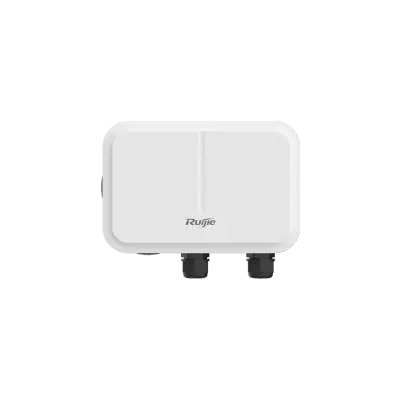
RG-AP680-O(V3), Wi-Fi 6 Dual-Radio 2.976 Gbps Outdoor Access Point, Omnidirectional Antennas
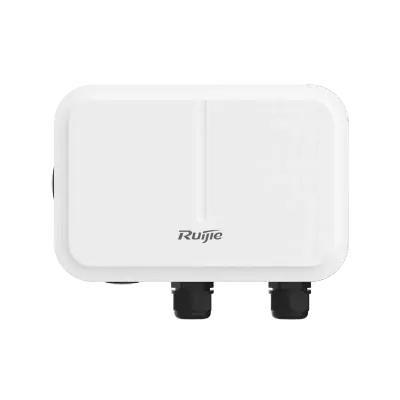
N-BOX-J4 AP42NC
Describe your application and constraints in a request.
What is recorded about the regulatory status and the life of this part.
| Current status | Status not stated |
| Key dates | Not recorded |
| Manufacturer part number | RG-AP880-E |
| Manufacturer | Ruijie |
Wi-Fi Access Points
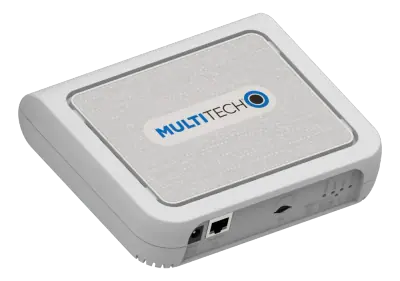
LoRa 868 MHz Ethernet Access Point, mPower Programmable · Ref. : MTCAP3-EN-A23EEA-DEM
Price on request
Wi-Fi Access Points
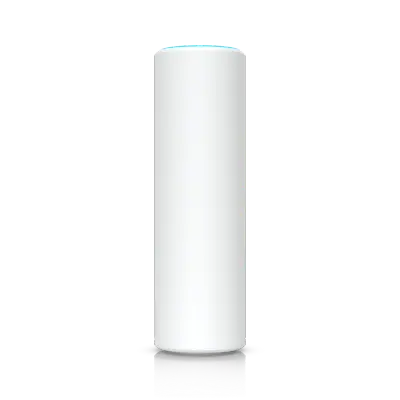
Indoor and outdoor Wi-Fi 6 access point, 6 spatial streams · Ref. : U6-MESH
Price on request
Wi-Fi Access Points
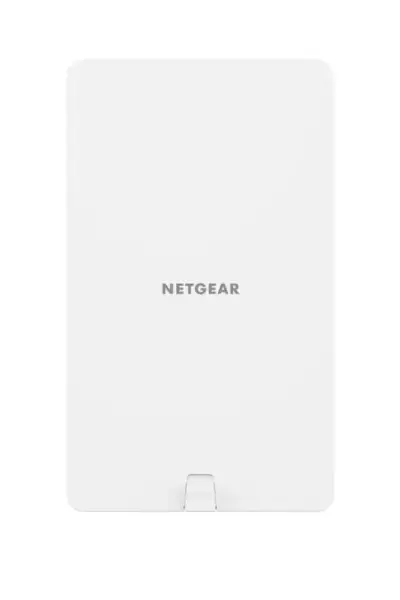
Tri-Band PoE++ 10G Manageable Wi-Fi 7 Access Point · Ref. : WBE750
Price on request
Wi-Fi Access Points
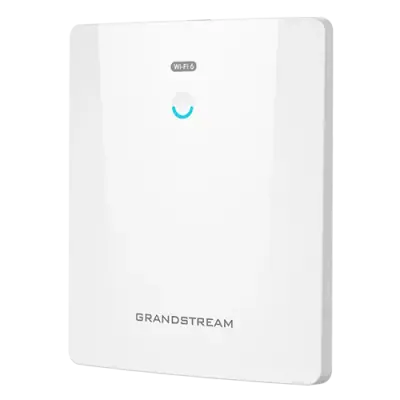
Outdoor Wi-Fi 6 Access Point 802.11ax 2.5G · Ref. : GWN7664ELR
Price on request
With your consent, we use Google cookies to measure the site’s audience and our advertising. Your quote basket and comparison stay in your browser either way. Details