
Functional role and scope of electronic components in industrial systems
Electronic components form the foundation of power conversion, analog signal conditioning, and logic processing within industrial automation equipment. Choosing suitable components ensures consistent long-term operation for printed circuit boards operating under persistent electrical noise, thermal stress, and mechanical vibration. A resilient hardware architecture requires complete compatibility among switching stages, board interconnects, and structural retention hardware.
Each sub-family fulfills a dedicated role, ranging from discrete solid-state power switches to mechanical board fixtures and test interfaces. Rigorous analysis of published manufacturer datasheets allows engineers to align nominal voltage ratings, current capacities, and thermal boundaries before procurement. This methodical selection process facilitates seamless supply on quotation while mitigating unforeseen lifecycle and operational risks across production batches.
Electrical sizing criteria for discrete power semiconductors
Within the Power MOSFETs (Silicon / SiC / GaN) category, semiconductor selection hinges on drain-source breakdown rating and conduction dissipation. The SGMICRO SGMNQ28430 provides a single N-channel 30 V structure housed in a compact PDFN package. Engineers must evaluate parameters like R DSON (TYP); V GS = 10 V — RD SON (MAX); V GS = 10 V to determine conduction losses under maximum continuous current I D (MAX); T C = +25℃.
For complementary switching stages, the SGMICRO SGMNQ40430 also utilizes a 30 V breakdown threshold within the PDFN footprint. Designers examine charge parameters across Q1, Q2, Q3, and Q4 to evaluate gate charge kinetics and driver output requirements. Dedicated thermal vias and copper planes directly beneath the thermal pad remain mandatory to prevent thermal runaway during sustained switching operations.
Package qualification and socket retention for integrated circuits
Component qualification cycles demand zero-insertion-force fixtures capable of maintaining signal integrity during elevated temperature screening. Under the Test and Burn-in Sockets category, the Waveshare Electronics P44-10 socket targets compact surface-mount devices with a fine Pitch of 0.95 mm and component body Width of 1.3-1.8 mm. This socket securely retains SOT-23 packages without preliminary soldering, preventing premature thermal stress on evaluation fixtures.
For higher pin-count integrated circuits, the Waveshare Electronics IC120-0444-306 socket accommodates PLCC44 footprints with a standard Pitch of 1.27 mm. Technicians must observe the designated Inserting Direction of IC specified for Live-bug type insertion to avoid inverted polarity. Uniform contact pressure across all terminal points protects pin plating and ensures repeatable data acquisition during screening profiles inside environmental test chambers.
Mechanical fastening and board-level thermal integration
Reliable board assembly relies on precision fasteners to secure printed circuits to enclosures and conductive heat spreaders. In the Screws and Bolts section, the Bambu Lab M1.6 machine screw features durable Material: Carbon steel construction and a precise Mounting Hole Shape: Hex socket for torque-controlled drivers. Its Color: Silver finish and fully threaded Screw type: Complete thread profile allow smooth engagement in tight tapped standoffs.
Rated with a mechanical Strength grade: 4.8 and belonging to the Nominal thread: M1.6M5 range, this fastener withstands vibration without stripping delicate threads. Applying calibrated installation torque prevents board flexure, trace fracture, and uneven interface pressure across power semiconductor heat sinks. Complementing screws with flat washers distributes clamping loads across FR4 substrates, preventing micro-cracking around mounting holes in harsh operating environments.
Critical integration pitfalls and circuit failures to avoid
A recurrent design oversight in component selection is neglecting thermal de-rating curves for power semiconductors. Specifying a MOSFET solely on room-temperature drain current ratings often results in thermal runaway when junction temperatures rise in enclosed cabinets. System architects must review on-state resistance increases at elevated operating temperatures and verify that thermal copper dissipation zones meet continuous dissipation needs.
Another common error involves overlooking package mechanical tolerances and socket orientation guidelines during board development. Forcing integrated circuits into mismatched socket pitches or exceeding torque limits during chassis assembly induces microscopic cracks in PCB traces and surface mount solder joints. Hardware teams should always review manufacturer mechanical drawings to verify pin numbering, orientation marks, and standoff clearance distances prior to physical assembly.
System architecture progression and catalogue navigation
Modern industrial electronic architectures demand compact integration, mixing high-frequency power switching converters with sensitive analog acquisition circuits. Isolating high-current power switching paths from low-noise digital microcontrollers requires coordinated layout planning, multi-point grounding topologies, and dedicated decoupling strategies. System developers can consult complementary component families within the Atlas Electronics catalogue to complete their hardware design without compromising electrical isolation.
Recommended adjacent sections include industrial interconnects, transient voltage suppression devices, electromagnetic filtering chokes, and specialized board-level thermal dissipation assemblies. Every single catalogue item is available through custom supply on quotation, supporting initial prototyping runs as well as full-scale production schedules. Review the comprehensive manufacturer product datasheets to finalize your component specifications and maintain architectural consistency across your entire industrial hardware fleet.
Frequently asked questions
How do engineers select the appropriate power MOSFET voltage rating for DC bus switching?
Designers recommend selecting a breakdown voltage rating with at least a twenty percent safety margin above the maximum anticipated DC bus voltage to absorb inductive switching transients. For nominal twelve-volt to twenty-four-volt buses, a 30 V device such as the SGMICRO SGMNQ28430 or SGMICRO SGMNQ40430 in a PDFN package provides sufficient headroom, provided gate-source resistance R DSON is evaluated at the specified gate drive voltage.
Why are burn-in test sockets essential during component qualification?
Burn-in sockets such as the Waveshare Electronics P44-10 for SOT-23 packages with 0.95 mm Pitch or the Waveshare Electronics IC120-0444-306 for PLCC44 devices with 1.27 mm Pitch enable non-destructive thermal stress screening. They allow rapid insertion and removal of integrated circuits without repeated soldering cycles, preserving delicate lead metallurgy during diagnostic evaluation.
What fasteners should be used to mount industrial printed circuit boards to metal chassis?
Threaded machine screws such as the Bambu Lab M1.6 carbon steel screw with a hex socket head provide controlled clamp force without damaging FR4 laminates. Combining complete thread screws of strength grade 4.8 with flat washers prevents board deformation and ensures resistance to mechanical loosening caused by industrial vibration.
Products mentioned
M1.6
Screws and Bolts
Carbon steel socket head cap machine screw · Ref. : M1.6
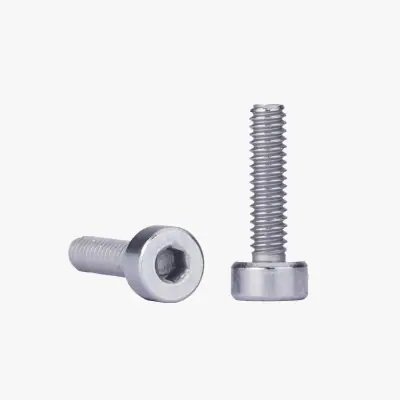
- Silver
- Carbon steel
- Hex socket
Price on request
SGMNQ28430
Power MOSFETs (Silicon / SiC / GaN)
30V single N-channel power MOSFET, PDFN package · Ref. : SGMNQ28430
Price on request
SGMNQ40430
Power MOSFETs (Silicon / SiC / GaN)
Single N-Channel 30 V power MOSFET, PDFN package · Ref. : SGMNQ40430
- Q2
- Q4
- I D (MAX); T C = +25℃
Price on request
P44-10
Test and Burn-in Sockets
Test and burn-in socket for SOT-23 integrated circuits · Ref. : P44-10
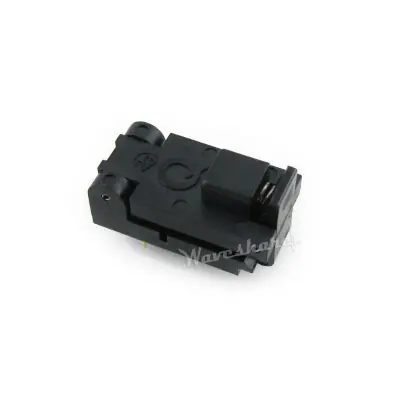
- 0.95mm
- 1.3-1.8mm
Price on request
IC120-0444-306
Test and Burn-in Sockets
PLCC44 test and burn-in IC socket, 1.27 mm pitch · Ref. : IC120-0444-306
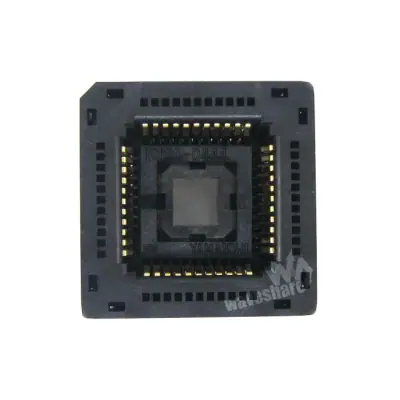
- Live-bug type
- 1.27mm
Price on request
A project? Our engineers build the solution with you.
Send your requirements: Atlas proposes the architecture, the bill of materials and a quotation, then follows the supply.
Request a quotation