
Real-world throughput in 4 G LTE Cat 1 vs Cat 4 for industrial payloads
4 G LTE Cat 1 delivers theoretical peak rates of 10 Mbps downlink and 5 Mbps uplink, whereas Cat 4 scales up to 150 Mbps downlink and 50 Mbps uplink. In field deployments, cell congestion, path loss, and IP packet overhead reduce usable bandwidth well below those ceilings. For periodic SCADA polling, Modbus register reads, or lightweight MQTT telemetry frames, Cat 1 uplink capacity provides ample headroom even when encrypted tunnels run continuously.
Cat 4 becomes necessary when a single enclosure aggregates IP camera feeds, high-rate vibration logs, or frequent large firmware packages across multiple controllers. Before selecting hardware, buyers must inspect the manufacturer datasheet for sustained payload throughput with VPN encryption enabled rather than relying solely on nominal radio category peaks.
Antenna architecture: single-antenna Cat 1 vs MIMO Cat 4 requirements
The throughput gap between Cat 1 and Cat 4 stems directly from antenna and RF front-end complexity. 4 G LTE Cat 4 relies on 2x2 downlink MIMO, requiring two separate cellular antennas with sufficient physical spacing to maintain spatial isolation. Inside compact metal cabinets or vehicle bulkheads, adding extra coaxial bulkhead connectors increases insertion losses and routing complexity.
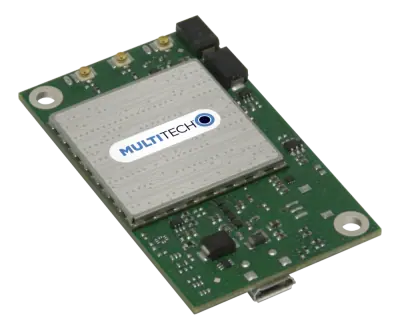
Cat 1 lowers RF integration overhead by using a simpler primary cellular path while still accommodating positioning antennas when required. Within OEM Cellular Modules (M.2 / mPCIe), the MultiTech MTQ-LAT3-B01.R3 and MultiTech MTQ-LAT3-B02.R2A support GNSS and GPS and ship with one 3.3 V magnetic GPS antenna and one Micro USB cable. Buyers should verify RF connector types and antenna impedance in the datasheet.
Module sleep consumption and power budgeting on off-grid sites
For battery-powered or solar-backed telemetry nodes, modem power draw dictates maintenance intervals and battery sizing. A Cat 4 baseband powers multiple MIMO receive paths and draws higher peak transmit current, placing heavier demands on upstream DC regulators. Conversely, a Cat 1 radio architecture activates fewer RF amplifiers and reduces energy spent per transmitted kilobyte during intermittent reporting cycles.
Sleep current profiles, wake-up latency, and fallback state transitions depend heavily on firmware settings and carrier network timers. Buyers must check the datasheet for idle and sleep current figures, peak transmit draw, supply voltage tolerances, and the additional current consumed when GNSS tracking remains active. On mains-powered control panels, continuous supply removes sleep limits and favors full-featured industrial routers.
Sizing 4 G LTE industrial routers for serial, Ethernet, and VPN workloads
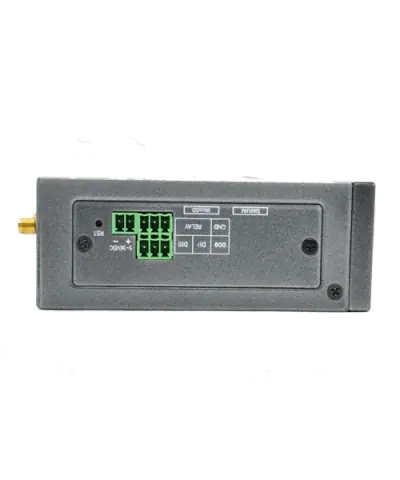
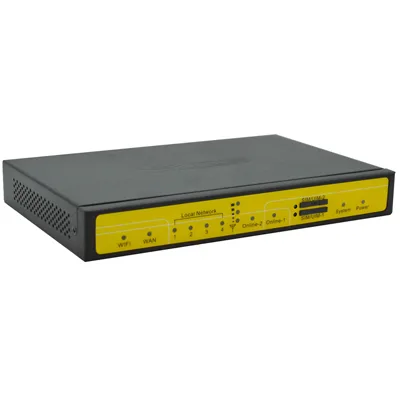
When connecting legacy field devices without designing a custom carrier board, the 4 G LTE / LTE-A Industrial Routers family provides ruggedized enclosures and industrial I/O. The Four-Faith F-R100 pairs 4 G LTE connectivity with DIN rail mounting, GNSS and GPS, Modbus support, and RS-232 plus RS-485 serial ports. For link redundancy in harsh climates, the Four-Faith F3X46 adds Dual SIM failover, RS-232, RS-485, an IP20 to IP44 rating, and a -30 °C minimum operating temperature.
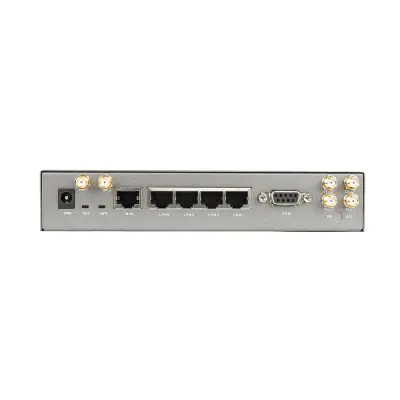
Sites requiring Power over Ethernet and encrypted remote access can specify the E-Lins H720TT-RS232, which integrates 4 G LTE, PoE, VPN, GNSS and GPS, plus RS-232 and RS-485 interfaces. Buyers must confirm regional LTE frequency bands, PoE budget, and serial pinouts on each datasheet.
Integrating OEM cellular modules in M.2 and embedded host designs
Equipment manufacturers building custom telemetry boards turn to OEM Cellular Modules (M.2 / mPCIe) to embed cellular links directly on the host PCB. The MultiTech MTQ-LAT3-B01.R3 is an M.2 LTE Cat 1 embedded cellular module for AT&T with GNSS and GPS, listing AT&T, Verizon, and FCC compliance marks. Alongside it, the MultiTech MTQ-LAT3-B02.R2A offers an LTE Cat 1 embedded cellular modem with fallback on the AT&T network, GNSS and GPS, and the same AT&T, Verizon, and FCC specifications.
Embedding a module trims enclosure footprint and eliminates external router housings, while shifting RF layout and thermal design onto the host engineering team. Buyers must review the datasheet for M.2 mechanical keying, carrier band coverage, thermal dissipation limits, and applicable FCC or regional regulatory approvals.
Pre-purchase selection checklist before requesting a quotation
Choosing between Cat 1 and Cat 4 comes down to sustained uplink volume, antenna space, and site power availability. Compact telemetry designs with tight power envelopes benefit from OEM Cellular Modules (M.2 / mPCIe) such as the MultiTech MTQ-LAT3-B01.R3 or MultiTech MTQ-LAT3-B02.R2A. Fixed industrial cabinets requiring Modbus, RS-232, or RS-485 aggregation align with 4 G LTE / LTE-A Industrial Routers like the Four-Faith F-R100, Four-Faith F3X46, or E-Lins H720TT-RS232.
All industrial routers and embedded modules from Atlas Electronics are supplied on quotation to match project specifications. Before requesting a quote, buyers should verify local operator LTE bands, -30 °C cold-start ratings, IP20 to IP44 enclosure needs, Dual SIM redundancy, and VPN throughput requirements directly in the manufacturer datasheets.
Frequently asked questions
When is 4 G LTE Cat 1 uplink throughput sufficient instead of Cat 4?
4 G LTE Cat 1 supports up to 10 Mbps downlink and 5 Mbps uplink, which handles periodic Modbus polling, MQTT sensor packets, and remote serial diagnostics over RS-232 or RS-485. Cat 4 becomes necessary for live video streams, frequent large firmware transfers, or high-rate multi-controller aggregation.
Does 4 G LTE Cat 4 always require two cellular antennas for MIMO?
Yes, 4 G LTE Cat 4 relies on 2x2 downlink MIMO to reach its 150 Mbps peak downlink rate, so installations must accommodate two spaced cellular antennas. Cat 1 simplifies RF integration with a single primary cellular antenna path, reducing bulkhead penetrations inside compact cabinets.
How do sleep consumption and power requirements differ between Cat 1 modules and Cat 4 routers?
Cat 1 modules draw lower peak transmit current and support deeper sleep states for battery or solar nodes, whereas Cat 4 routers power multiple RF chains and target continuous DC or PoE rails. Buyers must check idle draw, peak transmit current, and input voltage range on the datasheet.
How should I size a 4 G LTE industrial router for RS-232, RS-485, Dual SIM, and VPN?
Size the router around field interfaces, environmental limits, and link redundancy. For example, verify DIN rail mounting and Modbus on the Four-Faith F-R100, PoE and VPN on the E-Lins H720TT-RS232, or Dual SIM, IP20 to IP44 protection, and -30 °C operation on the Four-Faith F3X46.
Products mentioned
H720tt-RS232
4G LTE / LTE-A Industrial Routers
Industrial 4G LTE dual-SIM router with DB9 serial port · Ref. : H720TT-RS232
- Reset
- Yes
Price on request
F-R100
4G LTE / LTE-A Industrial Routers
Industrial 4G LTE cellular router with serial ports and Wi-Fi · Ref. : F-R100
- CE, FCC
Price on request
F3X46
4G LTE / LTE-A Industrial Routers
Dual SIM 4G LTE industrial router with Wi-Fi · Ref. : F3X46
- 335~572mA@12VDC
- Industrial 32bits CPU
- 207x135x28 mm
Price on request
MTQ-LAT3-B02.R2A
OEM Cellular Modules (M.2 / mPCIe)
LTE Cat 1 embedded cellular modem with fallback, AT&T network · Ref. : MTQ-LAT3-B02.R2A
- AT&T, Verizon
- 1 - Micro USB Cable
- FCC
Price on request
MTQ-LAT3-B01.R3
OEM Cellular Modules (M.2 / mPCIe)
LTE Cat 1 embedded cellular module M.2 for AT&T · Ref. : MTQ-LAT3-B01.R3
- AT&T, Verizon
- 1 - Micro USB Cable
- FCC
Price on request
A project? Our engineers build the solution with you.
Send your requirements: Atlas proposes the architecture, the bill of materials and a quotation, then follows the supply.
Request a quotationRelated pages
 Use caseEV Charging in Automotive & Electric MobilityHardware architecture and field deployment guide addressing operational requirements. Certified industrial hardware, custom integration, and supply on quotation.
 Use caseEV Charging in Electronics & OEM/ODMHardware architecture and field deployment guide addressing operational requirements. Certified industrial hardware, custom integration, and supply on quotation.
 Use caseEV Charging in Retail & CommerceHardware architecture and field deployment guide addressing operational requirements. Certified industrial hardware, custom integration, and supply on quotation.
 Use caseEV Charging in Telecom & NetworksHardware architecture and field deployment guide addressing operational requirements. Certified industrial hardware, custom integration, and supply on quotation.
 OfferEV Charging kit for Automotive & Electric MobilityComplete hardware package ready for industrial deployment. Verified components, architecture review by Atlas engineering desk, and procurement on quotation.
 OfferEV Charging kit for Electronics & OEM/ODMComplete hardware package ready for industrial deployment. Verified components, architecture review by Atlas engineering desk, and procurement on quotation.
 OfferEV Charging kit for Retail & CommerceComplete hardware package ready for industrial deployment. Verified components, architecture review by Atlas engineering desk, and procurement on quotation.
 OfferEV Charging kit for Telecom & NetworksComplete hardware package ready for industrial deployment. Verified components, architecture review by Atlas engineering desk, and procurement on quotation.