
Base Hardware Configuration for Telecom Connected EV Charging
The base electronics package pairs three functional blocks designed for dependable roadside operation and continuous remote management. Main compute and charge-point orchestration rely on the EDATEC SBC2300 from the ARM Single Board Computers category. This board integrates RS-232 and RS-485 serial buses alongside Wi-Fi 5 and Bluetooth 5.0, managing electric vehicle charge sequencing, peripheral metering communication, and cellular connectivity with a minimum operating temperature of -20 °C.
To deliver dedicated wide-area telecommunication, the assembly incorporates the Four-Faith F3936-3736H from the 4 G LTE / LTE-A Industrial Routers family. This unit features Cellular network 4 G LTE, Wi-Fi 4, RS-232, RS-485, and operates down to -30 °C. Internal power conversion relies on the MORNSUN 15-480 W DIN rail power supply, delivering an efficiency up to 94% and CLASS B electromagnetic compatibility.
Modular Alternatives and Compute Options for Charging Stations
Demanding installation environments frequently require tailored processing capabilities and specialized field bus interfaces. In installations demanding extended thermal robustness and direct vehicle bus telemetry, the Geniatech XPI-3576 single board computer provides a Rockchip RK3576 processor and built-in CAN bus connectivity. Operating down to -40 °C or lower with a DC 12 V supply and measuring 125 mm×56 mm×22.6 mm, this compact board fits tightly into street charging pillars.
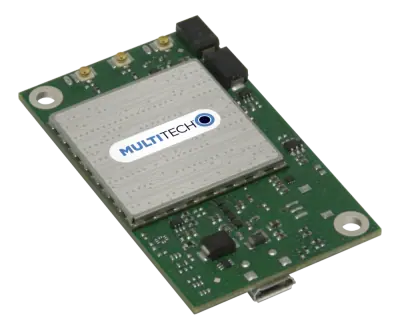
For architectures utilizing integrated embedded cellular modems instead of external networking gateways, the MultiTech MTQ-LAT3-B01.R2A from the OEM Cellular Modules (M.2 / mPCIe) category offers an alternate communications channel. This module includes GNSS / GPS positioning capabilities and carries FCC compliance. Such hardware options allow engineering teams to adapt communication density to regional deployment parameters without redesigning the enclosure.
Cellular Uplink Challenges and Redundant Network Topologies
Deploying charging networks across metropolitan and highway corridors requires rigorous attention to cellular frequency band compatibility and regional telecommunication carrier approvals. Using the EDATEC SBC2300 or the Four-Faith F3936-3736H cellular router ensures reliable 4 G LTE communication across industrial environments. External antenna selection, enclosure pass-through mountings, and low-loss coaxial cabling directly dictate radio link budget margins and prevent signal fading in dense urban areas.
To eliminate station downtime during regional telecom outages, the network architecture implements redundant uplink paths. The primary connection routes traffic across municipal Ethernet or fiber backhaul, while the cellular router provides automated failover routing for telemetry and safety signaling. This redundant topology enables persistent remote supervision from central management platforms, keeping operators fully informed of station status.
Customer Provided Subsystems and Physical Installation Interfaces
Under this quotation supply framework, the purchasing integrator supplies the external physical structure and high-voltage power distribution equipment. Essential customer-supplied items include the outdoor-rated metal enclosure with suitable ingress protection ratings, main circuit breakers, isolation contactors, heavy-gauge copper wiring, surge suppressors, and vehicle-facing charging plugs. Additionally, the integrator manages internal thermal ventilation and cable glands to prevent moisture ingress.
The buyer also sources utility-grade energy meters mandated for legal billing transactions, toroidal current measurement sensors, and the main grid connection feeder cables. On the software and network layer, the client provides active multi-carrier SIM cards and configures secure API credentials to link the station controllers directly with their central charge-point management backend servers. These elements complete the installation.
Critical Engineering Verification Points and Regulatory Compliance
Before procurement sign-off, system designers must check operating temperature specifications and ingress protection ratings directly in component datasheets. The MORNSUN 15-480 W specifies operation down to -40 °C or lower with CLASS B electromagnetic compatibility, while the EDATEC SBC2300 controller specifies a lower thermal boundary of -20 °C. Buyers must also confirm that selected metering interfaces fulfill regional regulations governing commercial billing.
Software evaluators must review native backend protocol capabilities, specifically verifying OCPP 1.6-J and OCPP 2.0.1 compliance over TLS encrypted transport. In addition, engineering teams must scrutinize the cybersecurity architecture, examining signed firmware update mechanisms, credential storage, and network segmentation. Reviewing these datasheet specifications ensures robust long-term operation and protects the connected infrastructure against unauthorized network intrusion.
Project Lifecycle Workflow and Quotation Supply Model
A deployment engagement begins with detailed requirements analysis aligning charging station power topologies with regional telecommunication infrastructure. Technical specialists review carrier network compatibility, compute performance margins, and serial bus connectivity before formalizing the complete industrial hardware bill of materials. This initial documentation review establishes interconnection schematics and software communication pipelines prior to assembling prototype demonstration units.
Following prototype assembly by the customer, software integration cycles evaluate OCPP signaling and cellular failover behavior under live network conditions. Atlas Electronics supplies this packaged offer strictly on quotation, tailoring compute cards, wireless routers, and industrial power units to exact project volume and environmental constraints. This structured approach maintains engineering alignment from component selection through commercial fleet manufacturing and installation.
Bill of materials
Catalogue products that can fill each role. Atlas Electronics quotes the complete bill of materials for your project; you check each datasheet before ordering.
Charge-point controller
Core ARM single board computer managing charge sequencing, metering telemetry, and OCPP backend communications.
ED-SBC2300
ARM Single Board Computers
ARM quad-core 64-bit single board computer with Wi-Fi 5 and Bluetooth 5.0 · Ref. : SBC2300

Price on request
XPI-3576
ARM Single Board Computers
RK3576 Industrial AI Single Board Computer · Ref. : XPI-3576

- DC 12V
- Rockchip RK3576
- 125mm×56mm×22.6mm
Price on request
Connectivity
Industrial 4 G LTE cellular router or embedded OEM modem providing redundant uplink connectivity to remote management systems.
F3936-3736H
4G LTE / LTE-A Industrial Routers
Vehicle LTE TDD WIFI Operating Router

Price on request
MTQ-LAT3-B01.R2A
OEM Cellular Modules (M.2 / mPCIe)
LTE Cat 1 embedded cellular module for AT&T · Ref. : MTQ-LAT3-B01.R2A
Price on request
Power conversion
High-efficiency industrial DIN rail power supply delivering regulated low-voltage DC power to controllers and communications gear.
15-480W LI
DIN Rail AC/DC Industrial Power Supplies (Mean Well)
High-performance AC/DC DIN rail power supply · Ref. : 15-480W

- up to 94%
- CLASS B
- 10V/m
Price on request
Frequently asked questions
How should antenna cabling be specified for metallic charging station pillars?
Integrators should deploy ruggedized vandal-proof dome antennas with IP67 ingress protection mounted on the pillar exterior. Coaxial feed lines should be kept under one meter where possible and utilize low-loss RG 58 or LMR 200 grade cabling to prevent signal attenuation on 4 G LTE uplink frequencies.
Which serial protocols interface the charge controller with energy metering hardware?
Charge controllers interface with revenue-grade energy meters and residual current monitors over RS-485 or RS-232 serial links running Modbus RTU. This deterministic physical bus isolates metering data acquisition from general operating system tasks and maintains reliable telemetry.
How does the charging station handle connectivity loss during active sessions?
The charge controller caches active transaction tokens and metering increments in local non-volatile flash memory. When an uplink fails, the system attempts failover between primary Ethernet and secondary cellular modems, resynchronizing transaction records with the remote OCPP backend once connectivity is restored.
A project? Our engineers build the solution with you.
Send your requirements: Atlas proposes the architecture, the bill of materials and a quotation, then follows the supply.
Request a quotationRelated pages
 OfferEV Charging Architecture for Electronics OEM and ODM IntegratorsThis hardware package for electric vehicle charging stations combines core control, cellular telemetry, and power conversion on quotation.
 Use caseEV Charging Infrastructure in Retail and Commercial EnvironmentsExplore EV charging architectures for retail sites, combining industrial controllers, robust cellular routing, and point-of-sale peripherals.
 Use caseEV Charging in Automotive & Electric MobilityThis use case examines hardware architectures for electric vehicle charging stations, focusing on CAN bus telemetry and power conversion.
 Use caseEV Charging in Electronics and OEM/ODM IntegrationThis technical guide details hardware architecture, radio compliance, and embedded electronic integration for commercial EV charging systems.
 Use caseEV Charging in Telecom & NetworksThis guide examines cellular and industrial network integration for reliable supervision and telemetry of electric vehicle chargers.
 OfferEV Charging kit for Automotive & Electric MobilityThis EV charging kit combines a CAN-capable controller, 4 G cellular gateway, and DIN power supply to support reliable mobility deployments.
 OfferEV Charging kit for Retail & CommerceThis package outlines charge-point controllers, cellular connectivity, and DIN rail power conversion for commercial parking stations.
 Use caseRetail & Kiosks in Electronics & OEM/ODMThis guide examines OEM electronics integration for retail kiosks, detailing SBC trade-offs, radio RED compliance, and lifecycle continuity.