
How IEEE 802.11 ah and the Wi-Fi HaLow standard operate
Wi-Fi HaLow is built on the IEEE 802.11 ah amendment and governed by the Wi-Fi Alliance HaLow interoperability program for sub 1 GHz industrial links. Unlike 2.4 GHz and 5 GHz Wi-Fi, the physical layer down-clocks IEEE 802.11ac timing by a factor of ten, narrowing channel bandwidths to 1, 2, 4, 8, and 16 MHz. Longer OFDM symbol durations improve multipath immunity across metal warehouses, plant floors, and dense urban yards.
Modulation scales across BPSK, QPSK, 16 QAM, 64 QAM, and 256 QAM, supplemented by mandatory MCS 10 block-repetition coding on 1 MHz channels to extend link budgets. Because it preserves standard IEEE 802.11 MAC framing, endpoints carry native IP and IPv 6 packets with WPA3 security directly to the access point, eliminating protocol translation gateways required by proprietary sub-GHz stacks.
Network and electrical topology of IEEE 802.11 ah deployments
At the network layer, Wi-Fi HaLow uses a star topology in which a single access point addresses up to 8 191 associated stations via a 13-bit hierarchical Association Identifier. The specification also supports two-hop relay nodes to bypass RF obstructions without building a complex multi-hop mesh. To curb contention, Restricted Access Window scheduling groups stations into deterministic transmission slots.
Electrically, battery-powered endpoints rely on Target Wake Time negotiation and Traffic Indication Map segmentation to keep the RF transceiver in deep sleep for minutes or hours between exchanges. Hardware designers must size decoupling capacitors and voltage regulators carefully because waking into sub-GHz transmission creates sharp current pulses, often exceeding several hundred milliamperes on a 3.3 V rail, which can reset sensitive host microcontrollers if rail impedance is too high.
Sub-GHz frequency bands and channel bandwidth regulations by region
Selecting a Wi-Fi HaLow radio module starts with checking regional operating frequency bands and channel bandwidth regulations in the target geography. In Europe, ETSI allocates 863 to 868 MHz for license-exempt operation, which generally restricts deployments to 1 MHz and 2 MHz channels subject to duty-cycle caps or listen-before-talk rules. In North America, FCC rules across 902 to 928 MHz accommodate wider 4 MHz, 8 MHz, and 16 MHz channels.
Asia-Pacific jurisdictions such as Japan, South Korea, and Australia define distinct sub-bands around 915 to 928 MHz with specific equivalent isotropically radiated power limits and channelization masks. Engineering teams must inspect the module datasheet to confirm which regional regulatory profiles are pre-loaded in firmware and whether antenna gain restrictions apply to preserve spectral mask compliance.
Throughput, transmission range, sleep power, and station capacity trade-offs
System architects must balance target throughput profiles against transmission distance and sleep power consumption. Operating at 1 MHz with MCS 10 yields roughly 150 kbps physical rate while maximizing receiver sensitivity for kilometer-scale outdoor links or multi-wall indoor penetration. Conversely, 4 MHz or 8 MHz channels using higher-order QAM deliver tens of megabits per second over shorter industrial spans.
Network topology requirements also dictate station capacity per access point and relay support. Although hierarchical addressing accommodates 8 191 stations, shared airtime and TWT wake intervals bound sustainable traffic. Infrequent telemetry payloads preserve multi-year battery budgets, whereas continuous video streams or frequent firmware updates rapidly saturate narrow 1 MHz channels and increase contention across relayed nodes.
Sub-GHz antenna tuning, matching circuits, and common integration mistakes
Implementing a sub-GHz carrier demands accurate antenna tuning and a dedicated pi-network matching circuit. A quarter-wave PCB trace around 868 or 915 MHz spans roughly 80 mm and relies on a clean ground plane to hold a 50 ohm feedpoint impedance. In compact enclosures, routing RF through a miniature coaxial connector to an external dipole avoids severe detuning from nearby metal walls or battery packs.
Common integration mistakes include shrinking the reference ground plane below wavelength requirements, omitting impedance-controlled microstrip routing, under-sizing bulk capacitance on the transmit supply rail, and overlooking regional channel bandwidth locks. Buyers should check the module datasheet for recommended S11 return-loss targets, minimum operating temperature ratings, and reference matching component layouts before finalizing the carrier board.
Complementary Atlas Electronics hardware blocks available on quotation
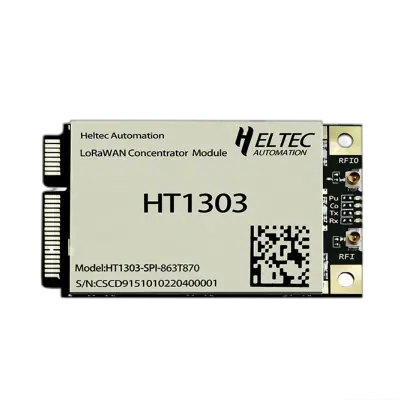
In the Atlas Electronics catalogue supplied on quotation, complementary modules support multi-radio gateways around sub-GHz networks. Within Sub-GHz Modules, the Heltec HT1303 covers 470 510 MHz, 863 870 MHz, and 902 923 MHz on a 52-pin Mini PCIe interface with SPI bus, optional USB, IPEX 1.0 antenna socket, 51 × 30 × 10.5 mm footprint, and -40 °C or lower temperature rating.
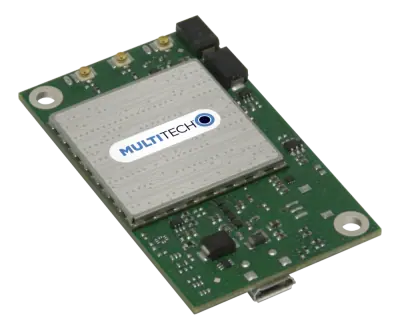
For local host interfaces in Wi-Fi and Bluetooth Modules, the Espressif Systems ESP32-C5-WROOM-1U-N8R8 integrates an antenna connector, 8 MB Flash, 8 MB PSRAM, and 22 GPIO, alongside the Espressif Systems ESP32-S3-WROOM-1-N4R2 with PCB antenna and 36 GPIO. In Thread and Matter Modules, the Espressif Systems ESP32-H2-MINI-1U-H2S supports IEEE 802.15.4, while the MultiTech MTQ-LAT3-B01.R2A in OEM Cellular Modules (M.2 / mPCIe) handles LTE Cat 1 AT&T and Verizon backhaul.
Frequently asked questions
What distinguishes Wi-Fi HaLow from LoRaWAN in sub-GHz industrial networks?
Wi-Fi HaLow (IEEE 802.11 ah) uses narrowband OFDM modulation to deliver hundreds of kbps up to tens of Mbps with native IP connectivity. LoRaWAN trades throughput for extreme link budget using short, low-rate frames and requires an application gateway to bridge traffic onto IP networks.
Which channel bandwidths are practical for Wi-Fi HaLow in Europe at 863–868 MHz?
Because the European 863–868 MHz allocation is only 5 MHz wide, deployments typically rely on 1 MHz and 2 MHz channels. Engineers must check the module datasheet for supported ETSI duty-cycle or listen-before-talk configurations.
How does Target Wake Time reduce battery draw on Wi-Fi HaLow stations?
Target Wake Time establishes a negotiated schedule between the access point and each station so the radio remains in deep sleep between planned intervals. This avoids continuous beacon listening and prevents simultaneous wake-up collisions.
What PCB checks are essential before integrating a sub-GHz antenna and matching network?
Designers should inspect 50 ohm microstrip impedance, pi-network matching component footprints, ground plane dimensions relative to wavelength, keep-out clearances around the radiating element or coaxial connector, and power-rail decoupling for TX current bursts.
Products mentioned
ESP32-S3-WROOM-1-N4R2
Wi-Fi and Bluetooth Modules
Wi-Fi and Bluetooth LE module with PCB antenna · Ref. : ESP32-S3-WROOM-1-N4R2
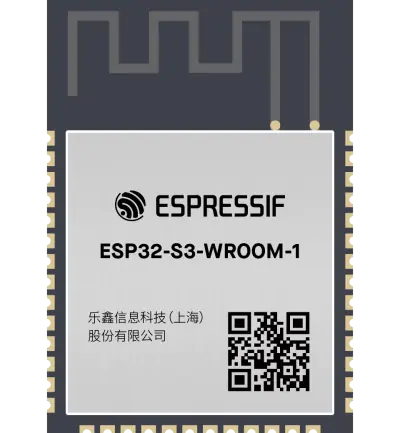
- PCB Antenna
- 18×25.5×3.1 mm
- 4 MB
Price on request
ESP32-H2-MINI-1U-H2S
Thread and Matter Modules
Bluetooth LE and IEEE 802.15.4 module with antenna connector · Ref. : ESP32-H2-MINI-1U-H2S
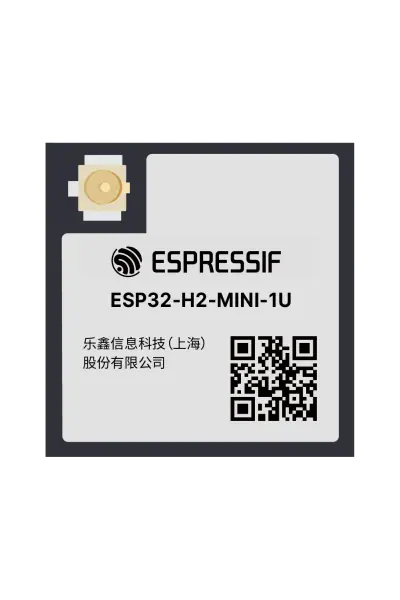
- Antenna Connector
- 13.2×12.5×2.4 mm
- 2 MB
Price on request
ESP32-C5-WROOM-1U-N8R8
Wi-Fi and Bluetooth Modules
Wi-Fi and Bluetooth LE module with antenna connector and 8 MB PSRAM · Ref. : ESP32-C5-WROOM-1U-N8R8
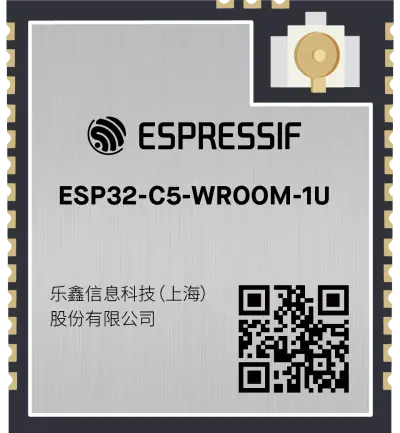
- Antenna Connector
- 18×21.2×3.3 mm
- 8 MB
Price on request
HT1303
Sub-GHz Modules
LoRaWAN concentrator module, mini-PCIe SX1303 · Ref. : HT1303
Price on request
MTQ-LAT3-B01.R2A
OEM Cellular Modules (M.2 / mPCIe)
LTE Cat 1 embedded cellular module for AT&T · Ref. : MTQ-LAT3-B01.R2A
Price on request
A project? Our engineers build the solution with you.
Send your requirements: Atlas proposes the architecture, the bill of materials and a quotation, then follows the supply.
Request a quotationRelated pages
 ProjectIndustrial Wi-Fi 6/7 Access Points & Wi-Fi HaLow ModulesThis guide helps buyers specify industrial Wi-Fi access points, PoE client bridges, and sub-GHz Wi-Fi HaLow modules for quotation.
 ArticleHow to choose an industrial Wi-Fi access point: roaming, antennas and IPTechnical guide to selecting an industrial Wi-Fi access point: radio standards, fast roaming, MIMO antennas, PoE power, and wide temperatures.