
Radio Architecture Between Industrial Wi-Fi Access Points and Wi-Fi HaLow
Wireless deployments across plants and warehouses balance high-throughput Wi-Fi coverage against sub-GHz propagation through metal racking. Catalog families covering Wi-Fi Access Points and Industrial Wi-Fi Routers, Access Points & Client Bridges serve fast-moving terminals and video backhaul, while Wi-Fi HaLow Modules based on 802.11 ah target long-range, low-power telemetry across dense structural obstacles where conventional 2.4 GHz or 5 GHz cells attenuate rapidly.
Before requesting a quotation, buyers should match each datasheet against site temperature, humidity, and enclosure requirements. For indoor and outdoor Wi-Fi 6 links using six spatial streams, the Ubiquiti U6-MESH operates down to -30 °C across 5 to 95% noncondensing ambient humidity in a ⌀48.5 x 159.5 mm housing, giving integrators a compact PoE option when ceiling or pole mounting is constrained.
Fast Roaming 802.11r/k/v and Dual-Band Versus 6 GHz Channels
Automated guided vehicles and mobile scanners require fast roaming to avoid session drops while moving between radio cells. Combining 802.11r fast transition with 802.11 k neighbor reports and 802.11 v BSS transition management reduces handoff interruption by preparing authentication keys and candidate channels in advance. Buyers must confirm in controller and client datasheets that mobile endpoints support these amendments cleanly.
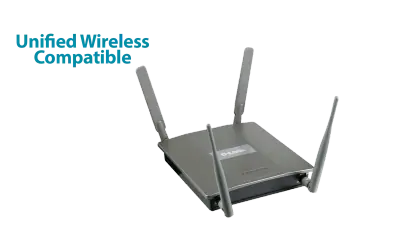
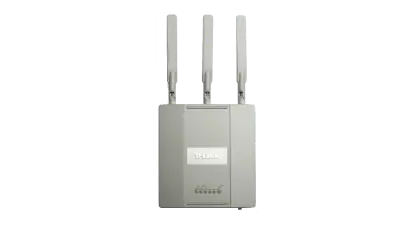
Channel planning often compares dual-band 2.4 GHz and 5 GHz operation against 6 GHz spectrum introduced in Wi-Fi 6E and Wi-Fi 7. While 2.4 GHz travels farther, it faces severe industrial noise, whereas 5 GHz and 6 GHz provide wider, cleaner channels. For indoor dual-band Wireless N deployments, both the D-Link DWL-8600AP and D-Link DAP-2590 support MIMO and AP traffic load balance.
Client Bridge Mode, Sector Antennas, and DIN-Rail or IP67 Enclosures
On factory floors, client bridge mode connects Ethernet-only PLCs, drives, or control cabinets to an existing wireless backbone without pulling fiber or copper. Buyers should check the datasheet for Layer 2 bridging behavior, MAC address transparency, and industrial VLAN tagging, alongside mechanical protection ratings ranging from DIN-rail units inside sealed panels to IP67 enclosures exposed to washdown or outdoor dust.
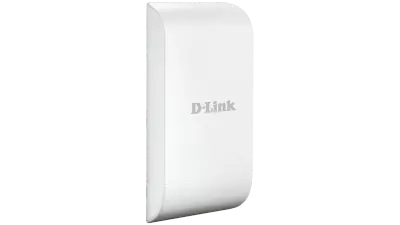
For outdoor 5 GHz directional links, the D-Link DAP-3410 features an embedded 15 dBi sector antenna, IPX6 protection, MIMO, and auto channel selection. Indoors, antenna diversity also differentiates models: the D-Link DWL-8600AP uses four detachable omni-directional antennas rated at 4 dBi for 2.4 GHz and 6 dBi for 5 GHz, whereas the D-Link DAP-2590 uses three detachable omni-directional antennas with identical gain.
PoE Powering Budgets and Embedded Wi-Fi Module Integration
Power over Ethernet simplifies overhead cabling in bays and gantries without local AC outlets. The Ubiquiti U6-MESH, D-Link DAP-3410, D-Link DWL-8600AP, and D-Link DAP-2590 all support PoE powering, and the D-Link DAP-3410 adds PoE pass-through to energize a downstream field device. Buyers must verify switch power budgets, maximum cable runs, and required PoE classes in each product datasheet before installation.
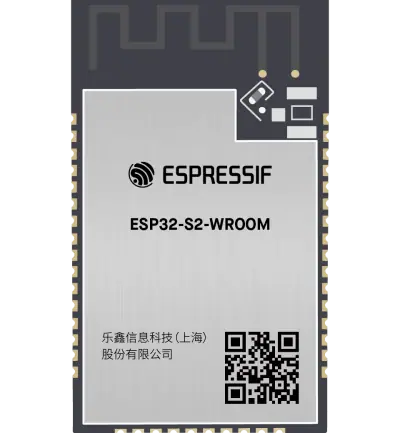
When OEMs build custom sensor nodes or gateways, the Wi-Fi Modules family complements standalone access points. The Espressif Systems ESP32-S2-WROOM-N4 measures 18 x 31 x 3.3 mm and integrates a PCB antenna, 4 MB flash, 37 GPIO pins, and no PSRAM on the ESP32-S2 SoC. For tighter footprints, the Espressif Systems ESP32-S2-MINI-2-N4R2 measures 15.4 x 20.5 x 2.4 mm with 2 MB PSRAM.
Specification Checklist Before Submitting a Quotation Request
Preparing a detailed procurement specification for Wi-Fi Access Points or Wi-Fi HaLow Modules starts with documenting environmental, mechanical, and RF link constraints. Record the minimum operating temperature, ingress protection rating, whether a single Ethernet port or PoE pass-through output is required, and the antenna gain and radiation pattern suited to the path loss between fixed infrastructure and mobile or embedded endpoints.
To request supply on quotation from Atlas Electronics, share your target part numbers, expected project quantities, PoE or DC powering topology, and cabinet or outdoor thermal limits. Also specify regional sub-GHz regulatory bands for Wi-Fi HaLow or locally permitted 5 GHz and 6 GHz channels so that datasheet specifications and regional radio approvals can be checked prior to ordering.
Frequently asked questions
How do Wi-Fi 6 or Wi-Fi 7 access points compare with Wi-Fi HaLow modules?
Wi-Fi 6 and Wi-Fi 7 access points deliver high throughput and low latency across 2.4 GHz, 5 GHz, and 6 GHz at short to medium range. Wi-Fi HaLow Modules use sub-GHz 802.11 ah spectrum for deeper obstacle penetration and longer battery life on low-rate sensors. Buyers should check regional sub-GHz band support in the datasheet.
When should an industrial site use client bridge mode?
Client bridge mode is used when an Ethernet-equipped PLC, drive, or control panel must join an existing wireless LAN without running new network cabling. Buyers should verify Layer 2 bridging behavior, MAC transparency, VLAN pass-through, and 802.11r/k/v roaming compatibility in the access point datasheet.
What PoE details should buyers verify before ordering industrial access points?
Check the required PoE standard and per-port power budget on the upstream switch, especially when chaining another device via PoE pass-through on the D-Link DAP-3410. Also verify operating limits such as the -30 °C minimum temperature on the Ubiquiti U6-MESH and the enclosure ingress rating.
What distinguishes the Espressif Systems ESP32-S2-WROOM-N4 from the ESP32-S2-MINI-2-N4R2?
Both modules share the ESP32-S2 family, PCB antenna, 4 MB flash, and 37 GPIO pins. The Espressif Systems ESP32-S2-MINI-2-N4R2 has a smaller 15.4 x 20.5 x 2.4 mm footprint and adds 2 MB PSRAM, whereas the Espressif Systems ESP32-S2-WROOM-N4 measures 18 x 31 x 3.3 mm with no PSRAM.
Products mentioned
DWL-8600AP
Wi-Fi Access Points
Simultaneous dual-band Wi-Fi N PoE access point for indoor use · Ref. : DWL-8600AP
- MIMO
- Supported
- Indoor
Price on request
DAP-2590
Wi-Fi Access Points
Dual Band Wireless N PoE Access Point, indoor use
Price on request
DAP-3410
Wi-Fi Access Points
Outdoor Wireless N 5 GHz access point with PoE pass-through
Price on request
ESP32-S2-WROOM-N4
Wi-Fi Modules
Wi-Fi module with PCB antenna, 4 MB flash, 37 GPIO
- PCB Antenna
- 18×31×3.3 mm
- 4 MB
Price on request
ESP32-S2-MINI-2-N4R2
Wi-Fi Modules
Wi-Fi module with PCB antenna, 37 GPIO, 4 MB flash · Ref. : ESP32-S2-MINI-2-N4R2
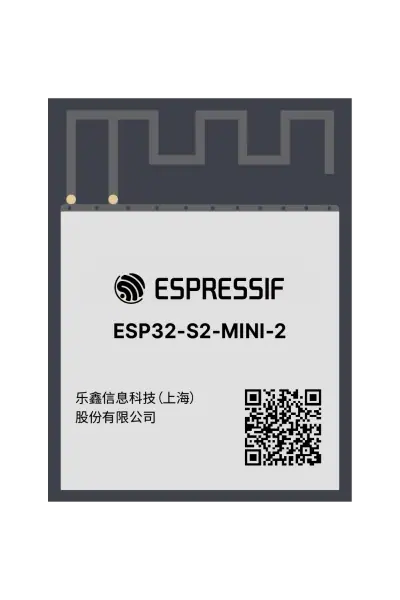
- PCB Antenna
- 15.4×20.5×2.4 mm
- 4 MB
Price on request
U6-Mesh
Wi-Fi Access Points
Indoor and outdoor Wi-Fi 6 access point, 6 spatial streams · Ref. : U6-MESH
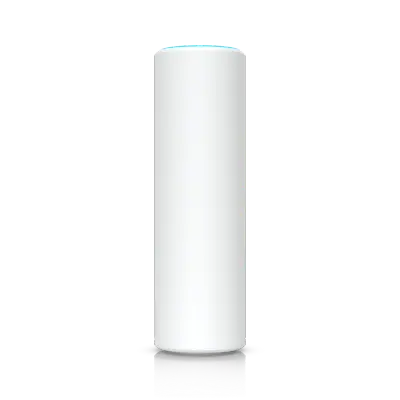
- WiFi 6
- 5 to 95% noncondensing
- 3 dBi
Price on request
A project? Our engineers build the solution with you.
Send your requirements: Atlas proposes the architecture, the bill of materials and a quotation, then follows the supply.
Request a quotationRelated pages
 Buying guideHow to choose Wi-Fi ModulesReference guide for selecting the right equipment from the Atlas catalogue. Technical criteria, architectures, design pitfalls, and bill of materials quotation by our engineers.
 ArticleHow to choose an industrial Wi-Fi access point: roaming, antennas and IPTechnical guide to selecting an industrial Wi-Fi access point: radio standards, fast roaming, MIMO antennas, PoE power, and wide temperatures.
 How-toPlan Wi-Fi coverage with industrial wi-fi routers, access points & client bridgesStep-by-step technical procedure to configure, wire, and commission your industrial equipment in real-world deployment conditions with Atlas technical support.
 ArticleUnderstanding Wi-Fi HaLow: architecture, standards & hardwareThis technical guide explains IEEE 802.11 ah Wi-Fi HaLow architecture, sub-GHz design criteria, integration pitfalls, and related modules.
 Use caseBiometric Access Control and Time Attendance in Security & Access ControlHardware architecture and field deployment guide addressing operational requirements. Certified industrial hardware, custom integration, and supply on quotation.
 OfferBiometric Access Control and Time Attendance kit for Security & Access ControlComplete hardware package ready for industrial deployment. Verified components, architecture review by Atlas engineering desk, and procurement on quotation.
 ArticleChoosing an indoor or outdoor LoRaWAN gateway for sensor networksCompare 8- vs 16-channel SX 1302/SX 1303 gateways, IP67 vs indoor enclosures, LTE cavity filtering, PoE power, and cellular failover options.
 Use caseConnected Senior Living in Electronics & OEM/ODMHardware architecture and field deployment guide addressing operational requirements. Certified industrial hardware, custom integration, and supply on quotation.