
Module, System-on-Module, or Custom Board by Series Volume
Choosing the hardware granularity for an Electronics and OEM/ODM product depends on annual series volume, engineering bandwidth, and mechanical constraints. At low to medium volumes, integrating Mini-ITX Industrial Motherboards alongside Microcontroller Development Boards minimizes schematic complexity and printed circuit board layout risk. Moving to System on Modules (SoM) & Computer on Modules (CoM) keeps high-speed memory routing, power management, and processor interfaces on a compact mezzanine while leaving application connectors on a simpler carrier board.
Full custom board design around bare Microcontrollers (MCU) becomes viable when larger production runs amortize multi-layer layout effort, impedance control, and extended laboratory qualification. Before locking an architecture for supply on quotation, engineering teams must verify pinout stability, power rail sequencing, and carrier reference guidelines in the manufacturer datasheet.
Component Lifecycle and Second-Source Planning in OEM Design
Industrial and OEM/ODM assemblies often remain in active production for five to ten years, far outlasting consumer silicon cycles. Relying on single-source silicon without lifecycle commitments exposes a finished product to sudden redesigns when a package or memory density reaches end of life. Selecting System on Modules (SoM) & Computer on Modules (CoM) or standardized Mini-ITX Industrial Motherboards isolates the host processor from field I/O, allowing hardware revisions without scrapping enclosure tooling.
Second-source planning requires verifying footprint compatibility, voltage tolerances, and software register parity across alternate passive and active parts. Within Wi-Fi and Bluetooth Modules or OEM Cellular Modules (M.2 / mPCIe), standardized form factors simplify swapping radio generations as networks evolve. Buyers should always check product change notification policies, operating temperature grades, and multi-year availability schedules directly in each component datasheet.
CE/RED Regulatory Approval When Integrating Radio Modules
Integrating pre-assessed Wi-Fi and Bluetooth Modules or OEM Cellular Modules (M.2 / mPCIe) reduces RF engineering overhead, yet it does not exempt the finished OEM/ODM enclosure from CE/RED regulatory approval. Under European radio directives, integrating a radio subassembly into a host system transfers legal compliance responsibility to the finished equipment manufacturer. Unintentional emissions from switching regulators, display clocks, or carrier traces can shift harmonics and invalidate original module radio reports.
Hardware designers must audit specific parameters in the module datasheet, including permitted antenna types, maximum peak gain, PCB ground plane keep-out areas, and shielding requirements. Choosing between an integrated PCB antenna and an external antenna connector changes enclosure material constraints and cable attenuation budgets. Final equipment qualification always requires radiated spurious emissions, immunity, and electromagnetic compatibility measurements on the complete populated assembly.
Compute Architectures Across ARM, RISC-V, Linux, and Yocto
Architecture selection balances deterministic real-time control against rich operating system support. Bare-metal or RTOS Microcontrollers (MCU) and RISC-V wireless devices excel at low-power sensor polling and sub-millisecond bus handling. Conversely, ARM-based System on Modules (SoM) & Computer on Modules (CoM) support embedded Linux distributions and custom Yocto builds, giving OEM/ODM teams reproducible root filesystems, container isolation, and long-term kernel patching across connected appliances.
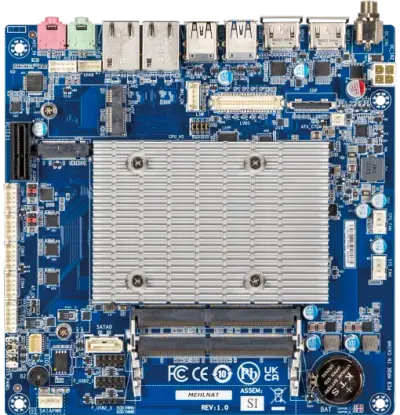
When applications demand x86 compatibility, PCIe expansion, or dual-network routing without custom motherboard layout, Mini-ITX Industrial Motherboards bridge the gap. The GigaIPC ITXL-6412 A illustrates this tier with a Thin Mini-ITX 170 W x 170 D mm footprint, an Intel Celeron J6412 10 nm 4-core processor up to 2.60 GHz at 10 W TDP, two GbE LAN ports, Realtek ALC 897 audio, one PCIe Gen 3 x1 slot, one 2280 M.2 M-Key slot, and one 2230 M.2 E-Key slot.
Wireless, Cellular M.2, and Industrial Bus Selection
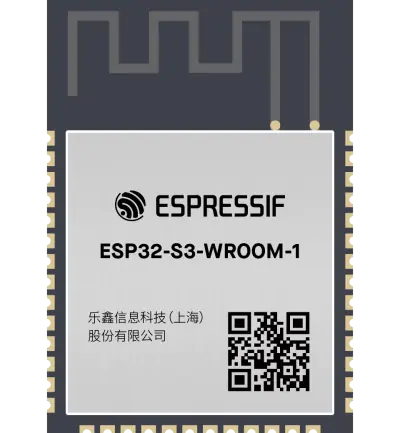
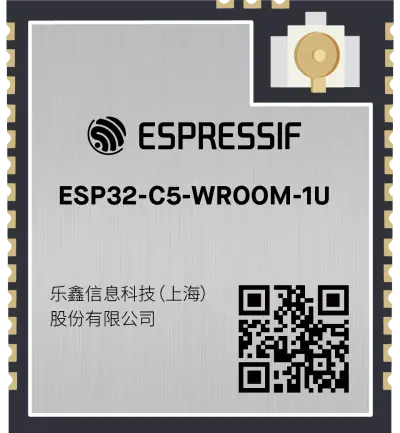
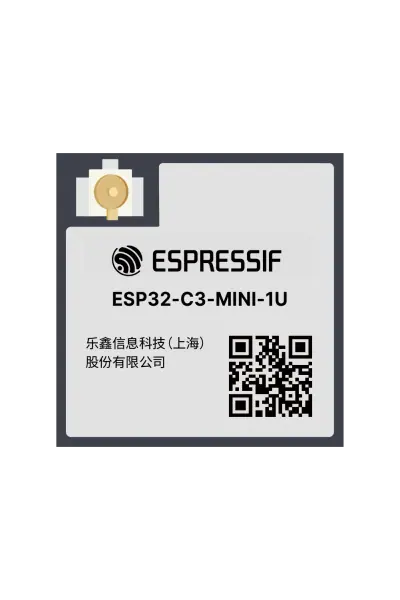
Selecting Wi-Fi and Bluetooth Modules requires matching memory, GPIO count, and antenna geometry to the enclosure. The Espressif Systems ESP32-S3-WROOM-1-N4R2 measures 18 by 25.5 by 3.1 mm with a PCB antenna, 36 GPIO, 4 MB flash, and 2 MB PSRAM. For metallic housings requiring external RF cabling, the Espressif Systems ESP32-C3-MINI-1U-N4 offers an antenna connector in 13.2 by 12.5 by 2.4 mm with 15 GPIO, 4 MB flash, and no PSRAM, while the Espressif Systems ESP32-C5-WROOM-1U-N8R8 provides 8 MB flash, 8 MB PSRAM, and 22 GPIO.
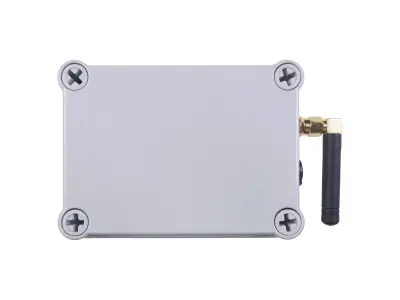
For industrial fieldbus prototyping using Microcontroller Development Boards before committing to OEM Cellular Modules (M.2 / mPCIe) or custom carriers, the Seeed Studio 102991697 pairs a 48 MHz clock and 256 KB flash with CAN 2.0 at 1 Mb/s, CAN FD at 5 Mb/s, and EU868/US915/AU915/AS923/KR920/IN865 radio support.
Engineering Qualification Checklist and Quotation Scope
Before issuing a production bill of materials for supply on quotation, OEM/ODM buyers should consolidate mechanical, electrical, and software requirements into a single qualification matrix. Confirm worst-case thermal dissipation under sealed ambient conditions, verify M.2 keying and PCIe lane allocation for OEM Cellular Modules (M.2 / mPCIe), and document Linux or Yocto board support package update responsibilities across the hardware lifecycle.
Across System on Modules (SoM) & Computer on Modules (CoM), Microcontrollers (MCU), Wi-Fi and Bluetooth Modules, Mini-ITX Industrial Motherboards, and Microcontroller Development Boards, every datasheet must be checked for power rail tolerances, ESD limits, and RF keep-out rules. Presenting target annual volumes, second-source preferences, and regional CE/RED compliance targets enables accurate hardware sizing and structured Atlas Electronics quotation preparation.
Frequently asked questions
When should an OEM/ODM project choose a System-on-Module instead of a custom MCU board?
A System on Module isolates high-speed memory routing, power management, and processor interfaces on a pre-routed mezzanine, while a custom MCU board minimizes per-unit BOM overhead only at high volumes. Check carrier reference schematics, thermal limits, and pinout longevity in the datasheet before selecting an approach.
Does integrating a pre-assessed Wi-Fi or cellular module remove CE/RED assessment obligations?
No. Integrating a pre-assessed radio module simplifies RF design, yet CE/RED compliance applies to the complete finished enclosure. Switching power supplies, enclosure materials, and antenna routing can alter spurious emissions, requiring full electromagnetic compatibility and radio measurements on the assembled unit.
How do industrial buyers secure second-source continuity over a multi-year product lifecycle?
Industrial buyers mitigate end-of-life risk by selecting standardized form factors such as Mini-ITX, SoM mezzanines, or M.2 cellular footprints, checking product change notification policies, and qualifying pin-compatible alternate parts across passive and active components in the datasheet.
What criteria determine whether to deploy a Mini-ITX motherboard or an ARM or RISC-V architecture?
Microcontrollers and RISC-V parts suit deterministic low-power I/O polling, ARM SoMs fit Yocto and embedded Linux applications, and Mini-ITX Industrial Motherboards such as the GigaIPC ITXL-6412 A serve workloads needing x86 compatibility, dual GbE LAN, and PCIe or M.2 expansion.
Products mentioned
ESP32-S3-WROOM-1-N4R2
Wi-Fi and Bluetooth Modules
Wi-Fi and Bluetooth LE module with PCB antenna · Ref. : ESP32-S3-WROOM-1-N4R2
- PCB Antenna
- 18×25.5×3.1 mm
- 4 MB
Price on request
ESP32-C5-WROOM-1U-N8R8
Wi-Fi and Bluetooth Modules
Wi-Fi and Bluetooth LE module with antenna connector and 8 MB PSRAM · Ref. : ESP32-C5-WROOM-1U-N8R8
- Antenna Connector
- 18×21.2×3.3 mm
- 8 MB
Price on request
ESP32-C3-MINI-1U-N4
Wi-Fi and Bluetooth Modules
Wi-Fi and Bluetooth LE module with antenna connector and 4 MB flash · Ref. : ESP32-C3-MINI-1U-N4
- Antenna Connector
- 13.2×12.5×2.4 mm
- 4 MB
Price on request
ITXL-6412A
Mini-ITX Industrial Motherboards
Thin Mini-ITX industrial motherboard Intel Celeron J6412 · Ref. : ITXL-6412A
- Realtek® ALC897
- 2 x GbE LAN Ports
Price on request
Wio-E5
Microcontroller Development Boards
LoRaWAN long range CAN FD development kit · Ref. : 102991697
- Up to 1Mb/s
- Up to 5Mb/s
- up to 48MHz
Price on request
A project? Our engineers build the solution with you.
Send your requirements: Atlas proposes the architecture, the bill of materials and a quotation, then follows the supply.
Request a quotationRelated pages
 ProjectHardware for Electronics & OEM/ODM projectsSource the right industrial hardware for your deployment. Validated architectures, rugged components, bill of materials review, and full supply on quotation.
 Use caseEdge AI in Electronics & OEM/ODMHardware architecture and field deployment guide addressing operational requirements. Certified industrial hardware, custom integration, and supply on quotation.
 Use caseRetail & Kiosks in Electronics & OEM/ODMHardware architecture and field deployment guide addressing operational requirements. Certified industrial hardware, custom integration, and supply on quotation.
 Use caseMachine Vision in Electronics & OEM/ODMHardware architecture and field deployment guide addressing operational requirements. Certified industrial hardware, custom integration, and supply on quotation.
 ProjectMCU & FPGA Development Boards for Embedded PrototypingCompare MCU and FPGA development boards on JTAG/SWD debuggers, logic density, pinout headers, SDK toolchains, and Atlas Electronics quotation.
 Use caseTransportation & Fleet in Electronics & OEM/ODMHardware architecture and field deployment guide addressing operational requirements. Certified industrial hardware, custom integration, and supply on quotation.
 WikiCAN busTechnical definition, operating principles, industrial standards, and datasheet selection criteria for hardware integration projects supported by Atlas engineers.
 Use caseConnected Senior Living in Electronics & OEM/ODMHardware architecture and field deployment guide addressing operational requirements. Certified industrial hardware, custom integration, and supply on quotation.