
Native 24 V DC UPS vs 230 V AC UPS inverter topologies in control cabinets
Selecting between a native DC UPS and a 230 V AC UPS inverter defines the electrical architecture of an industrial control cabinet. A DC backup topology uses a DIN rail AC/DC power supply to feed a 12 V, 24 V, or 48 V DC bus backed by a battery stage, powering PLCs, switches, and gateways directly. By contrast, an AC UPS inverter regenerates 230 V AC before downstream cabinet supplies rectify it again.
An AC UPS inverter remains necessary when a rack feeds strict alternating-current loads, such as panel cooling fans, service outlets, or legacy AC instrumentation. However, when low-voltage DC equipment represents most of the cabinet load, eliminating the AC inverter stage removes redundant conversions, lowers enclosure heat buildup, simplifies downstream circuit protection, and extends usable autonomy on the same battery capacity.
Double conversion efficiency and thermal dissipation inside sealed racks
In a double-conversion AC UPS inverter, mains power passes through a rectifier to the battery bank and then through an inverter back to 230 V AC, before cabinet power supplies convert it back to DC. Each conversion stage adds electrical losses and thermal load inside sealed industrial enclosures. A native DC architecture avoids the DC-to-AC and second AC-to-DC stages during normal mains operation.
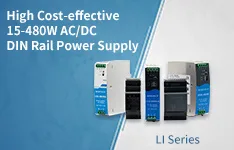
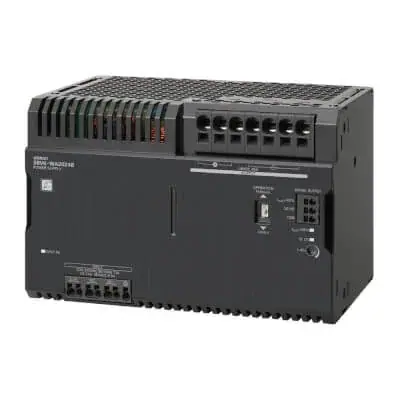
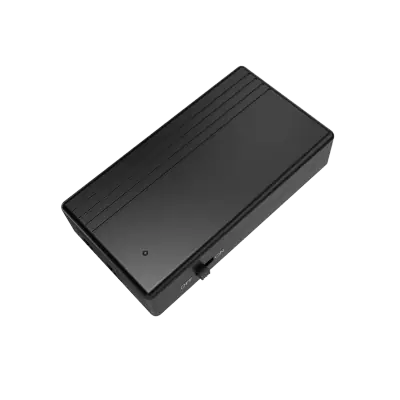
High-efficiency DIN rail stages further contain heat dissipation. The MORNSUN 15-480 W DIN rail AC/DC supply reaches up to 94% efficiency, while the Omron S8VK-WA20248-SPI delivers 2000 W at 48 V DC with 96 % efficiency across a 170-264 V AC input range. On the DC backup side, the RAKwireless 920415 mini UPS specifies at least 75% charging transfer efficiency and at least 85% discharging transfer efficiency at 12 V±5% output.
Battery management systems, charging currents, and cold-cabinet limits
Battery management determines reserve reliability under industrial temperature swings. Large AC UPS inverters typically rely on high-voltage series battery strings that demand strict cell balancing and dedicated cabinet ventilation. Conversely, a DC UPS supervises a single low-voltage rail, regulating charge current, enforcing deep-discharge cutoffs, and exposing clear charging or low-power status indicators without high-voltage battery string complexity.
Buyers must verify exact thermal and electrical thresholds in each datasheet prior to ordering. The MORNSUN 15-480 W power supply operates down to -40 °C or lower, whereas the RAKwireless 920415 DC UPS is rated down to -20 °C minimum, with a 350 mA ± 10% charging current and Red LED status signaling for input and output states. On Seeed Studio 103060001, the 12 V @4 A DC jack or PoE input takes priority.
DIN rail footprint, cabinet wiring, and electromagnetic immunity
Physical space on the mounting rail often dictates the final topology in compact control cabinets. An AC UPS inverter consumes rack units or floor space alongside AC distribution breakers and downstream DIN rail converters. By contrast, native DC power and backup modules snap directly onto standard DIN rails, keeping high-voltage AC wiring confined to the incoming breaker zone.
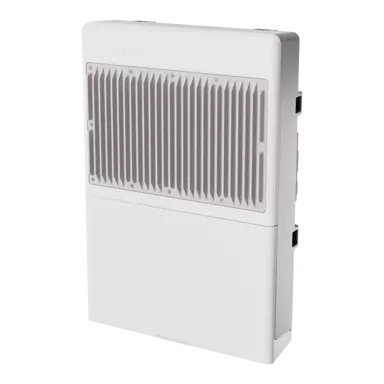
Both MORNSUN 15-480 W and Omron S8VK-WA20248-SPI feature DIN rail mounting, with coated construction on the Omron unit for harsh atmospheres. In electrically noisy cabinets, MORNSUN 15-480 W provides CLASS B electromagnetic compatibility, 10 V/m industry standard interference immunity, and interference radiation strength close to 300 V at 10 cm. Embedding UPS functions inside edge switches like MikroTik NETPOWERLITEUPS further removes separate backup enclosures from crowded DIN rails.
Atlas Electronics DC UPS, industrial UPS, and DIN rail power supplies
Atlas Electronics supplies complementary power and backup units on quotation across three industrial categories. For primary rectification, MORNSUN 15-480 W provides DIN rail mounting, -40 °C minimum operation, and up to 94% efficiency, while Omron S8VK-WA20248-SPI supplies 2000 W at 48 V DC with 96 % efficiency and coated DIN rail construction for demanding 48 V power buses.
In the DC UPS family, RAKwireless 920415 backs up compact 12 V±5% DC loads. Within Industrial UPS hardware, MikroTik NETPOWERLITEUPS combines an 8-port Gigabit PoE switch with a built-in UPS, offering 56,000.0 Mbps non blocking Layer 1 capacity and 28,000.0 Mbps non blocking Layer 1 throughput. For field terminals, Seeed Studio 103060001 integrates UPS backup alongside 4 G LTE, CAN bus, RS-485, PoE, and 4 x Antenna holes.
Pre-purchase selection checklist before requesting an industrial power quotation
Before requesting a quotation, map every cabinet load by native input voltage, peak draw, and duty cycle. When controllers, telemetry gateways, and industrial switches accept 12 V, 24 V, or 48 V DC, or PoE, selecting a DC UPS paired with a properly sized DIN rail AC/DC supply eliminates the losses and bulk of a central 230 V AC UPS inverter.
Verify key parameters directly in each manufacturer datasheet: allowable AC input voltage such as 170-264 V on Omron S8VK-WA20248-SPI, battery charging current headroom, minimum operating temperature (-20 °C or -40 °C), charging and discharging efficiency, and EMC rating such as CLASS B and 10 V/m immunity. If strict AC-only loads remain inside the rack, isolate them on a compact dedicated AC inverter branch.
Frequently asked questions
When should an industrial rack use a native DC UPS instead of a 230 V AC UPS inverter?
A native DC UPS is preferable whenever controllers, telemetry gateways, and industrial switches operate on 12 V, 24 V, 48 V DC, or PoE, eliminating the losses of converting DC battery power to 230 V AC and rectifying it back down.
How does conversion efficiency compare between DIN rail DC architectures and AC UPS inverters?
High-efficiency DIN rail AC/DC supplies such as MORNSUN 15-480 W (up to 94%) and Omron S8VK-WA20248-SPI (96 % at 48 V) feed DC loads directly without an AC inverter stage. For DC battery modules like RAKwireless 920415, check charging efficiency (≥75%) and discharging efficiency (≥85%) in the datasheet.
Which battery management and temperature specs should buyers verify in the datasheet?
Check minimum operating temperature (-40 °C or lower on MORNSUN 15-480 W, -20 °C on RAKwireless 920415), charging current (350 mA ± 10% on RAKwireless 920415), Red LED charging and low-power indicators, and input prioritization between DC Jack 12 V @4 A and PoE on Seeed Studio 103060001.
Can UPS backup be integrated directly into industrial network switches or edge terminals?
Yes. Hardware in the Industrial UPS family embeds backup directly into network or terminal nodes, such as the 8-port Gigabit PoE switch MikroTik NETPOWERLITEUPS or the Seeed Studio 103060001 expansion board featuring CAN bus, RS-485, PoE, and 4 G LTE.
Products mentioned
netPower Lite 8P
Industrial UPS
8-port Gigabit PoE industrial switch with built-in UPS
- 64 byte
- Mbps
Price on request
15-480W LI
DIN Rail AC/DC Industrial Power Supplies (Mean Well)
High-performance AC/DC DIN rail power supply · Ref. : 15-480W
- up to 94%
- CLASS B
- 10V/m
Price on request
S8VK-WA20248-SPI
DIN Rail AC/DC Industrial Power Supplies (Mean Well)
DIN rail AC/DC industrial power supply 2000 W 48 V · Ref. : S8VK-WA20248-SPI
- 170-264 V
- 96 %
- Coated
Price on request
UPS1201A
DC UPS
Mini UPS with 12V DC output · Ref. : 920415
- LED Status Indicator
Price on request
reTerminal E10-1
Industrial UPS
UPS and PoE expansion board for industrial terminal · Ref. : 103060001
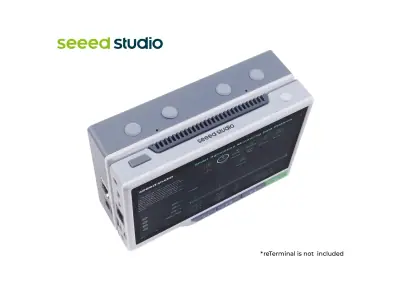
- 140mm x 95mm x 30mm
- 3 x LEDs
- Two Analog Microphones
Price on request
A project? Our engineers build the solution with you.
Send your requirements: Atlas proposes the architecture, the bill of materials and a quotation, then follows the supply.
Request a quotationRelated pages
 ProjectDIN-Rail 24 VDC Power Supplies & Industrial ConvertersOn-quotation guide for 12/24/48 VDC DIN-rail power supplies and industrial converters: inrush margin, thermal derating, PFC, redundancy.
 ArticleEMC Directive 2014/30/EU and EN 61000 standards in industrial cabinetsTechnical compliance guide to EMC Directive 2014/30/EU and EN 61000 immunity and emission rules for industrial control cabinet integration.
 Use caseEV Charging in Automotive & Electric MobilityHardware architecture and field deployment guide addressing operational requirements. Certified industrial hardware, custom integration, and supply on quotation.
 Use caseEV Charging in Electronics & OEM/ODMHardware architecture and field deployment guide addressing operational requirements. Certified industrial hardware, custom integration, and supply on quotation.
 Use caseEV Charging in Retail & CommerceHardware architecture and field deployment guide addressing operational requirements. Certified industrial hardware, custom integration, and supply on quotation.
 Use caseEV Charging in Telecom & NetworksHardware architecture and field deployment guide addressing operational requirements. Certified industrial hardware, custom integration, and supply on quotation.
 OfferEV Charging kit for Automotive & Electric MobilityComplete hardware package ready for industrial deployment. Verified components, architecture review by Atlas engineering desk, and procurement on quotation.
 OfferEV Charging kit for Electronics & OEM/ODMComplete hardware package ready for industrial deployment. Verified components, architecture review by Atlas engineering desk, and procurement on quotation.