
IEEE 802.3af, 802.3at, and 802.3bt PoE vs dedicated DIN rail power
Power over Ethernet delivers data and nominal 48 to 57 VDC power over standard twisted-pair cabling. Under IEEE 802.3af, power sourcing equipment supplies up to 15.4 W so a powered device receives 12.95 W. IEEE 802.3at raises output to 30 W for 25.5 W at the endpoint, while four-pair IEEE 802.3bt scales to 60 W or 90 W at the port, yielding 51 W or 71.3 W usable power.
By contrast, local power architectures using DIN Rail AC/DC Industrial Power Supplies (Mean Well) convert mains AC directly to 12 VDC, 24 VDC, or 48 VDC inside the cabinet. Before requesting supply on quotation, buyers should check each datasheet for required PoE type, DC input range, and ambient derating margins.
PoE power budgeting and network switch electrical sizing
Sizing a PoE switch goes beyond counting ports; it requires calculating total simultaneous power draw across every connected device. Eight endpoints drawing 30 W each demand 240 W of continuous power budget without triggering port prioritization shutdowns. For dense multi-gigabit access layers, the Ruckus Networks 8200-24XP2 provides twenty-four PoE ports, a maximum aggregate stack bandwidth of 1200 Gb/s, plus VPN, BGP, and EEE support.
When high-bandwidth endpoints require 10 G PoE++ power, the Netgear MS510TXUP combines eight multi-gigabit PoE++ ports, a 16 Mbit buffer, DoS prevention, and a 33.0 dBA acoustic rating from 0 °C or higher. For harsh industrial enclosures without forced airflow, the Axiomtek TEN300-0800-H brings DIN rail PoE down to -40 °C or lower with a 4 K MAC address table in a 45 x 75 x 100 mm housing.
Voltage drop on long copper runs and cable bundle heating
Over a 100-meter twisted-pair channel, conductor loop resistance causes DC voltage drop proportional to load current. Starting from 48 to 57 VDC, resistive losses lower the voltage arriving at the powered device and consume part of the allocated port wattage inside the cable. Under high-current IEEE 802.3bt operation across all four pairs, tightly packed cable bundles also experience measurable temperature rise.
Once link distances exceed 100 meters or transition to fiber-optic backbones, PoE can no longer carry energy from the core switch. Deploying DIN Rail AC/DC Industrial Power Supplies (Mean Well) inside remote field enclosures places conversion close to the load, provided buyers check conductor gauge, loop voltage drop, and enclosure thermal limits in the datasheet.
Cabling trade-offs, PoE injectors, and legacy non-PoE endpoints
The primary cabling advantage of PoE is eliminating separate AC conduit runs, local breakers, and outlet boxes for ceiling access points or perimeter cameras. One structured RJ-45 cable handles both connectivity and power. Conversely, when a machine control panel already carries a 24 VDC bus, local power avoids replacing functional non-PoE switches already installed on the DIN rail.
To bridge legacy 5 VDC or 12 VDC devices onto a PoE network without pulling separate power lines, the PoE Injectors family offers compact adaptation. The D-Link DWL-P200 kit accepts 48VDC at 400 mA over RJ-45, passes 10/100 Mbps data on pins 1, 2, 3, and 6, and provides DIP switch selectable 5VDC or 12VDC output in an 81 x 52 x 28 mm base unit.
Power resilience, fault isolation, and industrial EMC immunity
Centralized PoE lets one uninterruptible power supply in the distribution rack back up dozens of remote endpoints while enabling remote port power-cycling for frozen devices. However, a switch power supply fault interrupts every attached device simultaneously. Local power isolates faults per enclosure and simplifies independent dual-bus redundancy on critical automation nodes.
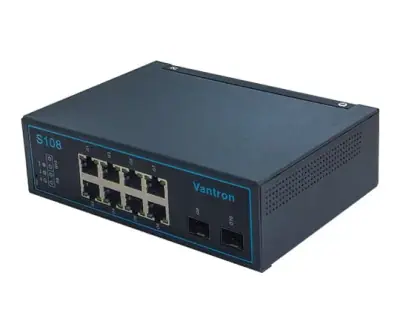
In electrically noisy plants, locally powered industrial switches focus on mechanical and surge resilience. The Vantron S108 eight-port Gigabit switch operates from -20℃ to +70℃ with IEC61000-4-2 immunity of ±6 kV contact and ±8 kV air, plus IEC61000-4-5 surge ratings of ±2 kV common mode. The fanless D-Link DIS-100E-8 W eight-port Fast Ethernet DIN rail metal switch specifies IEC60068-2-32 free fall, IEC60068-2-27 shock, and IEC60068-2-6 vibration limits.
Pre-quotation selection checklist for your network power architecture
Selecting between PoE and local power comes down to load wattage, reach, and cabinet environment. Choose PoE when endpoints remain under 60 to 70 W, sit within 100 meters over copper, and benefit from centralized backup. Specify local DIN Rail AC/DC Industrial Power Supplies (Mean Well) for fiber-linked cabinets, higher-wattage peripherals, or panels already wired with regulated 24 VDC.
Before requesting supply on quotation from Atlas Electronics, buyers should verify minimum operating temperature, EMI standards such as EN 61000-6-4 or FCC Part 15B Class A, MAC table size, and galvanic isolation in each datasheet. Hybrid topologies frequently pair central PoE switching with locally powered DIN rail nodes and targeted PoE adaptation.
Frequently asked questions
How do you calculate the real PoE power budget for an industrial switch?
Sum the maximum wattage of every powered device simultaneously connected, add roughly 15 to 20 percent for cable resistive losses over 100-meter runs, and compare that total against the switch simultaneous PoE budget in its datasheet rather than multiplying port count by per-port peak output. For high-density deployments such as the Ruckus Networks 8200-24XP2 or 10 G PoE++ uplinks on the Netgear MS510TXUP, also check ambient temperature derating before requesting supply on quotation.
When does cable voltage drop limit IEEE 802.3af/at/bt PoE deployments?
Twisted-pair copper links are limited to 100 meters, and conductor loop resistance reduces the 48 to 57 VDC source voltage along the run, especially under higher IEEE 802.3at and 802.3bt currents. Using thicker 23 AWG conductors lowers losses and bundle heating, while links beyond 100 meters require fiber optics paired with local DIN Rail AC/DC Industrial Power Supplies (Mean Well) inside the remote enclosure.
How can a non-PoE 5 VDC or 12 VDC device run from a PoE network link?
An inline PoE splitter from the PoE Injectors family extracts DC power from the Ethernet cable for legacy endpoints. For example, the D-Link DWL-P200 accepts 48VDC at 400 mA over RJ-45, passes 10/100 Mbps data across pins 1, 2, 3, and 6, and provides DIP switch selectable 5VDC or 12VDC output, provided the endpoint current draw fits within the adapter datasheet limits.
When is local DIN rail power preferable to centralized PoE switching?
Local DIN rail power is preferable when enclosures rely on fiber uplinks, when endpoint loads exceed the 71.3 W ceiling of IEEE 802.3bt Type 4, when machine cabinets already distribute regulated 24 VDC, or when fault isolation between nodes is required. Locally powered switches such as the Vantron S108 or D-Link DIS-100E-8 W pair naturally with dedicated cabinet supplies, whereas the Axiomtek TEN300-0800-H serves -40 °C DIN rail sites needing PoE.
Products mentioned
TEN300-0800-H
Industrial Ethernet Switches, PoE & TSN Networking
Industrial Gigabit Ethernet switch
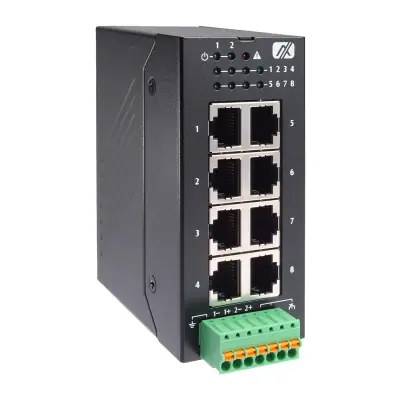
- 4K MAC addresses
Price on request
DIS-100E-8W
Industrial Ethernet Switches, PoE & TSN Networking
Industrial unmanaged Fast Ethernet switch, 8 ports · Ref. : DIS-100E-8W
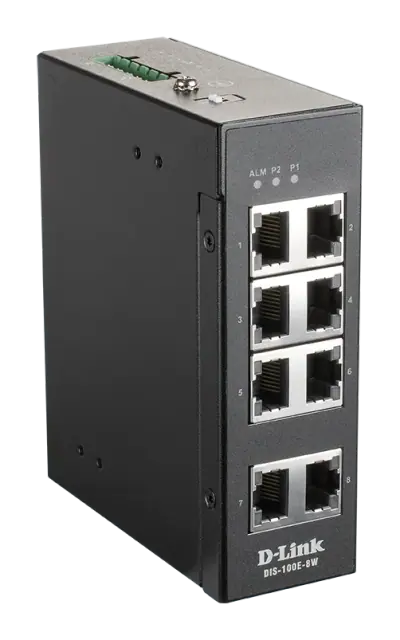
- Supported
- DIN rail
- Metal
Price on request
DWL-P200
PoE Injectors
Power over Ethernet adapter kit for cameras and access points · Ref. : DWL-P200
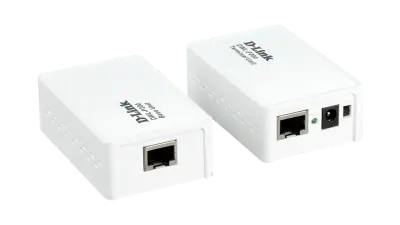
- 81 x 52 x 28 mm
- RJ-45
- pins 1, 2, 3, 6
Price on request
MS510TXUP
Industrial Ethernet Switches, PoE & TSN Networking
8-port multi-gigabit 10G PoE++ managed Ethernet switch · Ref. : MS510TXUP
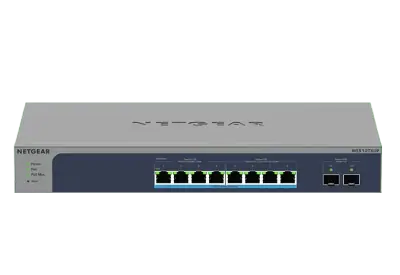
- 33.0 dBA
- 16Mbit
- Yes
Price on request
ICX8200-24XP2
Industrial Ethernet Switches, PoE & TSN Networking
24-Port Multigigabit PoE Access Ethernet Switch · Ref. : 8200-24XP2

- 1200 Gb/s
- Yes
- No
Price on request
S108
Industrial Ethernet Switches, PoE & TSN Networking
Industrial Gigabit unmanaged switch, 8 ports
- 10V/m (80MHz~2GHz)
- -20℃ ~ +70℃
Price on request
A project? Our engineers build the solution with you.
Send your requirements: Atlas proposes the architecture, the bill of materials and a quotation, then follows the supply.
Request a quotationRelated pages
 ArticleEMC Directive 2014/30/EU and EN 61000 standards in industrial cabinetsTechnical compliance guide to EMC Directive 2014/30/EU and EN 61000 immunity and emission rules for industrial control cabinet integration.
 Use caseEnergy & Metering in Telecom & NetworksHardware architecture and field deployment guide addressing operational requirements. Certified industrial hardware, custom integration, and supply on quotation.
 Use caseTelecom & Remote Sites in Telecom & NetworksHardware architecture and field deployment guide addressing operational requirements. Certified industrial hardware, custom integration, and supply on quotation.
 ProjectIndustrial Ethernet & PoE/PoE++ DIN-Rail SwitchesCompare industrial Ethernet and PoE DIN-rail switches by PoE budget, RSTP/ERPS ring redundancy, SFP fiber uplinks, and 12-48 VDC power input.
- ArticleUnmanaged vs L2 managed industrial PoE switch: how to chooseCompare unmanaged and L2 managed industrial PoE switches on 802.1Q VLANs, RSTP/ERPS rings, PoE watchdog, and 12-48 VDC boost input.
 ArticleWhat is an industrial Ethernet switch? DIN-rail, ring and PoEThis technical guide explains industrial Ethernet switch architecture, covering DIN-rail thermal ratings, dual DC power, ring failover, and PoE.
 Use caseDigital Signage and LED Walls in Telecom & NetworksHardware architecture and field deployment guide addressing operational requirements. Certified industrial hardware, custom integration, and supply on quotation.
 Use caseEV Charging in Automotive & Electric MobilityHardware architecture and field deployment guide addressing operational requirements. Certified industrial hardware, custom integration, and supply on quotation.