
Objective and hardware prerequisites
This guide details the procedure for connecting, configuring, and commissioning industrial communication hardware. Prior to starting, ensure you have device datasheets, appropriate communication cables, and a regulated 24VDC power supply.
Always de-energize the main cabinet supply before handling DIN-rail wiring to prevent accidental electrical short circuits.
Prepare a dedicated engineering laptop equipped with diagnostic tools and a direct Ethernet interface.
Datasheet review and physical wiring
Carefully inspect the manufacturer wiring schematic. Identify positive and negative power terminals as well as signal polarity (A and B lines for RS-485, or RX and TX for point-to-point serial links).
The Innodisk EXMU-X261 (FPGA Development Boards) addresses these field integration requirements and connects seamlessly to industrial networks.
The Seeed Studio 114992325 (FPGA Development Boards) addresses these field integration requirements and connects seamlessly to industrial networks.
Secure conductors respecting recommended terminal block screw torque. Ground cable shielding to functional earth at a single termination point to prevent ground loop formation.
Communication parameter configuration
Access the gateway or controller configuration interface through a web browser or dedicated diagnostic utility. Set the baud rate, parity, and stop bit values to match attached field instruments precisely.
Assign a static IP address within the local industrial subnet plan. Disable unused network services to reinforce device operational security.
Always export a verified configuration backup prior to committing changes into permanent flash storage.
Security recommended practices and network hardening
Deploying networked hardware requires rigorous security practices: immediate replacement of factory default credentials, closing non-essential ports (such as Telnet or unencrypted HTTP), and enforcing encrypted protocols exclusively (SSH, HTTPS).
Assigning equipment to an isolated industrial VLAN segregates automation traffic from administrative office networks, minimizing intrusion vectors.
Functional testing and validation
Power up the system and monitor LED diagnostic indicators (status, power, and communication activity). Execute Modbus register read queries to confirm accurate telemetry reception.
Perform a simulated power interruption test to ensure the hardware boots cleanly and re-establishes communication sessions automatically upon restoration.
Atlas technical assistance and review
If you encounter configuration difficulties or abnormal bus behavior, Atlas application engineers provide dedicated assistance. We assist in diagnosing root causes and validating configuration compliance.
We provide all required industrial cables, gateways, and protection units on quotation. Contact our team to support your procurement needs.
Step by step
Inventory and requirements audit
List all field devices to connect, their communication protocols, and site environmental constraints to prepare integration.
Hardware selection and sizing
Validate the electrical schematic, confirm power budgets, and select appropriate gateways and power supplies meeting production needs.
Cabinet mounting and wiring
Mount modules onto TS-35 DIN rails, connect regulated 24VDC power feeds, and terminate communication buses according to EMC guidelines.
Software configuration and addressing
Configure static IP addresses, serial communication parameters, and network security credentials inside device firmware.
Acceptance testing and commissioning
Verify live telemetry reception, test communication interruption recovery, and validate overall operation across the operational site.
Frequently asked questions
How can I obtain a quotation for this hardware?
Submit your bill of materials or operational requirements to our engineers. Atlas provides a comprehensive quotation covering all hardware and support.
Is this hardware compliant with industrial standards?
Yes, all selected devices meet rigorous industrial standards for electromagnetic compatibility, temperature resilience, and electrical isolation.
Does Atlas provide integration support?
Our application engineers verify the technical coherence of your hardware architecture and advise you on selecting necessary wiring accessories.
What prerequisites are required for commissioning?
You must provide a regulated power source matching device specifications and establish an addressing plan for devices on the local network.
Products mentioned
PYNQ-Z2
FPGA Development Boards
Zynq FPGA Development Board with Python Support · Ref. : DFR0600
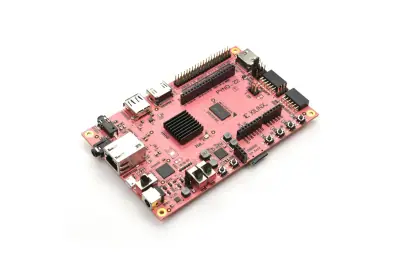
- 87mm*138mm/3.43”*5.43"
Price on request
EXMU-X261
FPGA Development Boards
Machine vision FPGA kit with Kria K26 SOM · Ref. : EXMU-X261
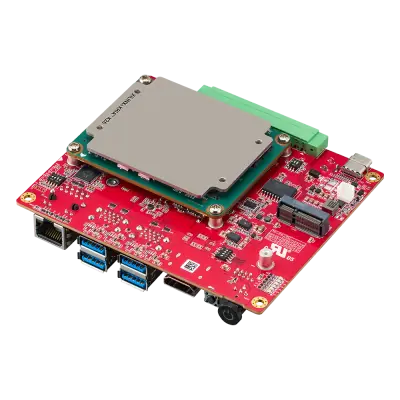
Price on request
Tang Nano 9K
FPGA Development Boards
Gowin FPGA development board with 8640 LUT4 · Ref. : GW1NR-9
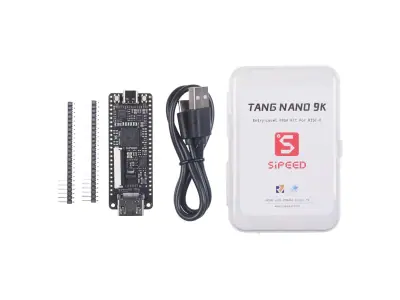
Price on request
102110277
FPGA Development Boards
Xilinx Artix-7 RISC-V open source FPGA development board
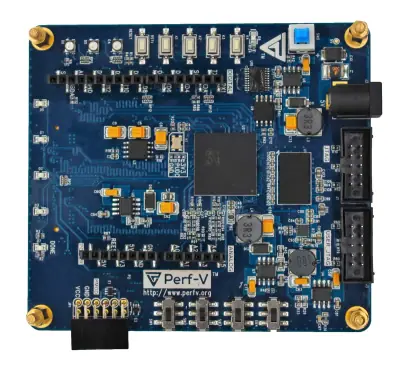
- 256MB(16Megx16x8Banks)
- 8MB(64Mbit)
Price on request
STEMlab 125-14
FPGA Development Boards
Zynq 7010 FPGA Diagnostic Kit with 14-bit 125 MS/s ADC · Ref. : 102060146
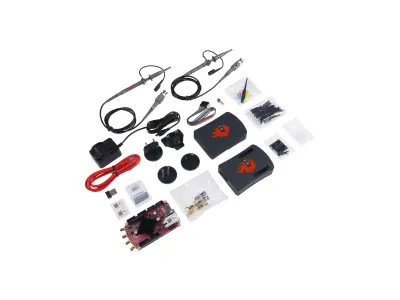
- MicroSD up to 32GB
- Xilinx Zynq 7010
- +5V, +3.3V, -4V
Price on request
GW1N-UV4LQ144
FPGA Development Boards
Gowin RUNBER FPGA Development Board · Ref. : 114992325
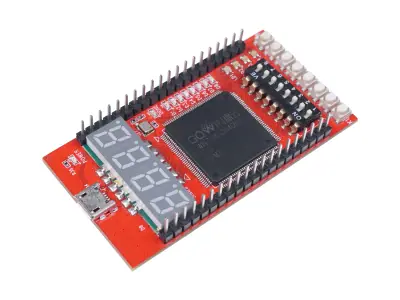
- 180K
- built-in flash
- 12MHz
Price on request
XC3S500E
FPGA Development Boards
XC3S500E FPGA core board with Xilinx Spartan-3E 500K LE and JTAG · Ref. : XC3S500E
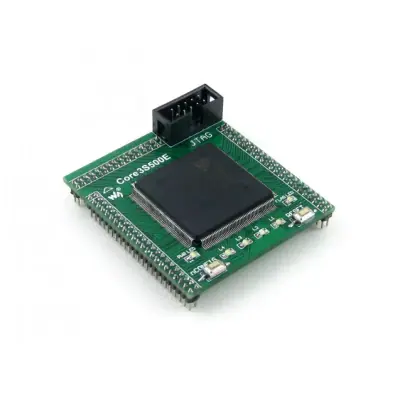
Price on request
Core3S250E
FPGA Development Boards
XC3S250E FPGA core board Xilinx Spartan-3E · Ref. : XC3S250E
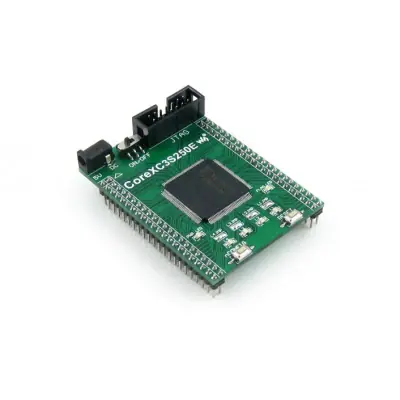
Price on request
A project? Our engineers build the solution with you.
Send your requirements: Atlas proposes the architecture, the bill of materials and a quotation, then follows the supply.
Request a quotationRelated pages
 ProjectMCU & FPGA Development Boards for Embedded PrototypingCompare MCU and FPGA development boards on JTAG/SWD debuggers, logic density, pinout headers, SDK toolchains, and Atlas Electronics quotation.
 ArticleWhat is an FPGA board? Logic cells, transceivers and selection criteriaThis guide explains how an FPGA board works, breaks down its hardware resources, and details technical criteria for board selection.