
Global vs Rolling Shutter CMOS Sensors and Line Scan Machine Vision Cameras
Selecting among machine vision cameras begins with the CMOS sensor architecture and exposure method. On fast conveyors, global shutter exposes every pixel simultaneously, eliminating motion skew on moving targets. Rolling shutter reads rows sequentially and fits static cells or indexed parts paused during capture. For continuous inspection of wide webs, paper, foil, or cylindrical surfaces, line scan cameras capture single pixel rows at high line rates synchronized with an encoder to build distortion-free images.
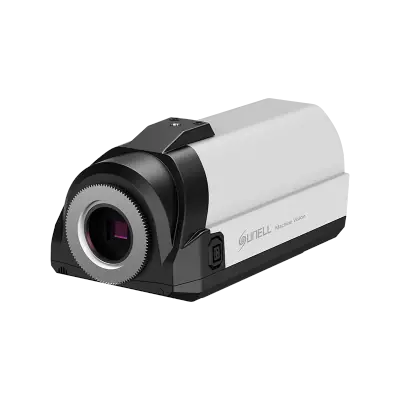
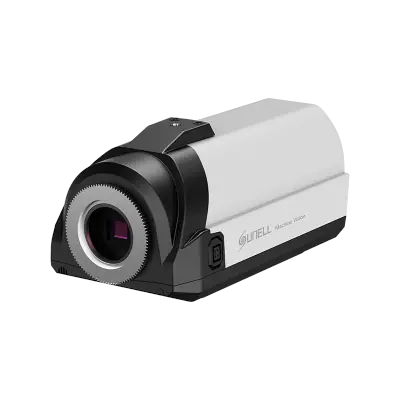
When reviewing datasheets for GigE and USB3 machine vision industrial cameras, buyers should check pixel pitch in micrometers, dynamic range, and spectral quantum efficiency. Within this category, the Sunell SN-MV1120HAN-F delivers 12 MP resolution for fine surface inspection, while the Sunell SN-MV1040HAN-F provides 4 MP resolution with integrated AI analytics for automated classification directly at the inspection point.
Frame Rate, Trigger Latency and GigE vs USB3 Camera Interfaces
Frame rate and hardware trigger latency determine the maximum cycle rate of an automated inspection station. GigE cameras carry image frames over standard Ethernet cabling up to one hundred meters with PoE power, simplifying cabinet and gantry wiring. Conversely, USB3 interfaces prioritize high throughput over short cable runs with minimal transfer jitter toward the host vision processor.
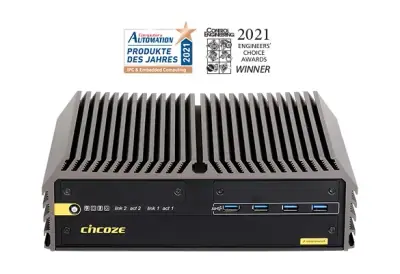
For multi-camera GigE networks running Edge AI inference, the Cincoze 9TH/8TH embedded GPU computer provides 3 to 4 Ethernet ports with PoE support, a CAN bus interface, DIN rail mounting, 4 G LTE with dual SIM, and one MXM 3.1 GPU expansion socket. Both the Sunell SN-MV1120HAN-F and Sunell SN-MV1040HAN-F include one PoE Ethernet port, RS-485 serial communication, and a -30 °C minimum operating temperature, which buyers must confirm against enclosure ratings.
C-Mount Focal Length Calculation and Machine Vision Lens Sizing
Sizing machine vision lenses on a C-mount interface relies on the geometric ratio between physical sensor dimensions, required field of view, and working distance. Focal length equals sensor width multiplied by working distance divided by field width. Integrators must also verify that the lens image circle covers the full CMOS sensor diagonal so corners do not suffer vignetting or edge contrast loss.
When mounting optics on industrial enclosures measuring 152.9 × 74.4 × 69.7 mm such as the Sunell SN-MV1120HAN-F or Sunell SN-MV1040HAN-F, engineers should inspect the datasheet for flange focal distance, minimum object distance, and resolving power in line pairs per millimeter. Telecentric machine vision lenses remain essential whenever part height variations would otherwise alter apparent magnification during dimensional gauging.
Structured Machine Vision Lighting, 3D Time-of-Flight and Thermal Inspection
Proper machine vision lighting maximizes defect contrast while allowing shorter exposure times on high-speed lines. Low-angle ring lights highlight surface scratches, diffuse domes suppress glare on polished metal, and collimated backlights create sharp silhouettes for gauging. Alongside two-dimensional optics, 3D cameras and time-of-flight cameras capture height profiles and volumetric measurements without mechanical contact.
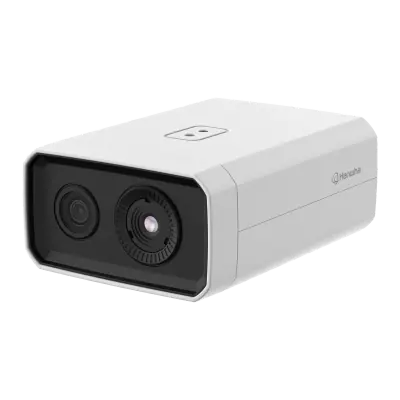
The Seeed Studio 101990657 time-of-flight camera pairs 850 nm illumination with a USB 3.0 interface, delivering depth accuracy within 1%, distortion under 2.5%, an 86° horizontal by 68° vertical field of view, and a 5 to 30 fps frame rate inside a 63.00 × 24.00 × 37.80 mm housing. For thermal process monitoring, the Hanwha Vision TNM-C3620TDR-CA combines 320 × 240 thermal and 2 MP visible imaging with PoE, CAN bus, and MQTT from -10 °C.
Network Security, Industrial Integration and Machine Vision Quotation
Beyond optical resolution, plant deployment requires deterministic PoE power budgets, isolated trigger wiring, and network access control compatible with industrial automation zones. The Sunell SN-MV1120HAN-F and Sunell SN-MV1040HAN-F implement IP-based access control with automatic logout, while the Hanwha Vision TNM-C3620TDR-CA provides IP-based access control alongside MQTT telemetry and CAN bus integration for supervisory systems.
Every assembly combining machine vision cameras, machine vision lenses, machine vision lighting, and the Cincoze 9TH/8TH GPU host is supplied strictly on quotation. To prepare an accurate bill of materials, share your target field of view, line speed, required spatial precision, mechanical envelope, and PLC interfaces, and check environmental ingress ratings and operating temperature limits in each product datasheet.
Frequently asked questions
How do I choose between a global shutter and a rolling shutter camera on a conveyor?
Global shutter exposes every pixel at the same instant, preventing geometric skew on fast-moving targets. Rolling shutter suits parts held stationary during capture or low-speed indexing cells. Always check the shutter architecture and minimum exposure time in the sensor datasheet.
How do I calculate the focal length of a C-mount machine vision lens?
Multiply the physical sensor width by the working distance, then divide by the required horizontal field of view. Also check in the lens datasheet that the image circle exceeds the sensor diagonal and that the flange focal distance matches the C-mount specification.
When should I select a GigE PoE camera instead of a USB 3.0 camera?
A GigE PoE camera such as the Sunell SN-MV1120HAN-F or Sunell SN-MV1040HAN-F supports Ethernet cable runs up to one hundred meters with power over a single cable. A USB 3.0 interface, featured on the Seeed Studio 101990657 3D ToF camera, fits compact setups with short cable lengths to a local host.
What parameters are needed to request a quotation for a machine vision setup?
Provide your target field of view, required pixel precision, line speed, available working distance, ambient temperature constraints, and host or PLC interfaces. This information allows Atlas Electronics to prepare a complete supply quotation covering cameras, lenses, illumination, and Edge AI compute.
Products mentioned
9TH/8TH
GigE & USB3 Machine Vision Industrial Cameras
Embedded GPU computer Intel Xeon/Core, MXM 3.1 socket
- CB-DP05/UB1336
Price on request
TNM-C3620TDR
Thermal Imaging Cameras
Bi-spectrum AI thermal camera, 320x240 thermal and 2 MP visible · Ref. : TNM-C3620TDR-CA
Price on request
TNM-C3620TDR
Thermal Imaging Cameras
Bi-spectrum IP thermal camera with AI analytics · Ref. : TNM-C3620TDR
- Object detection
- 87.6°
- S, T, M
Price on request
OPNCAM8008 Hawk 588-1MA-UA
Time-of-Flight Cameras
850 nm 3D ToF camera with USB 3.0 interface · Ref. : 101990657
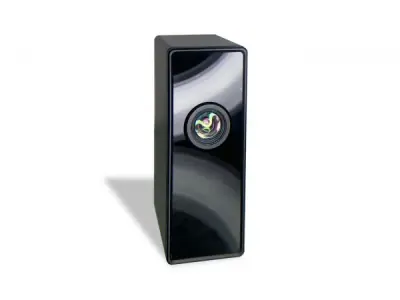
- <=1%
- <2.5%
- 86° (H) * 68° (V)
Price on request
SN-MV1040HAN-F
GigE & USB3 Machine Vision Industrial Cameras
4MP Machine Vision Network Camera with AI Analytics · Ref. : SN-MV1040HAN-F
Price on request
SN-MV1120HAN-F
GigE & USB3 Machine Vision Industrial Cameras
12 MP GigE machine vision industrial camera · Ref. : SN-MV1120HAN-F
Price on request
A project? Our engineers build the solution with you.
Send your requirements: Atlas proposes the architecture, the bill of materials and a quotation, then follows the supply.
Request a quotationRelated pages
 ArticleWhat is a machine vision camera? Sensors, shutter and interfacesThis technical guide defines machine vision cameras and details sensors, shutter modes, interfaces, and selection criteria on quotation.
 ArticleGigE Vision vs USB3 Vision cameras for automated optical inspectionThis pre-purchase guide compares GigE Vision and USB3 Vision across cabling, bandwidth, CMOS shutters, C-mount lenses, and trigger I/O.
 Use caseAI Visual Inspection in Data Centres & IT InfrastructureHardware architecture and field deployment guide addressing operational requirements. Certified industrial hardware, custom integration, and supply on quotation.
 Use caseAI Visual Inspection in Robotics & AutomationHardware architecture and field deployment guide addressing operational requirements. Certified industrial hardware, custom integration, and supply on quotation.
- OfferAI Visual Inspection kit for Data Centres & IT InfrastructureComplete hardware package ready for industrial deployment. Verified components, architecture review by Atlas engineering desk, and procurement on quotation.
 OfferAI Visual Inspection kit for Robotics & AutomationComplete hardware package ready for industrial deployment. Verified components, architecture review by Atlas engineering desk, and procurement on quotation.
 ProjectFanless Industrial Box PCs & DIN-Rail Edge ComputersTechnical buying guide for fanless box PCs and DIN-rail edge computers: passive cooling, dual LAN, COM ports, NVMe, DC input, and quotation.
 ProjectHardware for Data Centres & IT Infrastructure projectsSource the right industrial hardware for your deployment. Validated architectures, rugged components, bill of materials review, and full supply on quotation.