
Sizing Analog Bandwidth, Sample Rate, and Memory Depth for Digital Oscilloscopes
Proper oscilloscope sizing follows the five-times rule between the highest signal frequency component and the analog bandwidth to preserve fast rising edges without excessive attenuation. To capture transient events without aliasing, the real-time sample rate should exceed four to five times that bandwidth. Deep acquisition memory sustains this maximum sample rate across longer time windows when debugging serial buses, power sequencing, or intermittent hardware faults.
Within the Handheld Oscilloscopes category, the UNI-T UPO2000 and UNI-T UPO3000E cover two distinct performance tiers. The UNI-T UPO2000 provides two analog channels at 100 MHz analog bandwidth, a 2 GSa/s sample rate, and an 8-inch touch screen. For higher-speed digital clocks and faster switching waveforms, the UNI-T UPO3000E raises analog bandwidth to 350 MHz at 2.5 GSa/s across two analog channels.
Ensuring Safety with CAT III and CAT IV Multimeters and Differential Probes
Measurements on industrial distribution panels, motor drives, and primary power supplies require Multimeters and Handheld Multimeters rated for CAT III or CAT IV overvoltage environments under IEC 61010-1. Procurement teams must check the datasheet for maximum working voltage, high-rupture internal fuse ratings, and True RMS capability, which remains essential for accurate current and voltage readings on non-linear loads and variable-frequency drives.
When an oscilloscope is deployed alongside a multimeter on floating nodes or power electronics, galvanic isolation prevents ground loops and hardware damage. Both the UNI-T UPO2000 and UNI-T UPO3000E support a 10:1 and 100:1 differential probe rated at 100 MHz bandwidth, alongside current ranges of 20 A AC/DC up to 25 MHz at 100 mV/A or 0.4 A to 60 A up to 100 kHz at 600 Vrms.
Evaluating Bench and Handheld Spectrum Analyzers for RF Diagnostics
Spectrum analysis becomes indispensable when time-domain waveforms cannot isolate harmonics, intermodulation products, or spurious RF emissions. When comparing Bench Spectrum Analyzers and Handheld Spectrum Analyzers, engineers should evaluate displayed average noise level DANL, phase noise, inherent residual response, and input attenuator step resolution to maintain wide dynamic range when weak signals sit close to strong carriers.
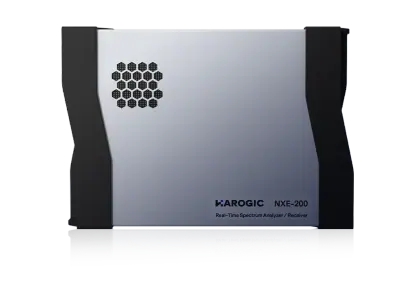
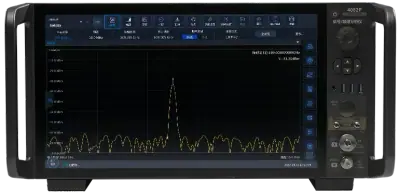
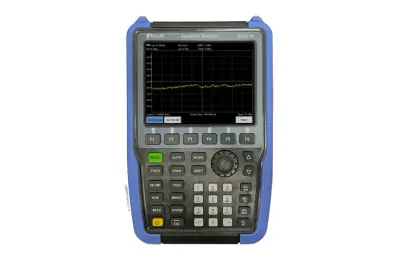
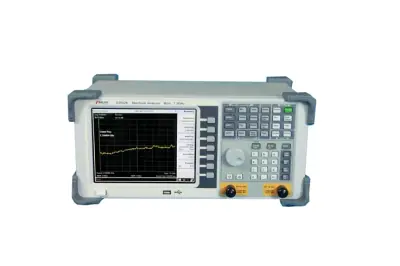
Available on quotation, the Saluki Technology S3532 spans 9 kHz to 3.6 GHz or 7.5 GHz with an 8.4 inch TFT LCD and residual response below -85 dBm above 10 MHz. For field portability, the Saluki Technology S3331 offers four hours of typical battery life. For higher microwave bands, the Harogic NXE-200 reaches 20 GHz with 100 MHz analysis bandwidth, and the Saluki Technology S4082 covers 2 Hz to 110 GHz.
Automating Lab and Production Test Benches via SCPI, Ethernet, and USB
Integrating an oscilloscope, multimeter, or spectrum analyzer into an automated characterization bench relies on standardized hardware buses and SCPI command sets. Deploying Ethernet LAN, USB 2.0, or GPIB links enables software scripts on Linux or Windows hosts to configure timebases, trigger acquisitions, and transfer waveform or spectral traces without manual front-panel intervention during repetitive compliance or production checks.
Among the listed Bench Spectrum Analyzers and Handheld Spectrum Analyzers, the Saluki Technology S3532 and Saluki Technology S3331 provide USB 2.0 and LAN ports suited for remote instrument control. The Harogic NXE-200 utilizes a 1000 M/100 M Ethernet interface supporting both Linux and Windows operating systems, whereas the Saluki Technology S4082 includes an auxiliary IF output selectable at 425 MHz, 750 MHz, or 1.5 GHz alongside 5 G and Wi-Fi capabilities.
Structuring Technical Specifications for On-Quotation Instrument Procurement
Before issuing a request for quotation, engineering teams benefit from documenting electrical operating limits and measurement targets in a clear specification sheet. Key parameters include maximum working voltages, CAT III or CAT IV safety category, required analog bandwidth, channel count, spectral frequency span, and the remote communication interfaces needed for integration into existing laboratory or field workflows.
Buyers must verify probe, attenuator, and power supply compatibility directly in each manufacturer datasheet, such as 600 Vrms differential probe limits, input attenuator steps, or AC 100 to 240 V at 50 to 60 Hz mains input on the Saluki Technology S4082. All Oscilloscopes, Handheld Oscilloscopes, Multimeters, Handheld Multimeters, and Spectrum Analyzers referenced by Atlas Electronics are supplied strictly on quotation.
Frequently asked questions
What is the difference between analog bandwidth and sample rate on a digital oscilloscope?
Analog bandwidth defines the frequency at which an input sine wave is attenuated by 3 dB by the oscilloscope front end, whereas sample rate specifies how many samples per second the analog-to-digital converter captures. To reconstruct fast edges accurately without aliasing, the real-time sample rate should be at least four to five times the analog bandwidth, as seen on the UNI-T UPO2000 at 100 MHz and 2 GSa/s or the UNI-T UPO3000E at 350 MHz and 2.5 GSa/s.
How should buyers choose between CAT III and CAT IV safety ratings for multimeters and probes?
Under IEC 61010-1, CAT III covers fixed building distribution installations such as switchboards, motor control centers, and three-phase industrial feeders, while CAT IV applies to utility-level service entrances and outdoor feeds exposed to higher transient surge energies. Buyers must verify both the rated working voltage and transient withstand rating in the manufacturer datasheet before connecting probes or multimeters to energized circuits.
When does an RF or electronics lab need a spectrum analyzer alongside an oscilloscope?
While an oscilloscope excels at time-domain waveform inspection, timing jitter, and logic transitions, its vertical dynamic range is typically limited compared to a dedicated RF front end. A spectrum analyzer such as the Saluki Technology S3532, Saluki Technology S3331, Harogic NXE-200, or Saluki Technology S4082 is required when measuring low-level spurious emissions, phase noise, or wide microwave spans up to 20 GHz or 110 GHz.
Which instrument interfaces are recommended for SCPI-based test automation?
Ethernet LAN and USB 2.0 are the most widely supported interfaces for sending SCPI commands from Windows or Linux automation controllers. Instruments like the Saluki Technology S3532 and Saluki Technology S3331 include both USB 2.0 and LAN ports, while the Harogic NXE-200 provides a 1000 M/100 M Ethernet interface suited for high-throughput spectral data transfer.
Products mentioned
NXE-200
Bench Spectrum Analyzers
Networked Spectrum Analyzer 9 kHz to 20 GHz · Ref. : NXE-200
Price on request
S4082
Bench Spectrum Analyzers
Signal and spectrum analyzer, 2 Hz to 110 GHz bench model · Ref. : S4082
Price on request
S3331
Handheld Spectrum Analyzers
Handheld spectrum analyzer 9 kHz to 3.6 GHz or 7.5 GHz · Ref. : S3331
Price on request
S3532
Bench Spectrum Analyzers
Bench spectrum analyzer 9 kHz to 3.6 GHz or 7.5 GHz · Ref. : S3532
Price on request
MSO/UPO2000
Handheld Oscilloscopes
100MHz 2GSa/s digital phosphor oscilloscope with 8-inch touch screen · Ref. : UPO2000
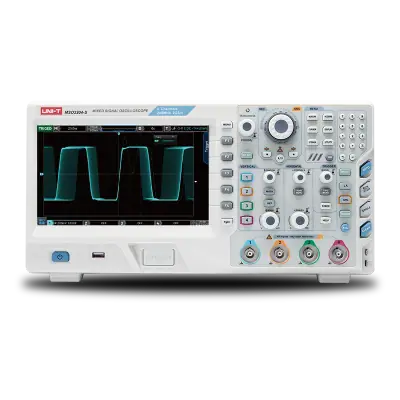
- 100MHz
- /
Price on request
MSO/UPO3000E
Handheld Oscilloscopes
350MHz 2.5GSa/s digital phosphor oscilloscope with 8-inch touch screen · Ref. : UPO3000E
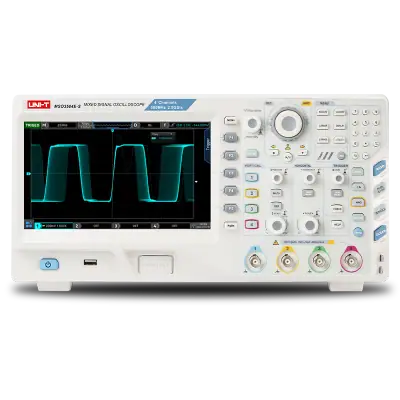
Price on request
A project? Our engineers build the solution with you.
Send your requirements: Atlas proposes the architecture, the bill of materials and a quotation, then follows the supply.
Request a quotation