
Industrial projects requiring dedicated memory modules
Industrial electronics projects span contrasting memory requirements depending on the target hardware architecture. Battery-powered sensor nodes, connected badges, and field loggers rely on low-capacity serial non-volatile devices such as the EEPROM module RAKwireless 100017 or the compact 10 x 10 mm FRAM module RAKwireless 100188. Conversely, telemetry equipment writing frequent measurements turns to high-endurance FRAM options like RAKwireless 100138 or RAKwireless 100216 to avoid cell degradation.
On embedded computers, gateways, and industrial workstations, system designers pair volatile system memory with high-density mass storage. The 240-pin UDIMM Netac DDR3 module serves motherboards requiring predictable memory bandwidth, while the 3D NAND Flash solid-state drive Netac NV7000-T handles operating system and data logging duties over an M.2 2280 PCIe Gen 4x4 slot.
Technical risks of an unsuitable memory selection
Selecting an unsuitable memory part compromises equipment reliability soon after deployment. Using a conventional EEPROM to log telemetry frames every second wears out memory cells rapidly, because an EEPROM like RAKwireless 100017 is rated for 1,000,000 write cycles. Overlooking standby or sleep current limits also drains battery reserves when an autonomous node spends most of its lifecycle in idle states.
Bus protocol mismatches and thermal limits create equally severe integration failures. Confusing I2C and SPI interfaces, misassigning expansion slot I/O pins, or installing a NAND Flash drive such as Netac NV7000-T rated only from 0 °C to 70 °C inside an unconditioned outdoor enclosure leads to intermittent faults, throttling, or silent data corruption during operation.
Endurance, data retention, and power budget criteria
Three electrical and physical metrics distinguish embedded non-volatile memory modules during initial component selection. First, write endurance separates technologies sharply: the EEPROM RAKwireless 100017 supports 1,000,000 write cycles, whereas the FRAM module RAKwireless 100216 reaches 1,000,000,000,000 read and write operations per byte. Second, data retention spans 100 years on RAKwireless 100017, compared with 95 years at +55 °C and 10 years at +85 °C on RAKwireless 100188.
Third, active, standby, and sleep currents govern battery sizing. RAKwireless 100188 caps read and write current at 710 uA with 15 uA in standby, while RAKwireless 100017 draws up to 1 mA during reads and 3 µA in standby. For higher throughput, RAKwireless 100138 and RAKwireless 100216 both peak at 2.6 mA active, dropping to 0.9 uA and 8 uA in sleep mode.
Bus interface, capacity, and thermal operating criteria
The fourth criterion combines bus architecture and usable capacity. For microcontroller boards, I2C connectivity is offered by RAKwireless 100188 at 512 kbit in a 10 x 10 mm package and by RAKwireless 100017 at 2 Mbit. When workloads demand faster transfers, the NVRAM module RAKwireless 100216 supplies 512 kByte and the SPI FRAM module RAKwireless 100138 supplies 1 MB.
The fifth criterion covers mechanical form factor, clock timings, and operating temperature for compute platforms. Netac DDR3 provides 4 GB or 8 GB capacities on a 240-pin UDIMM running at 1600 MHz with PC3-12800 bandwidth and 11-11-11-28 timings. For 3D NAND Flash storage, Netac NV7000-T scales across 512 GB, 1 TB, and 2 TB capacities on M.2 2280 PCIe Gen 4x4 within a 0 °C to 70 °C operating envelope.
Quotation workflow, compatibility checks, and full BOM sourcing
Atlas Electronics processes every memory request strictly on quotation so that supply aligns with your target quantities and technical constraints. Before confirming a purchase order, the buyer must check in each manufacturer datasheet the exact supply voltage rail, serial or parallel bus protocol, expansion slot pin mapping, and minimum to maximum operating temperature limits required by the host board.
Beyond the selected FRAM, EEPROM, DDR3, and NAND Flash line items, Atlas quotes and consolidates the supply of the rest of your electronic bill of materials. Grouping passive components, voltage regulators, connectors, and host carrier boards under a single quotation avoids fragmented procurement across multiple distributors and keeps hardware revisions consistent from initial assembly through production.
Frequently asked questions
How do you choose between EEPROM and FRAM for sensor data logging?
When an application writes configuration parameters infrequently, the EEPROM RAKwireless 100017 provides 2 Mbit over I2C with 1,000,000 write cycles and 100 years of data retention. For continuous telemetry writes, the FRAM RAKwireless 100216 supports 1,000,000,000,000 read and write operations per byte.
Which power consumption figures matter most for a battery-powered memory node?
Always check active, standby, and sleep current limits in the datasheet. For example, RAKwireless 100188 peaks at 710 uA active and 15 uA in standby, whereas RAKwireless 100138 draws up to 2.6 mA active while dropping to 0.9 uA in sleep mode.
What should be checked before integrating a DDR3 module or NAND Flash SSD?
The buyer must check mechanical form factor, bus protocol, and thermal limits in the datasheet. Netac DDR3 uses a 240-pin UDIMM slot at 1600 MHz with 11-11-11-28 timings, whereas Netac NV7000-T requires an M.2 2280 PCIe Gen 4x4 interface and a 0 °C to 70 °C operating range.
Can Atlas Electronics quote the rest of the bill of materials alongside the memory parts?
Yes, memory modules and all companion electronic components are supplied on quotation. Based on your complete list, Atlas consolidates the supply of FRAM, EEPROM, DDR3, or NAND Flash parts together with associated power regulators, connectors, and passive components.
Products mentioned
Basic DDR3-1600
DDR3
DDR3 UDIMM memory module 240-pin PC3-12800 1600 MHz · Ref. : DDR3

- PC3-12800
- Netac
- 8GB / 4GB
Price on request
NV7000-T
NAND Flash
Compact M.2 2280 NVMe PCIe Gen 4x4 SSD

Price on request
RAK15007
FRAM
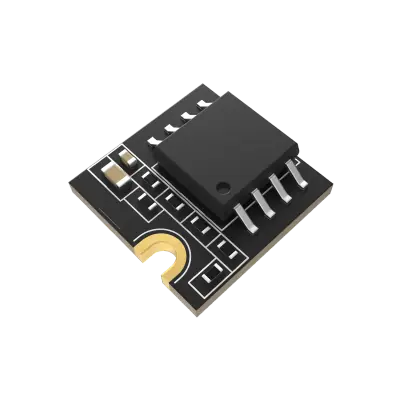
Non-volatile 1 MB FRAM memory module with SPI · Ref. : 100138
Price on request
RAK15000
EEPROM
2 Mbit I2C EEPROM Module for WisBlock · Ref. : 100017

Price on request
RAK15004
FRAM
512 kbit FRAM memory module with I2C interface · Ref. : 100188

Price on request
RAK15006
FRAM
512 kByte FRAM NVRAM memory module · Ref. : 100216

Price on request
A project? Our engineers build the solution with you.
Send your requirements: Atlas proposes the architecture, the bill of materials and a quotation, then follows the supply.
Request a quotation