
Port speeds, optical transceivers, and reach between switches and servers
In data centres and enterprise IT rooms, matching interface speeds between Rackmount Servers and Core and Aggregation Switches prevents east-west bottlenecks under heavy virtualisation traffic. A modular 9-slot chassis such as the D-Link DES-6500 delivers 160 Gbps of backplane switch fabric bandwidth and accepts 50 or 62.5/125 micron multimode fiber alongside 9 micron single-mode links. For compact 1U access racks, the Ubiquiti USW-PRO-48-POE provides 48 Layer 3 PoE++ ports with 10 G SFP+ uplinks.
Selecting SFP and SFP+ Transceivers then depends on cable reach between distribution frames and campus buildings. For 10 km links over 9/125 um single-mode fiber, the D-Link DEM-432XT 10GBase-LR optical transceiver with a blue bail latch conforms to Fibre Channel FC-PI 1200 SM-LL-L and CE, FCC, and VCCI EMI limits. Buyers should verify optical power budgets and fiber specifications in the datasheet.
Rack power budget, thermal dissipation, and Industrial UPS runtime sizing
Planning rack power and cooling requires summing peak draw across Rackmount Servers, PoE++ switch budgets, and rectifier losses. A core switch like the D-Link DES-6500 supports a wide 90 to 264 VAC input at 47 to 63 Hz, simplifying multi-region PDU integration. Inside dense cabinets, 1U switches such as the Ubiquiti USW-PRO-48-POE, measuring 442 x 400 x 44 mm, depend on unobstructed front-to-back airflow to avoid thermal throttling.
To bridge utility outages until generator transfer or orderly host shutdown, Industrial UPS systems must be sized on real kilowatt load and battery autonomy curves. Many rack components, including the Ubiquiti USW-PRO-48-POE and Apacer NVMe modules, specify a minimum operating temperature of 0 °C or higher. Buyers should confirm ambient derating, runtime curves, and cooling clearance in each product datasheet.
Sizing NVMe SSDs for virtualisation density and Edge AI workloads
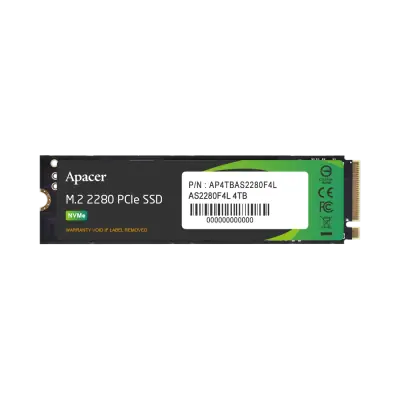
High-density virtualisation, database caching, and Edge AI inference place sustained random write demands on NVMe SSDs installed inside Rackmount Servers. Featuring a PCIe Gen5 x4 interface and 3D NAND flash, the Apacer AS2280F4L M.2 drive scales from 1 TB to 4 TB while reaching up to 1500 K 4 K random write IOPS within an 80.00 x 22.00 x 2.38 mm profile.
When server motherboards use PCIe Gen4 x4 lanes or tighter thermal envelopes, the Apacer AS2280Q4X provides 512 GB to 4 TB capacities and up to 750 K 4 K random write IOPS. Its thickness spans 2.25 mm single-sided at 7.6 g to 3.5 mm double-sided at 10.2 g. Both models carry CE, UKCA, FCC, VCCI, BSMI, and RoHS markings and operate from 0 °C upward. Buyers should verify M.2 clearance and endurance in the datasheet.
Perimeter firewall sizing, VPN encryption, and multi-site segmentation
Securing site-to-site links between central data centres and remote facilities starts with Firewall Appliances dimensioned for encrypted WAN inspection. The Netgear PR30SG Dual WAN Security Gateway integrates a Quad Core ARM A55 processor at 1.8 GHz, 2 GB DDR4 memory, and 16 GB eMMC flash in a 110 mm deep enclosure. It supports VPN tunnels with 3 DES and AES 128/192/256-bit encryption alongside SHA-1, SHA-2 256-bit, and MD5 authentication.
Inside the server rack, perimeter filtering pairs with Layer 3 isolation on Core and Aggregation Switches. The Ubiquiti USW-PRO-48-POE enforces 128 IPv 4 access lists and 128 MAC access lists to separate management planes from tenant VLANs. Buyers should check encrypted VPN throughput, ACL table limits, and routing capacity in vendor datasheets before locking network topologies.
Hardware redundancy and remote management across edge IT deployments
Unmanned edge closets face stricter availability constraints than staffed facilities, demanding dual-path connectivity and out-of-band diagnostics. Using a dedicated WAN port and cloud management, the Netgear PR30SG enables remote failover administration across distributed sites. At the switching core, the D-Link DES-6500 retains an RS-232 serial console port and per-port Link/Act LED indicators, plus 512 KB boot flash and 16 MB runtime flash for resilient recovery.
Power resilience relies on Industrial UPS units equipped with network management interfaces for telemetry and remote load cycling of unresponsive Rackmount Servers. Pairing these power controllers with dual power feeds minimizes downtime during utility disturbances. Dual fiber uplinks populated with redundant SFP and SFP+ Transceivers protect aggregation paths against single module or fiber cuts. Buyers should confirm serial console pinouts, failover timers, and remote power-cycling capabilities in datasheets.
Architectural trade-offs between modular cores and distributed aggregation
Choosing between a centralised modular core and distributed rack aggregation hinges on port growth, rack footprint, and fiber topology. Campus hubs with expanding trunks benefit from the 9-slot D-Link DES-6500 and its 160 Gbps backplane supporting both multimode and single-mode cabling. Space-constrained branch closets instead deploy 1U Ubiquiti USW-PRO-48-POE switches linked across buildings via D-Link DEM-432XT 10 G single-mode optics and redundant patch panels.
Compute and storage layers balance similarly: Apacer AS2280F4L PCIe Gen5 x4 drives target latency-sensitive Edge AI nodes, whereas Apacer AS2280Q4X PCIe Gen4 x4 SSDs fit thermally bounded host slots. Combined with Netgear PR30SG edge gateways, Rackmount Servers, and appropriately rated Industrial UPS units, all six hardware families are supplied on quotation by Atlas Electronics once buyers confirm datasheet budgets and rack clearances.
Frequently asked questions
How should buyers choose between multimode and single-mode SFP and SFP+ Transceivers?
Multimode fiber suits short intra-room runs, whereas 9/125 um single-mode fiber handles extended inter-rack or campus distances. For example, the D-Link DEM-432XT supports 10 km over single-mode fiber. Buyers should confirm optical loss budgets in the datasheet.
When is a PCIe Gen5 x4 NVMe SSD preferable to PCIe Gen4 x4 in Rackmount Servers?
PCIe Gen5 x4 drives such as the Apacer AS2280F4L deliver up to 1500 K 4 K random write IOPS for heavy virtualisation and Edge AI inference. Where slot cooling is constrained, the PCIe Gen4 x4 Apacer AS2280Q4X offers up to 750 K IOPS with lower thermal load.
Which parameters govern Industrial UPS runtime sizing for a server rack?
Sum the active watt draw of Rackmount Servers, PoE++ switching loads, and conversion losses, then verify battery runtime curves in the Industrial UPS datasheet to cover utility transfer to backup generation or graceful host shutdown.
How can unmanned edge IT sites maintain out-of-band resilience?
Combine a cloud-managed dual WAN gateway such as the Netgear PR30SG, a core switch with an RS-232 serial console like the D-Link DES-6500, and networked Industrial UPS load cycling so administrators can recover links remotely.
Products mentioned
AS2280F4L
NVMe SSDs
M.2 PCIe Gen5 x4 NVMe SSD in 3D NAND, 1TB to 4TB
Price on request
AS2280Q4X
NVMe SSDs
M.2 PCIe Gen4 x4 NVMe SSD with 3D NAND Flash · Ref. : AS2280Q4X
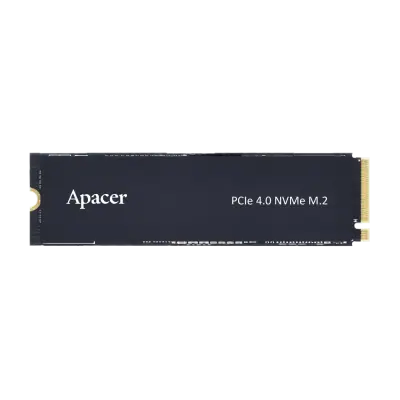
- 512GB/1TB/2TB/4TB
- PCIe Gen4 x4
Price on request
DEM-432XT
SFP and SFP+ Transceivers
10GBase-LR SFP+ single-mode optical transceiver 10 km · Ref. : DEM-432XT
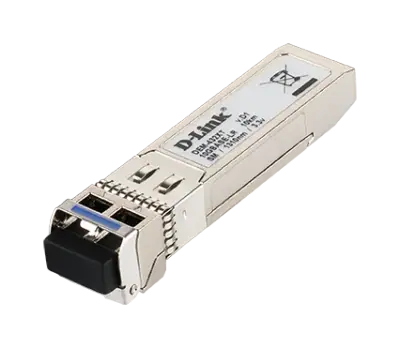
- Blue
- 10Km
- CE, FCC, VCCI
Price on request
DES-6500
Core and Aggregation Switches
9-slot Layer 3 modular chassis switch · Ref. : DES-6500
- 160Gbps
- Link/Act
Price on request
PR30SG
Firewall Appliances
Dual WAN Security Gateway with Cloud Management · Ref. : PR30SG
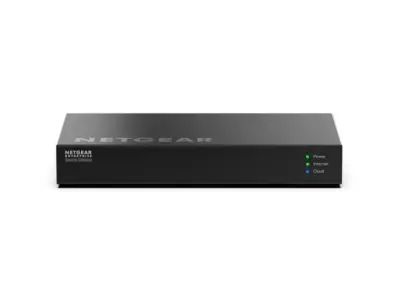
Price on request
USW-Pro-48-POE
Core and Aggregation Switches
48-port Layer 3 Gigabit PoE++ switch with 10G SFP+ uplinks · Ref. : USW-PRO-48-POE
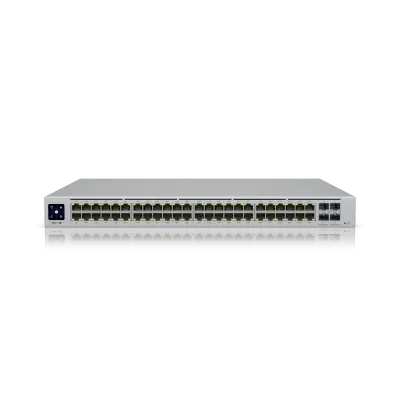
Price on request
A project? Our engineers build the solution with you.
Send your requirements: Atlas proposes the architecture, the bill of materials and a quotation, then follows the supply.
Request a quotationRelated pages
 WikiFiber optic and SFP: what it is and how it is usedTechnical definition, operating principles, industrial standards, and datasheet selection criteria for hardware integration projects supported by Atlas engineers.
 ProjectHardware for Data Centres & IT Infrastructure projectsSource the right industrial hardware for your deployment. Validated architectures, rugged components, bill of materials review, and full supply on quotation.
 Use caseMachine Vision in Data Centres & IT InfrastructureHardware architecture and field deployment guide addressing operational requirements. Certified industrial hardware, custom integration, and supply on quotation.
 Use caseEdge AI in Data Centres & IT InfrastructureHardware architecture and field deployment guide addressing operational requirements. Certified industrial hardware, custom integration, and supply on quotation.
 Use caseAI Visual Inspection in Data Centres & IT InfrastructureHardware architecture and field deployment guide addressing operational requirements. Certified industrial hardware, custom integration, and supply on quotation.
 ProjectHardware for Telecom & Networks projectsSource the right industrial hardware for your deployment. Validated architectures, rugged components, bill of materials review, and full supply on quotation.
 ArticleHow to choose hardware for Telecom & NetworksThis guide details cellular band checks, RF link budgets, uplink redundancy and hardware families for sizing industrial telecom networks.
- Use caseRetail & Kiosks in Telecom & NetworksHardware architecture and field deployment guide addressing operational requirements. Certified industrial hardware, custom integration, and supply on quotation.