
How MQTT operates under OASIS v5.0 and ISO/IEC 20922
MQTT implements an asynchronous publish-subscribe architecture coordinated by a central broker that completely decouples field publishers from downstream subscribing applications. Unlike cyclic polling protocols such as Modbus, field devices push telemetry frames to hierarchical topic strings whenever an event or scheduled interval triggers an update. ISO/IEC 20922 standardizes MQTT v3.1.1, whereas the OASIS MQTT v5.0 specification adds user properties, explicit reason codes, message expiry intervals and shared subscriptions to distribute workloads across multiple consuming servers.
Its minimal two-byte fixed header reduces framing overhead on constrained industrial and cellular links. Control packets manage session establishment, keep-alive heartbeat timers, Last Will and Testament alerts when a client drops unexpectedly, and retained messages so newly connected subscribers immediately receive the last known value on each topic.
Network and electrical topology for industrial MQTT deployments
At the plant or building edge, sensors and fieldbuses rarely speak native MQTT over serial lines or long-range radio links. Industrial LoRaWAN Gateways and BACnet IP & MS/TP Building Automation Gateways translate local frames into TCP/IP sessions, while OPC UA and MQTT Gateways normalize telemetry toward enterprise platforms. All client gateways initiate outbound connections to the broker on TCP port 1883 for plaintext or port 8883 for encrypted traffic, eliminating inbound firewall rules on site routers.
Electrically, cabinet installations rely on DIN rail hardware powered via PoE over structured Ethernet cabling or isolated DC industrial supplies. Where wired backhaul is absent, cellular uplinks and encrypted VPN tunnels maintain persistent MQTT sessions across distributed facilities without requiring local server infrastructure.
Comparing MQTT v3.1.1 versus v5.0 and QoS persistence requirements
Choosing between MQTT v3.1.1 and MQTT v5.0 directly affects large-scale observability and routing. Buyers should check the gateway datasheet for v5.0 user properties support, which embeds correlation identifiers, routing hints and timestamps into packet headers without altering the application payload. Detailed reason codes also streamline diagnostics whenever a broker rejects a connection or enforces publish quotas.
Quality of Service levels define message reliability and local persistence demands on edge hardware. QoS 0 dispatches frames on a fire-and-forget basis without acknowledgment or buffering. QoS 1 guarantees at-least-once transmission through PUBACK acknowledgments, requiring non-volatile store-and-forward queues inside the gateway to survive cellular or Ethernet backhaul outages. QoS 2 enforces exactly-once handshaking across four sequential packets, increasing network latency and flash write cycles during bursts.
TLS mutual authentication and MQTT payload encoding compatibility
Industrial gateways communicating over public or routed networks must enforce TLS encryption on port 8883 alongside certificate-based mutual authentication using X.509 client certificates. Relying solely on static username and password credentials over plaintext connections exposes telemetry and actuator commands to interception. Buyers must confirm supported TLS cipher suites, private key import workflows and automated certificate rotation capabilities in the product datasheet.
Because MQTT is payload-agnostic, integrators must also verify payload encoding compatibility against downstream software requirements. JSON provides human-readable parsing for cloud dashboards at higher bandwidth cost, Protocol Buffers compresses structured telemetry into compact binary frames for metered cellular links, and Sparkplug B standardizes binary payloads, topic namespaces and birth/death state management for industrial SCADA platforms.
Common MQTT integration mistakes in field architectures
A frequent integration mistake is cloning the same client identifier across multiple gateways, which forces the broker into an endless loop of kicking and reconnecting competing devices. Another common pitfall involves enabling QoS 2 universally across battery-powered or intermittent cellular links, exhausting local buffer queues and silently dropping recent sensor readings during prolonged backhaul disruptions.
Integrators also routinely subscribe to root-level wildcard topics using the hash character without broker access control lists, overwhelming constrained edge gateways with unrelated message floods. Finally, configuring persistent sessions without session expiry intervals across thousands of transient clients gradually exhausts broker memory during mass reconnection storms after site-wide industrial power restoration, unless strict broker retention caps and randomized reconnect jitter are enforced.
Selecting industrial MQTT gateways from the Atlas Electronics catalogue
To bridge radio sensors and PLC buses to a central broker, the RAKwireless 715247 from the Industrial LoRaWAN Gateways family combines LoRaWAN EU868, Modbus, MQTT, VPN, Wi-Fi 5 and a -20 °C minimum operating temperature. For commercial building telemetry, the BACnet IP & MS/TP Building Automation Gateways RAKwireless 715106 and RAKwireless 715107 support BACnet/IP conversion without LTE or with 2 RS485 ports respectively, providing 3 to 4 Ethernet ports, DIN rail mount, LoRaWAN EU868, MQTT, PoE and 5 G cellular capability.
For remote cabinets lacking primary wired backhaul, the RAKwireless 715108 adds LTE Cat 4 connectivity alongside 3 to 4 Ethernet ports, DIN rail mount, PoE, LoRaWAN EU868 and MQTT, supplied on quotation to match project requirements.
Frequently asked questions
What is the main difference between MQTT v3.1.1 (ISO/IEC 20922) and OASIS MQTT v5.0?
ISO/IEC 20922 defines MQTT v3.1.1 with QoS 0, 1 and 2, persistent sessions and Last Will messages. OASIS MQTT v5.0 adds user properties for structured metadata, explicit reason codes, shared subscriptions for consumer load balancing and automatic message or session expiry intervals.
When should industrial gateways use QoS 1 instead of QoS 2?
QoS 1 fits most industrial telemetry workloads because it guarantees at-least-once transmission with a single PUBACK handshake, provided subscribing applications handle idempotency. QoS 2 avoids duplicates via four-packet handshaking, but increases latency and flash write wear during outages.
Why is TLS mutual authentication recommended over password-only MQTT logins?
Plaintext logins over port 1883 expose credentials and control payloads on the network. Certificate-based mutual authentication over TLS on port 8883 lets both the broker and the field gateway verify X.509 cryptographic identities before allowing telemetry publication or actuator commands.
How should engineers choose between JSON, Protocol Buffers and Sparkplug B payloads?
JSON simplifies integration with enterprise dashboards at higher byte counts. Protocol Buffers reduces cellular bandwidth consumption through compact binary serialization, whereas Sparkplug B standardizes binary payloads, topic hierarchies and edge node birth/death states for SCADA systems.
Products mentioned
RAK7437
BACnet IP & MS/TP Building Automation Gateways
BACnet/IP Gateway for LoRaWAN EU868, without LTE · Ref. : 715106

- Reserve
Price on request
RAK7437
BACnet IP & MS/TP Building Automation Gateways
BACnet/IP gateway for LoRaWAN with 2 RS485 ports · Ref. : 715107
Price on request
RAK7437
BACnet IP & MS/TP Building Automation Gateways
EU868 LoRaWAN to BACnet Gateway with LTE Cat 4 · Ref. : 715108
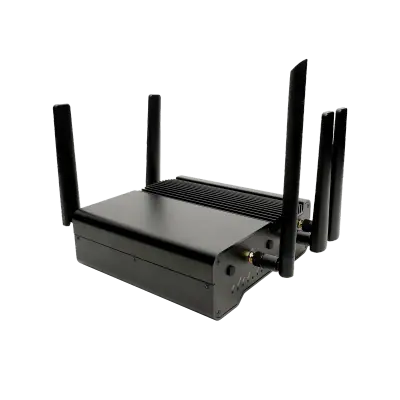
- Reserve
Price on request
RAK7392
Industrial LoRaWAN Gateways
Industrial LoRaWAN Router Gateway 800 MHz with 4 Ethernet Ports · Ref. : 715247

Price on request
A project? Our engineers build the solution with you.
Send your requirements: Atlas proposes the architecture, the bill of materials and a quotation, then follows the supply.
Request a quotationRelated pages
 ProjectLoRaWAN Gateways & LPWAN Concentrator CardsCompare indoor, IP67 outdoor LoRaWAN gateways and concentrator cards on quotation: EU868 plans, MQTT backhaul, and LTE failover.
 Use caseSmart Building in Robotics & AutomationHardware architecture and field deployment guide addressing operational requirements. Certified industrial hardware, custom integration, and supply on quotation.
 OfferSmart Building kitComplete hardware package ready for industrial deployment. Verified components, architecture review by Atlas engineering desk, and procurement on quotation.
 OfferSmart Building kit for Agriculture & Environmental MonitoringComplete hardware package ready for industrial deployment. Verified components, architecture review by Atlas engineering desk, and procurement on quotation.
 OfferSmart Building kit for Energy, Power Grids & UtilitiesComplete hardware package ready for industrial deployment. Verified components, architecture review by Atlas engineering desk, and procurement on quotation.
 OfferSmart Building kit for Healthcare & Medical DevicesComplete hardware package ready for industrial deployment. Verified components, architecture review by Atlas engineering desk, and procurement on quotation.
 OfferSmart Building kit for Industrial Manufacturing & Connected FactoriesComplete hardware package ready for industrial deployment. Verified components, architecture review by Atlas engineering desk, and procurement on quotation.
 OfferSmart Building kit for Robotics & AutomationComplete hardware package ready for industrial deployment. Verified components, architecture review by Atlas engineering desk, and procurement on quotation.