
Private LoRaWAN infrastructure versus carrier NB-IoT subscriptions
Choosing between LoRaWAN and NB-IoT starts with network ownership and cost structure. A private LoRaWAN architecture relies on dedicated gateways operating in unlicensed sub-GHz ISM bands such as EU868 in Europe. The buyer funds the radio hardware, mounting accessories, and network server upfront, while ongoing operations incur zero per-sensor cellular airtime charges from a telecom carrier.
Conversely, NB-IoT runs over licensed cellular spectrum managed by public mobile network operators. This removes local gateway deployment and backhaul routing from the project scope, yet every field node requires a SIM profile and a recurring connectivity subscription. Dense campuses, warehouses, and industrial plants favor private LoRaWAN economics, whereas geographically dispersed metering fleets favor carrier NB-IoT supplied on quotation.
Transmission energy budgets and sensor battery autonomy
RF energy consumption directly dictates multi-year battery life on autonomous field sensors. In LoRaWAN Class A operation, an end device wakes from deep sleep, transmits a compact chirp spread spectrum frame, opens two short receive windows, and immediately returns to standby. This asynchronous sequence keeps radio active time minimal and supports long intervals between battery replacements.
NB-IoT requires cellular synchronization with the operator base station, including network attach procedures and Power Saving Mode or extended discontinuous reception negotiation. Under weak indoor signal conditions, packet repetitions substantially raise total energy per transmitted message. System buyers should inspect module datasheets for peak transmit current, Power Saving Mode draw, and reconnection overhead after signal loss before finalizing battery sizing.
Payload limits, duty cycle constraints and downlink behavior
Both standards impose distinct constraints on packet size and transmission cadence. Under European EU868 regulations, LoRaWAN devices must comply with a one percent sub-band duty cycle, capping total airtime per hour. Depending on the selected spreading factor and data rate, usable application payloads span roughly 51 bytes at maximum range up to 222 bytes at higher speeds.
Operating in licensed spectrum, NB-IoT avoids ISM duty cycle restrictions and supports IP or CoAP payloads reaching roughly 1600 bytes per transaction. This headroom simplifies multi-sensor logging, reliable acknowledgements, and over-the-air firmware updates. By contrast, LoRaWAN firmware campaigns require fragmented multicast sessions, and low-latency downlink commands require moving battery nodes from Class A to Class B or Class C.
Indoor coverage penetration and building RF link budgets
Signal attenuation through reinforced concrete, basements, and metallic utility risers determines indoor telemetry reliability. NB-IoT achieves a maximum coupling loss near 164 dB through coverage enhancement levels that repeat frames across narrowband subcarriers. Subsurface water meters or basement utility sensors can therefore reach outdoor macro towers directly without local concentrators whenever public operator coverage exists on site.
With LoRaWAN, line-of-sight range reaches up to 15 kilometers according to the official Winext GW5000A website using its Semtech SX 130 X chipset. Inside complex industrial buildings, integrators control coverage directly by placing indoor gateways near shadowed equipment rooms. This private approach eliminates dead zones in shielded basements, remote rural facilities, and underground tunnels where commercial cellular reception fails completely.
Gateway and sensor hardware bill of materials before purchase
Drafting a complete hardware bill of materials before procurement prevents hidden integration and cabling gaps across sites. A private LoRaWAN deployment combines end-node radios from LoRa and LoRaWAN Modules, external tuned antennas, infrastructure from LoRaWAN Gateways, PoE switches or surge protectors, and cellular backhaul when local Ethernet is unavailable, alongside a dedicated LoRaWAN network server.
An NB-IoT or cellular LPWAN architecture eliminates local gateways and PoE cabling, shifting the bill of materials toward embedded cellular modules, industrial SIM cards, wideband antennas, GNSS receivers, and operator data plans. Regardless of topology, buyers must verify datasheet regional frequency bands, minimum operating temperature ratings, enclosure ingress protection, and supply voltage tolerances prior to requesting supply.
Catalog gateways, concentrators and OEM cellular modules
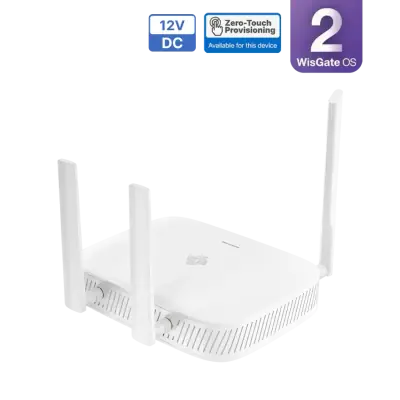
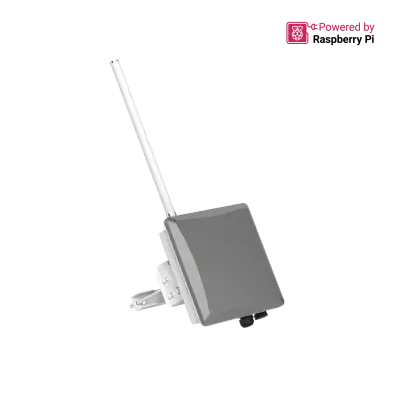
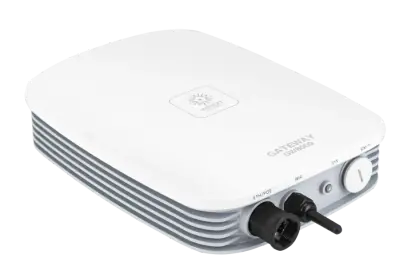
For indoor sites, the RAKwireless 715170 in Indoor LoRaWAN Gateways combines 8 LoRaWAN EU868 channels, 4 G LTE Cat 4, MQTT, PoE, VPN, and an IP20 to IP44 housing. Outdoor deployments can use the RAKwireless 715167 in Outdoor LoRaWAN Gateways, rated IP67 down to minus 20 degrees Celsius with GNSS, or the Winext GW5000A offering IP67, PoE, and full-duplex or half-duplex operation.
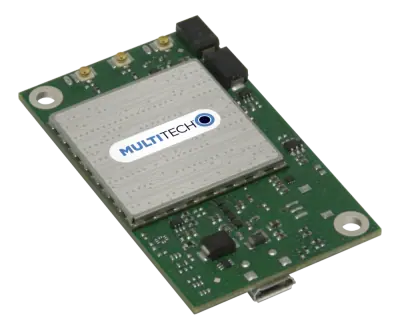
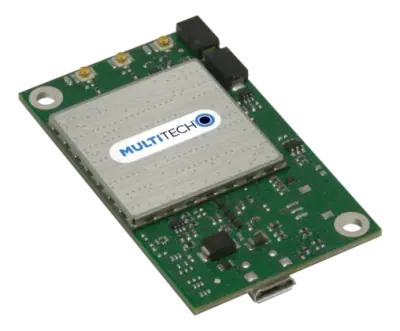
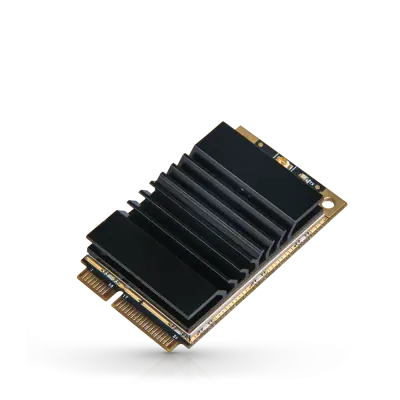
For custom designs, the RAKwireless 518016 in LoRaWAN Concentrator Cards (mPCIe / SPI) includes a RAK 2247 card, GNSS, digital inputs, and KR920 support with CE, FCC, IC, KC, RCM, REACH, and RoHS marks. In OEM Cellular Modules (M.2 / mPCIe), MultiTech MTQ-MNA1-B02.R1-SP provides LTE Cat M1 and MTQ-LAT3-B01.R2A provides LTE Cat 1 with GNSS for AT&T and Verizon; buyers targeting NB-IoT must verify band compatibility in the datasheet.
Frequently asked questions
When does a private LoRaWAN network make more sense than carrier NB-IoT subscriptions?
On a single campus, factory, or warehouse, deploying dozens to hundreds of sensors typically favors private LoRaWAN because a gateway such as the RAKwireless 715170 eliminates per-device recurring carrier fees. Conversely, widely scattered assets across a country avoid gateway installation by relying on existing mobile operator networks.
Can a LoRaWAN gateway operate on sites without local Ethernet backhaul?
Yes, gateways such as the indoor RAKwireless 715170 and outdoor RAKwireless 715167 combine PoE connectivity with built-in 4 G LTE Cat 4 cellular backhaul. Buyers must check datasheet regional LTE frequency bands and industrial SIM requirements before ordering.
How does the RAKwireless 518016 concentrator differ from enclosed EU868 LoRaWAN gateways?
The RAKwireless 518016 in LoRaWAN Concentrator Cards (mPCIe / SPI) is an embedded mPCIe SPI module including one RAK 2247 card configured for the KR920 band, intended for custom host integration. European EU868 deployments needing PoE enclosures should select gateways such as the RAKwireless 715170, RAKwireless 715167, or Winext GW5000A.
Are the catalog MultiTech OEM cellular modules directly suited for European NB-IoT networks?
The MultiTech MTQ-MNA1-B02.R1-SP and MTQ-LAT3-B01.R2A are LTE Cat M1 and LTE Cat 1 embedded modems respectively, with AT&T and Verizon listed in their specifications. Buyers planning an NB-IoT or European cellular rollout must check exact band support and carrier approvals in the target module datasheet.
Products mentioned
MTQ-LAT3-B01.R2A
OEM Cellular Modules (M.2 / mPCIe)
LTE Cat 1 embedded cellular module for AT&T · Ref. : MTQ-LAT3-B01.R2A
Price on request
MTQ-MNA1-B02.R1-SP
OEM Cellular Modules (M.2 / mPCIe)
LTE Cat M1 embedded cellular modem with GNSS · Ref. : MTQ-MNA1-B02.R1-SP
Price on request
RAK7268CV2
Indoor LoRaWAN Gateways
Indoor LoRaWAN gateway 8-channel with LTE Cat 4 and external antenna · Ref. : 715170
Price on request
RAK2247
LoRaWAN Concentrator Cards (mPCIe / SPI)
Multichannel LoRaWAN concentrator module mPCIe SPI · Ref. : 518016
Price on request
RAK7393
Outdoor LoRaWAN Gateways
Outdoor industrial LoRaWAN gateway 8 channels with LTE Cat 4 · Ref. : 715167
Price on request
GW5000A
LoRaWAN Gateways, Concentrators & LPWAN Infrastructure
8-Channel LoRaWAN IoT Gateway Router, IP67, PoE Powered
Price on request
A project? Our engineers build the solution with you.
Send your requirements: Atlas proposes the architecture, the bill of materials and a quotation, then follows the supply.
Request a quotationRelated pages
 ArticleRadio Equipment Directive RED and CE marking for wireless modulesThis guide outlines Directive 2014/53/EU (RED) obligations for integrating wireless modules and affixing CE marking to industrial equipment.
 ArticleChoosing an indoor or outdoor LoRaWAN gateway for sensor networksCompare 8- vs 16-channel SX 1302/SX 1303 gateways, IP67 vs indoor enclosures, LTE cavity filtering, PoE power, and cellular failover options.
 ProjectLoRaWAN Gateways & LPWAN Concentrator CardsCompare indoor, IP67 outdoor LoRaWAN gateways and concentrator cards on quotation: EU868 plans, MQTT backhaul, and LTE failover.
 ProjectOEM 4 G LTE, 5 G & NB-IoT M.2 / Mini-PCIe Cellular ModulesCompare OEM M.2, Mini-PCIe, and SMD cellular modems across 3GPP categories, TX current bursts, GNSS integration, and Linux QMI/MBIM drivers.
 Use caseTurnkey Cellular IoT Connectivity in Electronics & OEM/ODMHardware architecture and field deployment guide addressing operational requirements. Certified industrial hardware, custom integration, and supply on quotation.
 Use caseTurnkey Cellular IoT Connectivity in Telecom & NetworksHardware architecture and field deployment guide addressing operational requirements. Certified industrial hardware, custom integration, and supply on quotation.
 OfferTurnkey Cellular IoT Connectivity kit for Electronics & OEM/ODMComplete hardware package ready for industrial deployment. Verified components, architecture review by Atlas engineering desk, and procurement on quotation.
- OfferTurnkey Cellular IoT Connectivity kit for Telecom & NetworksComplete hardware package ready for industrial deployment. Verified components, architecture review by Atlas engineering desk, and procurement on quotation.