
Qualification, traceability, and end-customer documentation requirements
In aerospace, space, and defence programmes, every hardware subsystem must satisfy strict qualification and traceability rules set by the end customer. Technical buyers must require batch tracking, serial-number traceability, and clear hardware revision identification prior to system integration. This documentation allows engineering teams to maintain configuration control across the full operational lifecycle of an airborne payload or ground segment.
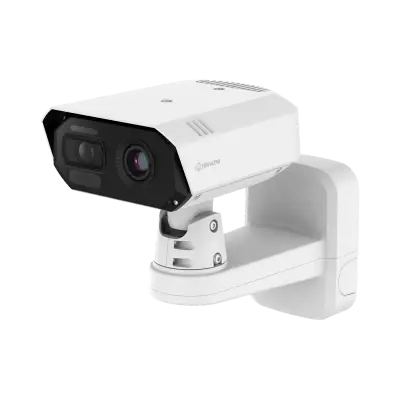
Before requesting supply on quotation, project teams should verify network security features and manufacturer interface documentation in the datasheet. On the Hanwha Vision TNM-C4960TD-LATAM from the Thermal Imaging Cameras family, IP-based access control supports deployment inside segmented networks. Buyers must also check mechanical envelopes, connector pinouts, and supply tolerances against the acceptance dossier required by the prime contractor.
Positioning accuracy, timing, and GNSS correction sources
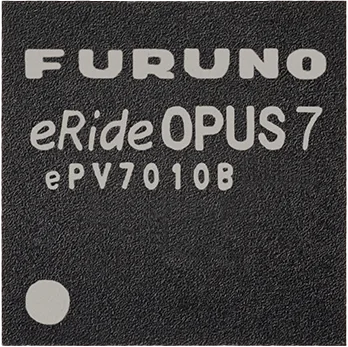
Selecting between RTK GNSS Modules and Survey GNSS Receivers depends on target positioning accuracy and correction-source availability. Where no local base station or correction network is accessible, the Furuno EPV7010B provides concurrent GPS and GLONASS reception with 2.5 m CEP GPS accuracy, selectable 1, 2, 5, or 10 Hz GNSS and Dead Reckoning rates, and -147 dBm cold-start sensitivity.
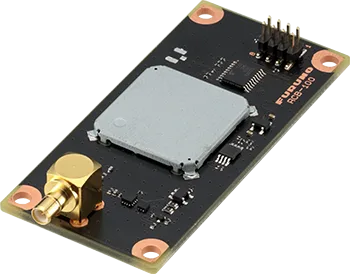
When precise timing or dual-band reception is prioritized alongside ground RTK infrastructure, the Furuno RCB-100 timing receiver carrier board supports L1/L5 dual-band operation. It specifies acquisition sensitivity of -148 dBm or better, a 35 sec typical cold start, an SMB antenna connector, and an 8-pin interface carrying UART/ToD, PPS, power, and reset signals, while the Furuno EPV7010B draws 61 mA at DC 3.3 V in acquisition mode.
Weight, power budget, and operating temperature on airborne payloads
On airborne platforms, payload weight, power budget, and operating temperature range directly govern flight endurance and safety margins. Hardware from the Propellers and Airframes family must balance structural stiffness and predictable rotational behaviour across altitude temperature drops, while onboard receivers and sensors must keep continuous current draw within tight power budgets.
For light multi-rotor platforms, the Hobbywing 18X6.0 folding propeller in carbon fiber reinforced polymer operates in a 14.5 kg commonly used thrust range, reaching 6.6 kg max thrust at 7650 RPM with a -20 °C minimum operating temperature. For heavy-lift platforms, the Hobbywing 48X17.5 folding propeller combines carbon fiber and epoxy resin blades with an aluminium alloy adapter, delivering 43 kg max thrust at 2900 RPM down to -40 °C or lower.
Thermal imaging, mmWave radar, and UWB sensing architectures
Observation, perimeter security, and obstacle-avoidance missions pair Thermal Imaging Cameras with Radar Sensors and ultra-wideband radio links. In smoke, fog, or low-light conditions, thermal imagers provide passive target detection while mmWave radar and UWB ranging deliver short-range distance and motion telemetry without relying on ambient illumination.
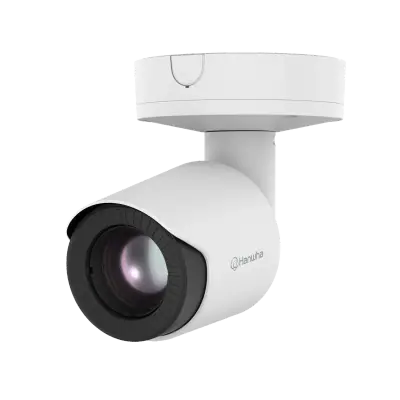
Within Thermal Imaging Cameras, the Hanwha Vision TNM-C4960TD-LATAM integrates a bi-spectrum dual sensor with PoE, CAN bus, IP67 ingress protection, and a minimum operating temperature of -40 °C or lower. For long-range observation, the Hanwha Vision TNO-C4080T-CA bullet camera provides a VGA telephoto 60 mm lens, AI analytics, PoE, CAN bus, MQTT, RS-485, and IP67 sealing rated to -40 °C or lower, simplifying multi-sensor integration on ruggedized mounts.
Architecture trade-offs across satellite terminals, onboard buses, and edge processing
System architecture requires balancing link bandwidth, latency, and onboard power draw across mission phases. Satellite Terminals preserve command and telemetry connectivity beyond visual line of sight, yet their transceiver mass, antenna footprint, and transmit power constrain compact airframes. Performing analytics locally on edge sensors lowers uplink bandwidth demand by transmitting filtered alerts rather than raw video streams.
Across internal harnesses and ground stations, bus selection shapes electromagnetic resilience and deterministic timing. CAN bus and RS-485 suit rugged vehicle or gimbal control loops, whereas PoE and MQTT streamline IP-based ground surveillance nodes. Integrators must also verify UART/ToD pin mapping, PPS signal conditioning, supply rail stability, and SMB antenna routing in the schematic before locking the final mechanical enclosure and harness layout.
Selection criteria across the six hardware families and datasheet checks
A coherent hardware architecture spans six complementary families: Propellers and Airframes for propulsion, RTK GNSS Modules and Survey GNSS Receivers for navigation and timing, Thermal Imaging Cameras and Radar Sensors for multi-spectral perception, and Satellite Terminals for extended-range links. Each subsystem should be sized against worst-case thermal, vibration, and power limits rather than benign bench conditions.
Before requesting supply on quotation, technical buyers must inspect each datasheet for minimum operating temperature, IP67 ingress protection where exposed, supply current at nominal voltage, GNSS acquisition sensitivity, communication interfaces, and propulsion thrust or rotational speed limits. Checking these parameters upfront avoids late harness redesigns and ensures the selected hardware aligns with the end customer qualification and traceability package.
Frequently asked questions
How should teams choose between standalone multi-GNSS reception and an RTK architecture on an airborne platform?
Without a local base station or correction network, a concurrent GPS and GLONASS receiver such as the Furuno EPV7010B delivers 2.5 m CEP GPS accuracy with Dead Reckoning up to 10 Hz. When centimeter positioning or L1/L5 timing with PPS is needed, pair an RTK correction source with hardware such as the Furuno RCB-100.
Which datasheet parameters matter most when selecting a thermal camera for -40 °C operation?
Check the rated minimum operating temperature, IP67 ingress protection for exposed mounts, PoE supply requirements, and onboard control interfaces such as CAN bus, RS-485, or MQTT, all specified across models like the Hanwha Vision TNM-C4960TD-LATAM and TNO-C4080T-CA.
How do folding propeller specifications affect payload weight and cold-altitude margins?
Integrators must match commonly used thrust, max thrust, max RPM, blade and adapter materials, and minimum operating temperature to mission loads. The Hobbywing 18X6.0 reaches 6.6 kg max thrust down to -20 °C, whereas the Hobbywing 48X17.5 delivers 43 kg max thrust at -40 °C or lower.
What documentation should be requested when sourcing hardware on quotation for aerospace or defence?
When requesting supply on quotation, ask for exact revision datasheets, batch and serial traceability records, mechanical and pinout drawings, and IP-based access control details needed to compile the end-customer qualification package.
Products mentioned
RCB-100
Survey GNSS Receivers
GNSS timing receiver carrier board, L1/L5 dual-band · Ref. : RCB-100
- GNSS Antenna
- >= -148 dBm
- SMB
Price on request
ePV7010B
Survey GNSS Receivers
Multi-GNSS receiver, concurrent GPS and GLONASS reception · Ref. : EPV7010B
- 61 mA (@ DC 3.3V)
- -147 dBm
- 1 / 2 / 5 / 10 Hz
Price on request
TNM-C4960TD
Thermal Imaging Cameras
Bi-spectrum AI network thermal camera, dual sensor · Ref. : TNM-C4960TD-LATAM
- 42°(Wide)~15°(Tele)
Price on request
TNO-C4080T
Thermal Imaging Cameras
VGA AI telephoto 60 mm bullet IP thermal camera · Ref. : TNO-C4080T-CA
- 10.3°
Price on request
MFP 18x6.0
Propellers and Airframes
Industrial carbon fiber folding propeller · Ref. : 18X6.0
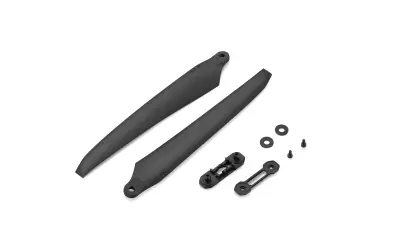
- 1~4.5kg
- 7650RPM
- 6.6kg
Price on request
MFC 48x17.5
Propellers and Airframes
Carbon fiber folding propeller for agricultural drones · Ref. : 48X17.5
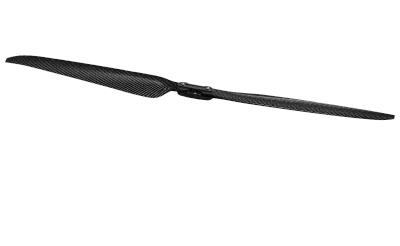
- Aluminium alloy
- 2900 RPM
- 43 kg
Price on request
A project? Our engineers build the solution with you.
Send your requirements: Atlas proposes the architecture, the bill of materials and a quotation, then follows the supply.
Request a quotationRelated pages
 WikimmWave radar: what it is and how it is usedTechnical definition, operating principles, industrial standards, and datasheet selection criteria for hardware integration projects supported by Atlas engineers.
 WikiUltra-wideband (UWB): what it is and how it is usedTechnical definition, operating principles, industrial standards, and datasheet selection criteria for hardware integration projects supported by Atlas engineers.
 WikiSatellite IoT: what it is and how it is usedUnderstand Satellite IoT architecture, orbital classes, industrial use cases, datasheet checks, and terminals supplied on quotation.
 ProjectHardware for Aerospace, Space & Defence projectsSource the right industrial hardware for your deployment. Validated architectures, rugged components, bill of materials review, and full supply on quotation.
 Use caseDrone and Thermal Inspection in Aerospace, Space & DefenceHardware architecture and field deployment guide addressing operational requirements. Certified industrial hardware, custom integration, and supply on quotation.
 Use caseRTK GNSS Surveying in Aerospace, Space & DefenceHardware architecture and field deployment guide addressing operational requirements. Certified industrial hardware, custom integration, and supply on quotation.
 OfferDrone and Thermal Inspection kit for Aerospace, Space & DefenceComplete hardware package ready for industrial deployment. Verified components, architecture review by Atlas engineering desk, and procurement on quotation.
 Use caseSatellite Connectivity for Remote Sites in Aerospace, Space & DefenceHardware architecture and field deployment guide addressing operational requirements. Certified industrial hardware, custom integration, and supply on quotation.
 ProjectMulti-Band GNSS & Centimeter-Level RTK ModulesCompare multi-band GNSS modules and RTK receivers by acquisition time, RTCM 3 NTRIP correction streams, IMU dead reckoning, and antenna bias.