
Lawful bases for enterprise video surveillance under GDPR Article 6
Deploying IP Cameras and Network Video Recorders across corporate premises falls directly under Regulation (EU) 2016/679 (GDPR), published in EUR-Lex (OJ L 119, 4.5.2016). Under Article 6 and European Data Protection Board (EDPB) Guidelines 3/2019 on processing of personal data through video devices, every camera stream capturing identifiable individuals requires a documented legal basis prior to commissioning, typically legitimate interest under Article 6(1)(f) to protect assets and perimeter security.
Relying on legitimate interest requires a documented proportionality assessment that excludes continuous monitoring of workstations, rest areas, or public walkways outside the site boundary. Engineering teams must define strict purposes, configure privacy masks, and verify exclusion zones on edge-capable hardware such as the Hikvision DS-2CD3363G2-LISU or the Hanwha Vision PNM-C32083RVQ-CA, supplied on quotation by Atlas Electronics.
Biometric processing prohibition under Article 9 and edge AI boundaries
Article 9 of Regulation (EU) 2016/679 prohibits processing biometric data for the purpose of unambiguously identifying a natural person unless a narrow statutory exception applies, such as explicit, freely revocable consent. EDPB Guidelines 3/2019 clarify that standard video capture does not constitute biometric processing until mathematical facial templates are extracted and compared against a reference gallery or linked to Access Control Readers.
Edge-AI architectures must therefore separate generic object classification from biometric identification. When specifying the Hanwha Vision PRN-1600B2 recorder, which features AI Search — Object Attribute (Human, Face, Vehicle, Lisence plate) and 8 alarm inputs with 4 outputs, buyers must check the manufacturer datasheet to confirm how the Face attribute can be disabled or restricted so automated analytics remain strictly non-biometric.
DPIA obligations under Article 35 and Article 30 processing records
When enterprise video systems monitor publicly accessible areas on a large scale or conduct systematic monitoring, Article 35 of the GDPR requires a Data Protection Impact Assessment (DPIA) before activation. The assessment documents camera fields of view, evaluates intrusion risks for employees and visitors, and specifies technical safeguards that limit unnecessary data capture across entryways, loading bays, and shared corridors.
In parallel, Article 30 mandates an up-to-date record of processing activities detailing purposes, recipient categories, retention periods, and network data flows. For multi-sensor units such as the Hanwha Vision PNM-C32083RVQ-CA (4-channel 4 K AI multi-directional IP camera with IR, PoE, IP66, CAN bus, and MQTT), compliance teams must document each optical channel and every MQTT telemetry stream in the internal register.
Storage limitation for NVR archives and local camera memory cards
Under GDPR storage limitation principles and EDPB Guidelines 3/2019, recorded footage must be automatically purged after a short retention window, typically a few days, strictly aligned with incident investigation needs. Any extended retention following a documented security event should rely on an isolated, access-logged export rather than lengthening global retention schedules across Network Video Recorders.
Retention governance also covers edge storage inside IP Cameras. On models such as the Hikvision DS-2CD1183G2-LIU-F, equipped with a built-in microSD/microSDHC/microSDXC slot supporting up to 512 GB and a physical Reset Key (-F), administrators should verify in the datasheet how cyclic overwriting, card encryption, and local slot deactivation operate when primary recording is centralized on a Hanwha Vision PRN-1600B2 NVR with ARB support.
Mandatory information signs and two-layer transparency under EDPB 3/2019
EDPB Guidelines 3/2019 establish a layered transparency framework to satisfy Articles 12 and 13 of Regulation (EU) 2016/679. The first layer requires clear warning signs positioned at a reasonable distance before individuals enter the monitored zone, displaying the controller identity, primary surveillance purpose, data subject rights, and contact details for the data protection officer.
The second layer directs individuals to a full privacy notice available digitally or at reception, detailing the Article 6 legal ground, exact retention period, and access request procedures. For perimeter devices with active illumination such as the Hikvision DS-2CD3363G2-LISU, featuring Acusense human and vehicle deep-learning classification and Smart Hybrid Light with three supplemental lighting modes, signage must clearly inform visitors of round-the-clock monitoring.
Data protection by design under Article 25 and device access hardening
Article 25 of Regulation (EU) 2016/679 mandates data protection by design and by default throughout hardware deployment and operation. Video architectures should isolate IP Cameras on dedicated VLANs, enforce strong credentials at commissioning, disable unused services, and log every administrative or footage-export action. Procurement teams should inspect datasheets for stream encryption protocols, role-based permissions, and firmware update mechanisms.
Physical and logical hardening features directly support compliance audits. The Sunell SN-IPV8080EWAR-B mini dome provides IP-based access control and Auto logout alongside PoE, IP67 sealing, and a minimum operating temperature of -40 °C or lower for exposed perimeters. Meanwhile, the Hikvision DS-2CD1183G2-LIU-F combines IP67 (IEC 60529-2013) environmental sealing with IK08 (IEC 62262:2002) impact protection against physical tampering.
Frequently asked questions
Does using edge-AI analytics on IP Cameras automatically fall under GDPR Article 9 biometric rules?
No, standard video recording or basic person and vehicle classification does not trigger Article 9 of Regulation (EU) 2016/679. Biometric processing occurs only when a system extracts mathematical facial or physiological templates to uniquely identify a person against a reference database or access-control gallery. Buyers must check the datasheet of analytics-enabled devices like the Hanwha Vision PRN-1600B2 to verify how Face attribute extraction can be disabled.
When does enterprise video surveillance require a DPIA under GDPR Article 35?
According to European Data Protection Board (EDPB) Guidelines 3/2019, a Data Protection Impact Assessment under Article 35 is required when monitoring publicly accessible areas on a large scale, conducting systematic monitoring of premises, or combining video streams with sensitive analytics. The DPIA must be completed before commissioning cameras and updated if optical coverage or analytics configurations change.
What information must appear on GDPR video surveillance warning signs under EDPB Guidelines 3/2019?
EDPB Guidelines 3/2019 mandate a two-layer notice: a visible sign placed before entering the monitored zone showing the controller identity, purpose, rights, and DPO contact, plus a second-layer detailed privacy notice accessible on site or online. Signs must cover all perimeter fields of view, including low-light or active-illumination zones covered by cameras such as the Hikvision DS-2CD3363G2-LISU.
How should enterprises govern local microSD storage inside IP Cameras alongside central Network Video Recorders?
Local microSD slots inside IP Cameras, such as the 512 GB slot on the Hikvision DS-2CD1183G2-LIU-F, must follow the same strict retention limit as central Network Video Recorders. If local storage is used only as a failover buffer, administrators should check the datasheet for cyclic overwriting, card encryption, and physical Reset Key (-F) access controls.
Products mentioned
PRN-1600B2
Network Video Recorders
16-channel AI network video recorder with analytics · Ref. : PRN-1600B2
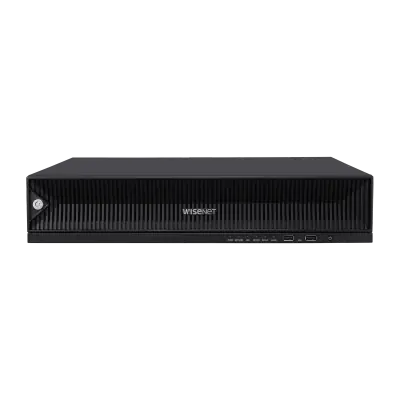
- In 8EA, Out 4EA
- Support
- 2-Way
Price on request
PNM-C32083RVQ
IP Cameras
4-channel 4K AI multi-directional IP camera with IR · Ref. : PNM-C32083RVQ-CA
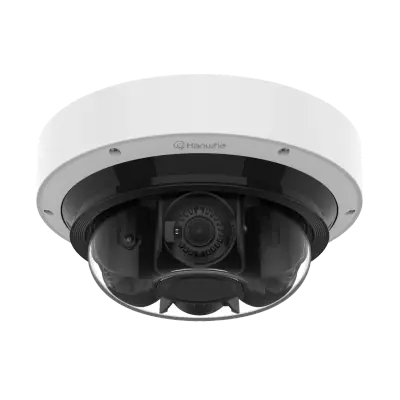
Price on request
DS-2CD1183G2-LIU-F
IP Cameras
8 MP Smart Hybrid Light Fixed Dome Network Camera · Ref. : DS-2CD1183G2-LIU-F
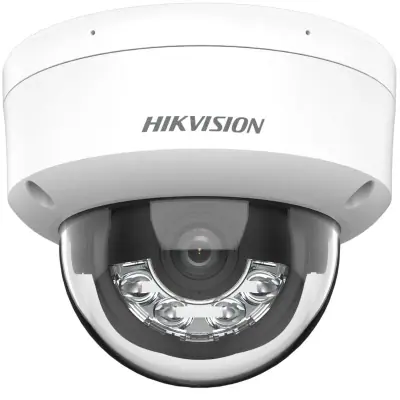
- Yes
Price on request
DS-2CD3363G2-LISU
IP Cameras
6 MP Network Fixed Turret Camera with Smart Hybrid Light · Ref. : DS-2CD3363G2-LISU
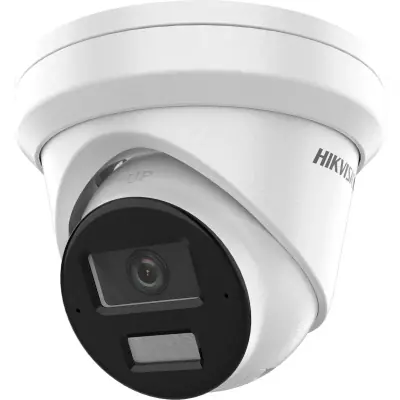
- IEC 60529-2013
Price on request
SN-IPV8080EWAR-B
IP Cameras
8MP IR Fixed Mini Dome IP Camera · Ref. : SN-IPV8080EWAR-B
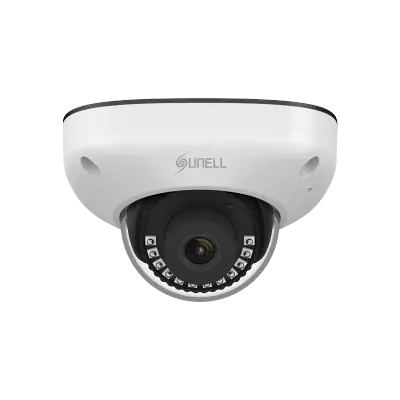
- 1ch Input, 1ch Output
Price on request
A project? Our engineers build the solution with you.
Send your requirements: Atlas proposes the architecture, the bill of materials and a quotation, then follows the supply.
Request a quotationRelated pages
 WikiCAN busTechnical definition, operating principles, industrial standards, and datasheet selection criteria for hardware integration projects supported by Atlas engineers.
 ProjectIndustrial IP Cameras, Thermal Imaging & NVR RecordersThis guide helps buyers specify IP cameras, thermal units, and NVR recorders using ONVIF, WDR, H.265 bitrate, RAID sizing, and IP67/IK10.
 Use caseGuard Tour Control in Security & Access ControlHardware architecture and field deployment guide addressing operational requirements. Certified industrial hardware, custom integration, and supply on quotation.
 ProjectHardware for Security & Access Control projectsSource the right industrial hardware for your deployment. Validated architectures, rugged components, bill of materials review, and full supply on quotation.
- Use caseIP Public Address in Security & Access ControlHardware architecture and field deployment guide addressing operational requirements. Certified industrial hardware, custom integration, and supply on quotation.
 Use caseIP Video Production in Security & Access ControlHardware architecture and field deployment guide addressing operational requirements. Certified industrial hardware, custom integration, and supply on quotation.
 Use caseOccupancy and People Counting in Security & Access ControlHardware architecture and field deployment guide addressing operational requirements. Certified industrial hardware, custom integration, and supply on quotation.
 ArticleSizing an IP network video recorder (NVR): bitrate, storage and PoEThis guide explains how to calculate H.264/H.265 bitrate, SATA retention, PoE power budgets and ONVIF compatibility when sizing an IP NVR.
 ArticleIP camera vs thermal camera: which vision technology for monitoring?Compare visible IP cameras and thermal sensors across darkness, fog penetration, temperature monitoring, storage load, and catalogue options.