
Role and importance in industrial systems
In any industrial or embedded architecture, selecting the right components and modules determines overall system reliability. These devices perform critical processing, power, or interfacing functions. Rigorous selection ensures service continuity even in demanding environments where voltage variations and electromagnetic interference occur regularly.
Atlas engineers select rugged references capable of uninterrupted operation across wide operational ranges. Initial design must account for thermal dissipation, interface availability, and compliance with industrial standards.
Key technical selection criteria
Analyzing a technical datasheet requires examining several decisive parameters. First, input voltage range and power efficiency must match typical industrial cabinet supplies, typically 24VDC or 12VDC. Furthermore, operating temperature ranges are critical for fanless enclosures or outdoor deployments.
Physical form factors and mounting methods represent another decisive criterion: TS-35 DIN rail mounting, rackmount chassis, or carrier board integration. Available communication interfaces must match site protocols, whether RS-485 serial buses, industrial Ethernet links, or CAN fieldbuses.
Sub-families and typical architectures
The catalogue includes diverse equipment categories tailored to each stage of the hardware chain. Key segments include power conversion modules, embedded processing boards, and communication gateways. Each family matches a specific integration level depending on whether the project requires off-the-shelf devices or integrable modules.
The Niubol 4G/WIFI/GPS/RS232/RS485 (Data Loggers) addresses these field integration requirements and connects seamlessly to industrial networks.
The Epever ELOG01-G3 (Data Loggers) addresses these field integration requirements and connects seamlessly to industrial networks.
The Siglent Technologies FEED (Data Loggers) addresses these field integration requirements and connects seamlessly to industrial networks.
Combining these modules inside a single enclosure requires verifying signal compatibility and addressing plan consistency.
Common design mistakes to avoid
A common mistake is underestimating peak power consumption during start-up or radio transmission phases, which causes unexpected voltage drops. Sizing power supplies with at least a 25 percent headroom margin is highly recommended.
Another critical pitfall is omitting galvanic isolation on extended fieldbuses. Without appropriate isolation, ground loops can damage transceiver ports on PLCs or gateways. Finally, heat dissipation inside sealed IP67 enclosures requires thorough verification of thermal derating curves.
Cabinet integration and electromagnetic compatibility
Installing hardware inside an industrial cabinet requires strict adherence to wiring rules and physical segregation between high-power conductors and low-voltage signal lines. Power cables and communication lines must use separate wiring ducts to minimize capacitive and inductive noise coupling.
Connecting functional earth to the TS-35 DIN rail must maintain minimal impedance. Utilizing noise suppression filters and ferrite cores across power supply conductors contributes significantly to preserving digital signal integrity over long operational cycles.
Atlas technical support and quotation
Atlas provides more than distribution: our technical engineers inspect your complete bill of materials and verify the technical fit of every device against your operational requirements. We validate electrical compatibility, interface wiring, and environmental ratings prior to procurement.
All supplies are provided on quotation. Submit your technical requirements, deployment constraints, and project schedule to receive an architecture review and a complete bill of materials quotation.
Frequently asked questions
How can I obtain a quotation for this hardware?
Submit your bill of materials or operational requirements to our engineers. Atlas provides a comprehensive quotation covering all hardware and support.
Is this hardware compliant with industrial standards?
Yes, all selected devices meet rigorous industrial standards for electromagnetic compatibility, temperature resilience, and electrical isolation.
Does Atlas provide integration support?
Our application engineers verify the technical coherence of your hardware architecture and advise you on selecting necessary wiring accessories.
What prerequisites are required for commissioning?
You must provide a regulated power source matching device specifications and establish an addressing plan for devices on the local network.
Products mentioned
ELOG01-G3
Data Loggers
RS485 data logger for solar systems · Ref. : ELOG01-G3
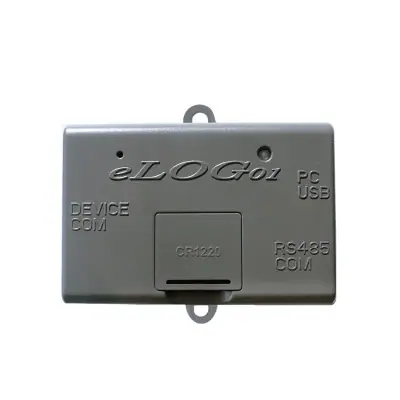
- RS485
- IP30
Price on request
Fresh Keeper-1
Data Loggers
Reusable USB temperature and humidity data logger · Ref. : KEEPER-1

Price on request
AR-300-T
Data Loggers
3-channel IEPE accelerometer and 1-channel thermistor data logger

Price on request
CL-223-WF
Data Loggers
Air Quality Data Logger PM CO CO2 Ethernet Wi-Fi PoE · Ref. : CL-223

Price on request
CL-222-WF
Data Loggers
Air Quality Data Logger PM CO2 Wi-Fi PoE · Ref. : CL-222

Price on request
CL-221-WF
Data Loggers
IAQ Data Logger with PM1/PM2.5/PM10, CO and Temperature, Wi-Fi and PoE · Ref. : CL-221

Price on request
SOLAR-PYRANOMETER-SENSOR
Data Loggers
Solar Radiation Pyranometer Sensor

- Company Profile
- Company news
- Weather Stations
Price on request
TG462
Data Loggers
IoT edge gateway data logger with RS485 and 4G · Ref. : 4G/WIFI/GPS/RS232/RS485

Price on request
A project? Our engineers build the solution with you.
Send your requirements: Atlas proposes the architecture, the bill of materials and a quotation, then follows the supply.
Request a quotationRelated pages
 ProjectSourcing data acquisition systems for a projectSource the right industrial hardware for your deployment. Validated architectures, rugged components, bill of materials review, and full supply on quotation.
 ProjectIndustrial Data Acquisition (DAQ) & Cold-Chain LoggersEvaluate industrial DAQ hardware and environmental data loggers by ADC resolution, isolation, sensor conditioning, memory, and fieldbus.