
Typical industrial and field projects requiring data acquisition systems
Engineering buyers source Data Acquisition Systems across solar monitoring plants, agricultural weather stations, rotating machinery diagnostics, indoor air quality supervision, and cold-chain thermal logging. Each deployment relies on Data Loggers matched to the field transducers, spanning low-speed analog or counter inputs, dynamic vibration channels, and serial industrial buses that consolidate sensor telemetry across distributed equipment rooms or outdoor parcels.
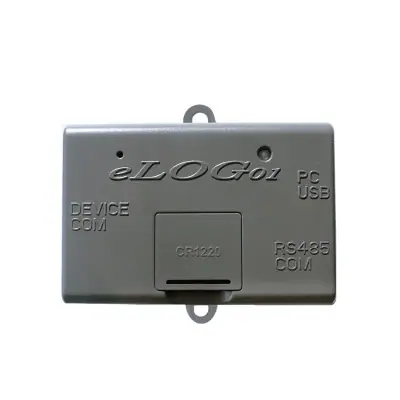
On a photovoltaic installation, Epever ELOG01-G3 handles local RS-485 collection with configuration and monitoring via PC software. In remote agricultural fields, Niubol NBL-PH-1 aggregates up to 16 analog or counter channels in its documented controller configuration over a 4 G LTE cellular link. Facility and equipment teams also combine cellular gateways, PoE Ethernet loggers, and battery-powered standalone recorders.
Operational risks of selecting incompatible data acquisition hardware
Specifying the wrong unit within Data Acquisition Systems leads to missing measurements, field rewiring, or memory overflow before an inspection cycle ends. Neglecting sensor excitation or input conditioning leaves piezoelectric accelerometers unreadable, while mounting an enclosure rated IP20 to IP44 outdoors without a sealed cabinet exposes electronics to moisture ingress and premature electrical faults.
Protocol and capacity mismatches also stall integration with existing supervision software. Selecting hardware without Modbus or MQTT support forces buyers to add unexpected protocol converters inside control panels. Likewise, underestimating logging intervals or memory depth on autonomous units risks overwriting critical alarms. Buyers must verify every electrical, environmental, and communication parameter directly in the manufacturer datasheet before issuing an order.
Selection criteria: input channels, memory capacity, and ingress protection
The first selection criterion is input type and channel count. For vibration and temperature diagnostics, ICP DAS AR-300-T provides 3-ch IEPE input and 1-ch thermistor input with RoHS compliance, supporting compatible thermistor cables across -40°C to +80°C or +105°C ranges. For field irrigation and soil temperature or moisture monitoring, Niubol NBL-PH-1 supports up to 16 analog or counter channels.
The second criterion balances onboard memory, sampling cadence, and enclosure protection. Freshliance KEEPER-1 provides a maximum memory capacity of 35,000 readings, a logging interval from 1 minute to 24 hours, up to 6 alarm points, a 3.6 V lithium battery, and an IP65 rating covering 0 to 100%RH humidity. Conversely, Epever ELOG01-G3 carries an IP20 to IP44 rating in a 71 mm x 67.62 mm x 25.8 mm housing.
Selection criteria: industrial protocols, telemetry links, and power architecture
The third criterion evaluates serial interfaces and telemetry protocols. Niubol 4 G/WIFI/GPS/RS232/RS485 combines 4 G LTE cellular connectivity, 2 Ethernet ports, RS-232, GNSS and GPS positioning, Modbus, and MQTT in one gateway. Niubol NBL-PH-1 similarly pairs 4 G LTE with RS-232, RS-485, and Modbus for weather station and soil observation controllers deployed far from wired plant networks.
The fourth criterion addresses building network integration and power supply. For indoor environmental supervision, ICP DAS CL-223 integrates 1 Ethernet port with PoE support, RS-485, Modbus, MQTT, and an IP20 to IP44 enclosure to monitor PM, CO, and CO2. Power over Ethernet avoids running separate mains circuits to ceiling sensors, whereas unpowered sites rely on cellular telemetry or internal lithium batteries.
Quotation workflow, datasheet compatibility checks, and full bill of materials
Atlas Electronics supplies all Data Loggers and Data Acquisition Systems strictly on quotation so commercial offers reflect exact project quantities and configurations. Once a buyer submits a component list, our sales team consolidates the requested part numbers, flags obvious mismatches in bus protocols, channel counts, or IP ratings visible in manufacturer documentation, and proposes equivalent catalogue options where needed.
Quoting through Atlas Electronics also streamlines sourcing for the rest of the project bill of materials. Buyers can group connected sensors, parallel network cables, power supplies, sealed cabinets, and cellular gateways into one consolidated request. Buyers remain responsible for checking all electrical limits, environmental ratings, and firmware details in each product datasheet prior to final order confirmation.
Frequently asked questions
What technical details should be included when requesting a quotation for data acquisition systems?
Specify the required input channels (IEPE, thermistor, analog, counter, RS-485, or RS-232), supported protocols such as Modbus or MQTT, enclosure IP rating, logging interval, and whether power comes from PoE, DC mains, or a battery.
When should a project choose a 4 G LTE gateway instead of a PoE data logger?
Models with 4 G LTE such as Niubol 4 G/WIFI/GPS/RS232/RS485 or Niubol NBL-PH-1 suit remote outdoor stations without local Ethernet cabling, whereas a PoE logger like ICP DAS CL-223 fits structured building networks.
How should buyers evaluate standalone battery loggers against multi-channel controllers?
Buyers should check memory capacity, logging interval, and battery chemistry in the datasheet—for example, Freshliance KEEPER-1 logs up to 35,000 readings on a 3.6 V lithium battery—compared with continuously powered multi-channel units.
Can an IP20 to IP44 data logger be installed outdoors without an enclosure?
An IP20 to IP44 rating, such as on Epever ELOG01-G3 or ICP DAS CL-223, is intended for sheltered panels or indoor rooms; exposed installations require an IP65 unit like Freshliance KEEPER-1 or a weatherproof cabinet.
Products mentioned
ELOG01-G3
Data Loggers
RS485 data logger for solar systems · Ref. : ELOG01-G3
- RS485
- IP30
Price on request
Fresh Keeper-1
Data Loggers
Reusable USB temperature and humidity data logger · Ref. : KEEPER-1

Price on request
AR-300-T
Data Loggers
3-channel IEPE accelerometer and 1-channel thermistor data logger

Price on request
CL-223-WF
Data Loggers
Air Quality Data Logger PM CO CO2 Ethernet Wi-Fi PoE · Ref. : CL-223

Price on request
TG462
Data Loggers
IoT edge gateway data logger with RS485 and 4G · Ref. : 4G/WIFI/GPS/RS232/RS485

Price on request
NBL-PH-1
Data Loggers
Multi-channel 4G data logger for weather stations · Ref. : NBL-PH-1

- Company Profile
- Company news
Price on request
A project? Our engineers build the solution with you.
Send your requirements: Atlas proposes the architecture, the bill of materials and a quotation, then follows the supply.
Request a quotationRelated pages
 Buying guideHow to choose Data Acquisition SystemsThis engineering guide provides the core technical criteria to select suitable data acquisition systems for industrial sensor instrumentation.
 ProjectIndustrial Data Acquisition (DAQ) & Cold-Chain LoggersEvaluate industrial DAQ hardware and environmental data loggers by ADC resolution, isolation, sensor conditioning, memory, and fieldbus.