
Industrial challenges and cellular band allocation for private networks
Industrial sites such as automated factories, marine ports, and transport yards require dedicated wireless coverage free from public cellular congestion. In private telecom deployments, securing appropriate radio frequency spectrum represents the initial operational requirement. Technical planners must check regional spectrum allocations with national communications authorities prior to selecting transmission equipment, whether employing localized private frequency bands or regional shared access models.
Carrier compatibility across deployment territories dictates the overall radio hardware architecture. System architects review regulatory specifications to ensure transmission power masks adhere strictly to operational parameters. Establishing accurate spectrum alignment eliminates neighboring channel interference, providing predictable throughput for automated guided vehicles, crane sensors, and autonomous container handling equipment operating within harsh industrial environments and expansive outdoor yards.
Base radio architecture and small cell deployment parameters
The radio access layer establishes wireless communication across the coverage footprint using compact outdoor base stations. The Genew GN5313 functions as an outdoor LTE TDD two-carrier 4T4R base station delivering 4 G LTE connectivity with an output power of 440 W. This unit supports up to 256 concurrent users/cell and incorporates 1588/GPS/BDS clock mode synchronization alongside integrated GNSS / GPS capability to maintain strict radio frame timing across distributed access nodes.
For high-capacity next-generation deployments, the Askey 5 G-SMALL-CELL-PRODUCTS outdoor 5 G small cell provides an all-in-one gNB architecture. Deploying these small cells requires calculating antenna mounting heights and RF down-tilt angles to control cell edge boundaries. Integrators mount these units on outdoor masts or building parapets, sizing low-loss coaxial cabling to maintain signal integrity across long runs between mastheads and power distribution enclosures.
Integration of cellular terminal modems and antenna cabling constraints
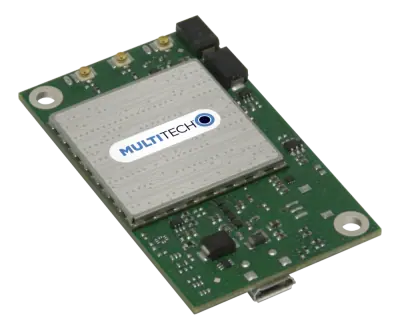
Terminal integration links machine controllers, remote telemetry units, and mobile robots to the private radio infrastructure. The MultiTech MTQ-LNA7-B02.R2 embedded cellular modem operates on 4 G LTE Cat 4 networks while providing integrated GNSS / GPS positioning. Built for extreme operating environments, this unit functions down to a min operating temperature of -40 °C or lower and features 3 surface mount U.FL connectors dedicated to GPS, Cellular, and Auxiliary antenna paths.
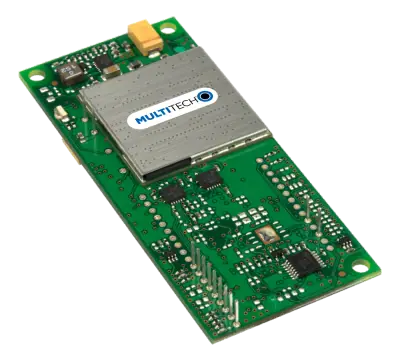
As a flexible peripheral alternative, the MultiTech MTSMC-LAT3-U.R4-SP embedded cellular modem supplies connectivity through a host USB interface. Delivered with a micro USB cable and a 3.3 V magnetic GPS antenna, it simplifies terminal retrofitting. Engineers must calculate RF transmission losses across RF coaxial cables, choosing low-attenuation jumper leads and external radome antennas to ensure adequate link margin inside shielded control cabinets and metal vehicle chassis.
Core network hosting options and redundant uplink supervision
The cellular core network coordinates subscriber authentication, session management, and user plane packet routing. Organizations choose between deploying an on-premise core appliance or utilizing a cloud-hosted virtual core. On-site core installations keep sensitive telemetric data within local plant boundaries, guaranteeing sub-millisecond local routing even during external wide area network outages. Conversely, hosted core setups centralize multi-site operations and reduce on-premises hardware footprints.
High availability relies on redundant backhaul uplinks connecting local base stations to the core appliance. Network designs combine primary optical fibre connections with secondary Gigabit Ethernet links and commercial cellular failover paths. Remote supervision tools continuously monitor latency, packet loss, and radio link quality via SNMP and NETCONF protocols, enabling centralized operations teams to detect degraded backhaul links or radio node faults before operational processes suffer interruption.
Customer infrastructure prerequisites and technical assessment points
Successful private cellular deployments require thorough site preparation and explicit technical handoffs. The customer provides dedicated mounting positions on communication towers or rooftops, uninterrupted AC or DC power feeds, structured cabling trays, and local local-area network routing configurations. Additionally, the operating company supplies site access clearances, internal IP subnet allocations, and any required environmental security enclosures needed to house auxiliary power supplies and network interface switches.
Before drafting network topologies, technical teams review critical project parameters. Field engineers confirm the allocated private radio spectrum and operating license validity issued by national regulators. They quantify the outdoor surface area, indoor building footprints, and anticipated device density. Furthermore, technical evaluations determine whether the core network resides locally or within a hosted data center, while examining the exact radio band support and SIM profiles across all connected client terminals.
Project execution phases and deployment workflow on quotation
Private cellular projects progress through a structured engineering sequence tailored to each industrial facility. Atlas Electronics delivers packaged systems sold exclusively on quotation following a comprehensive RF propagation assessment. The process commences with predictive RF coverage modeling that accounts for physical topography, metallic obstructions, concrete wall dampening, and required signal thresholds across active operational zones.
Following simulation, hardware bills of materials are established with selected small cells, industrial modems, and antenna assemblies. Equipment undergoes pre-configuration and SIM profile assignment prior to on-site mechanical installation. Deployment teams complete RF alignment, calibrate synchronizing clock sources, and establish redundant backhaul connections. Final handover includes formal acceptance procedures checking throughput, coverage heatmaps, and remote supervisory integration into existing industrial management consoles.
Bill of materials
Catalogue products that can fill each role. Atlas Electronics quotes the complete bill of materials for your project; you check each datasheet before ordering.
Small cells
Outdoor small cell base stations including the Genew GN5313 4T4R unit and Askey 5 G-SMALL-CELL-PRODUCTS all-in-one gNB for dedicated industrial wireless coverage.
GN5313
Small Cells
Outdoor LTE TDD two-carrier 4T4R base station · Ref. : GN5313

- GENEW
- 1588/GPS/BDS
- 4*40W
Price on request
5G-SMALL-CELL-PRODUCTS
Small Cells
Outdoor 5G small cell, all-in-one gNB

Price on request
Terminals
Embedded industrial cellular modems including the MultiTech MTQ-LNA7-B02.R2 and MultiTech MTSMC-LAT3-U.R4-SP for machine and vehicle telemetry.
MTQ-LNA7-B02.R2
Cellular Modems and Dongles
Embedded LTE Cat 4 cellular modem with GNSS · Ref. : MTQ-LNA7-B02.R2
- AT&T, Verizon
- 1 - Micro USB Cable
- FCC
Price on request
MTSMC-LAT3-U.R4-SP
Cellular Modems and Dongles
LTE Cat 1 embedded cellular modem with USB interface · Ref. : MTSMC-LAT3-U.R4-SP
- 1 - Micro USB Cable
- FCC, IC
- Quick Start Guide
Price on request
Frequently asked questions
How do regulatory frequency band allocations impact the selection of small cells for private cellular networks?
Industrial spectrum authorization varies by jurisdiction, with authorities granting specific local allocations or shared cellular bands. Engineering teams must review local license terms to select small cells supporting the exact channel frequencies and maximum equivalent isotropically radiated power limits authorized on the property.
What criteria determine whether the cellular core network should be hosted locally on site or in a remote cloud facility?
An on-premise core network guarantees autonomous low-latency packet routing and keeps proprietary telemetric data strictly within plant boundaries even if external Internet backhaul drops. A cloud-hosted core centralizes administration across multiple distributed facilities and simplifies computing hardware maintenance.
How does antenna cabling length affect the performance of industrial cellular modems?
High-frequency cellular signals suffer attenuation when routed through standard coaxial cable. In installations where modems reside inside shielded metallic machinery enclosures, operators must keep coaxial antenna jumper leads as short as possible and select low-loss cables to preserve receive sensitivity.
What synchronization mechanism is required between multiple outdoor small cells?
Cellular small cells operating in Time Division Duplexing modes require phase and frequency alignment to prevent inter-slot interference. Systems utilize Precision Time Protocol conforming to IEEE 1588 or integrated GNSS satellite receivers to synchronize frame timing across adjacent base stations.
A project? Our engineers build the solution with you.
Send your requirements: Atlas proposes the architecture, the bill of materials and a quotation, then follows the supply.
Request a quotationRelated pages
 Use casePrivate 4 G and 5 G Cellular Networks in Telecom and NetworkingExplore private 4 G and 5 G cellular network architectures for telecom networks, covering frequency bands, mast cabling, and remote monitoring.
 Use caseCellular IoT Connectivity Architecture in Telecom and Network DeploymentsThis technical analysis details how cellular IoT modems and gateways provide reliable out-of-band links for telecom infrastructures.
 Use caseCellular IoT Connectivity Solutions in Electronics & OEM/ODMThis engineering guide details cellular IoT deployment for OEM builders facing radio compliance mandates and lifecycle management issues.
 Use caseFleet Transportation and Traceability Architecture for Warehouse LogisticsThis technical guide details cellular gateway integration and RFID tracking architectures for fleet vehicles in warehouse logistics.
 ProjectHardware for Telecom & Networks projectsThis guide helps Telecom & Networks buyers select routers, switches, RF links, and optics on quotation through Atlas Electronics.
 ArticleHow to choose hardware for Telecom & NetworksThis guide details cellular band checks, RF link budgets, uplink redundancy and hardware families for sizing industrial telecom networks.
 OfferIndustrial IoT Kit for Robotics & AutomationThis technical guide details custom industrial IoT kit integration to link robotics and automation lines with edge and backhaul architectures.
 OfferIndustrial IoT kit for Telecom & NetworksThis technical guide details the on-quotation industrial IoT kit connecting field sensors and PLCs to platforms across telecom networks.