S-730
Online total suspended solids and MLSS meter
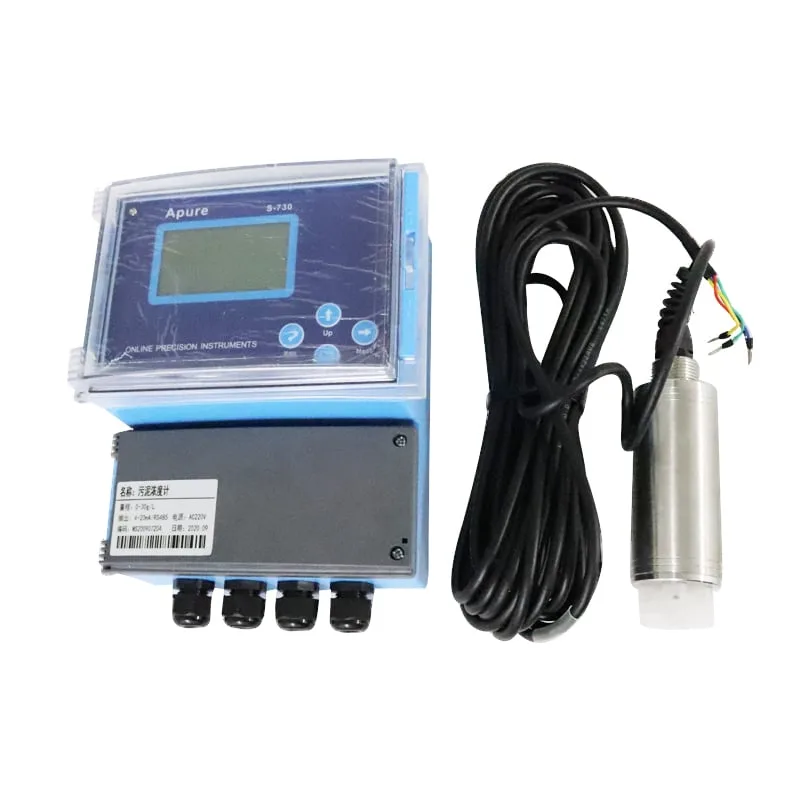
Limited record: this part has neither specifications nor a datasheet in the catalog yet. It is shown for reference and is not indexed.
Online total suspended solids and MLSS meter
The Apure S-730 is an online suspended-solids analyser whose reading must be calibrated on site. It suits continuous monitoring of sludge and wastewater.
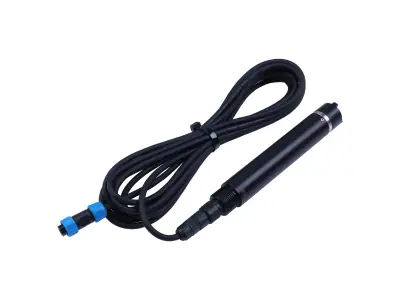
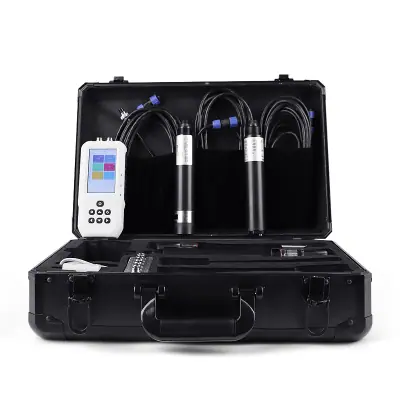
Overview. The Apure S-730 is an online meter for total suspended solids (TSS) and mixed-liquor suspended solids (MLSS), designed for a matched optical measurement system. Concentration is obtained through calibration on the actual water or sludge matrix, as the relationship between optical signal and concentration depends on particle properties and installation.
Main characteristics. Resolution of 1 mg/L and precision of ±1 %FS over the TD-30 electrode range of 0 to 30 g/L. The unit is mg/L or g/L; NTU describes a separate turbidity indication and is not converted to concentration.
Interfaces and connectivity. One isolated 4-20 mA signal output and two alarm relays are provided, with a control interface of four relays with high and low point triggers. Depending on the version ordered, an RS485 Modbus RTU link is available.
Power and environment. Supply of 100-240 VAC or 24 VDC depending on the version, IP65 protection. Medium temperature from 0 to 60 °C, minimum operating temperature 0 °C, relative humidity less than or equal to 85 %. Dimensions 242×184×135 mm.
Typical uses. Monitoring of suspended solids and MLSS in wastewater and sludge treatment processes, with values passed to a PLC through the 4-20 mA output or Modbus.
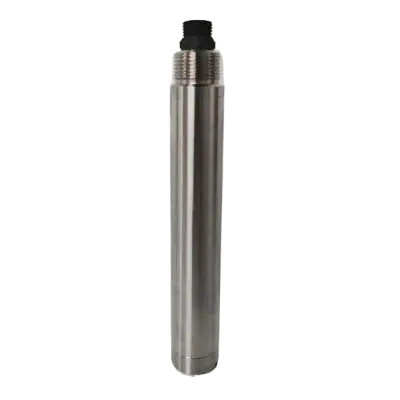
Integration. An on-site calibration, verified against reference samples taken at the probe location, is required. It must be repeated when sludge composition, particle size, colour or installation changes. The exact characteristics of the supplied probe and the terminal assignments are to be confirmed at ordering.
No published question about this part yet. Questions are reviewed before publication.
Official documents and the technical data recorded for S-730. For a missing document or a specific revision, our experts send it to you.
The Apure S-730 is an online suspended-solids analyser whose reading must be calibrated on site. It suits continuous monitoring of sludge and wastewater.
Similar parts to answer your needs. Compare the main characteristics. A recorded replacement is a documented relation; a similar product is a similarity only, never a compatibility claim.
Online total suspended solids and MLSS meter
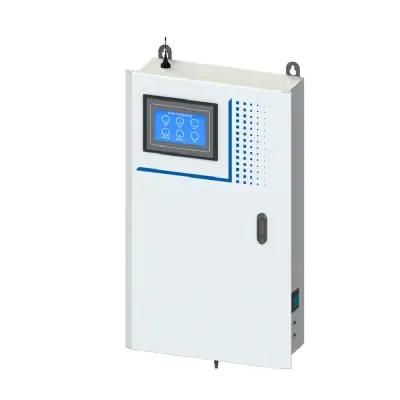
MPP1000 Multi-parameter analyzer
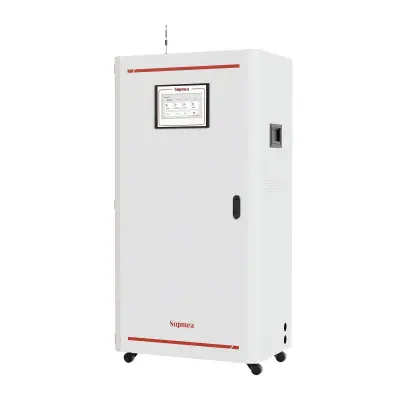
MDX500 Multi-parameter analyzer
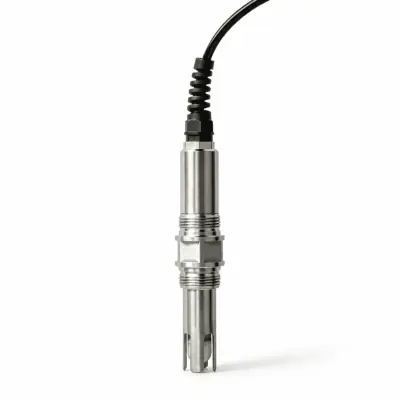
SUP-ADP2400 Digital pH Sensor for Reliable Online Water Quality Monitoring
Describe your application and constraints in a request.
What is recorded about the regulatory status and the life of this part.
No compliance statement is recorded for this part. Ask the supplier for the RoHS and REACH declarations and, for a radio product, the EU declaration of conformity.
| Current status | Status not stated |
| Key dates | Not recorded |
| Manufacturer part number | S-730 |
| Manufacturer | Apure |
pH and Conductivity Analyzers
RS485 Modbus Dissolved Oxygen Sensor, Fluorescence Method
Price on request
pH and Conductivity Analyzers
Online UV fluorescence BOD sensor, reagent-free · Ref. : WQ-BOD-4S
Price on request
pH and Conductivity Analyzers
Portable ORP analyzer with digital electrode and touch screen · Ref. : ORP-METER
Price on request
pH and Conductivity Analyzers
Multiparameter Water Quality Sensor · Ref. : KPS-400
Price on request
No advertising or analytics cookies. A single, strictly necessary cookie is set only if you sign in to your account. Your quote basket and comparison stay in your browser. Details