BDE-WF3230SFN
Wi-Fi MCU module based on CC3230SF
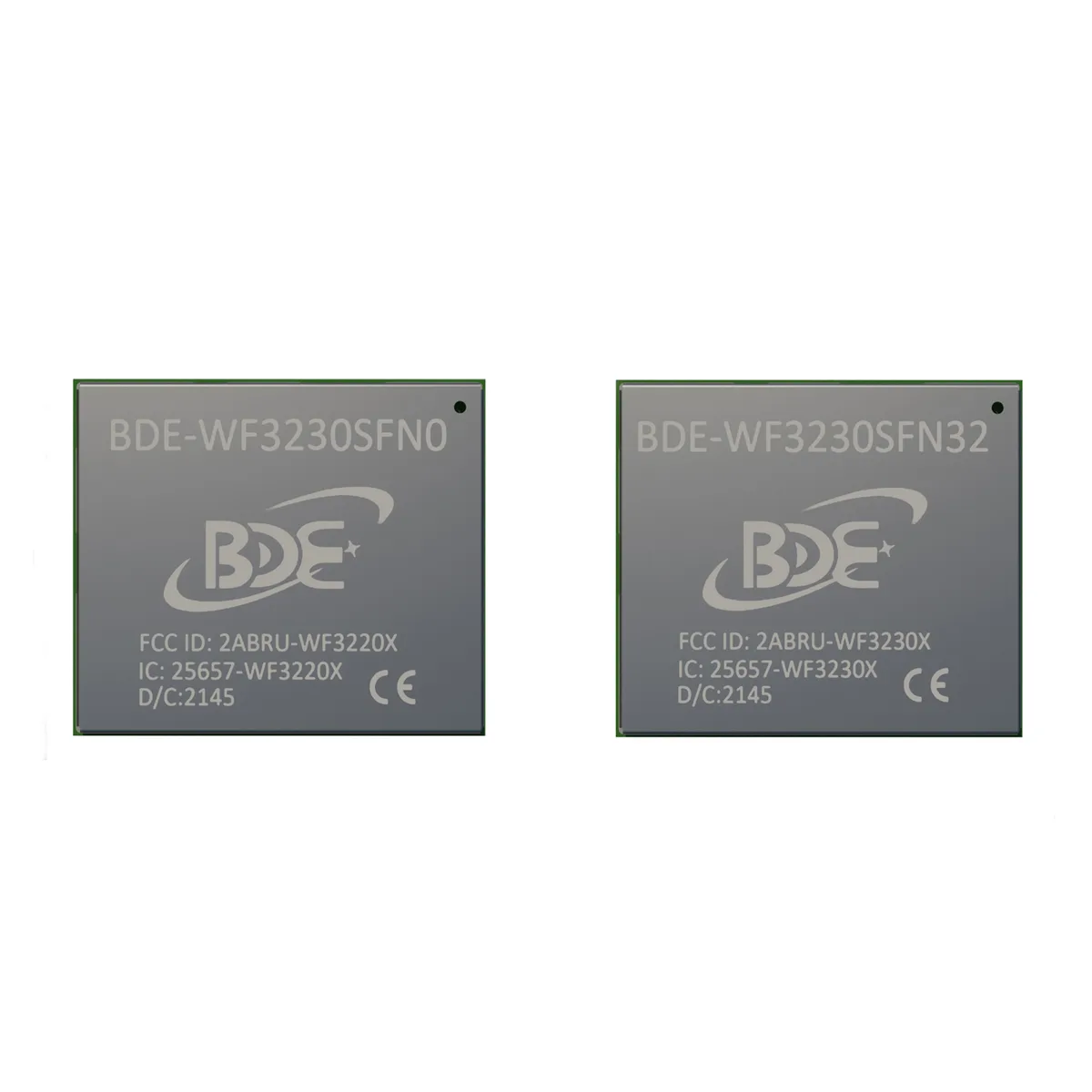
Wi-Fi MCU module based on CC3230SF
Dual-band 802.11a/b/g/n Wi-Fi MCU module integrating two MCUs, an application processor and a network processor, designed for battery-powered IoT applications.
Overview. The BDE-WF3235 from BDE Technology is an 802.11a/b/g/n, IPv4 and IPv6 Wi-Fi MCU module based on the CC3235SF SoC, integrating all external components, including a dual-band chip antenna. It is designed for IoT and integrates two physically separated on-chip MCUs, an application processor and a network processor.
Main characteristics. The module is fully integrated and RoHS compliant, with all required clocks, SPI flash and passives included. It operates in 802.11a/b/g/n on 2.4 GHz and 5 GHz, offers low-power modes for battery-powered applications, and supports an industrial temperature range of –40 °C to +85 °C. The IC inside is FIPS 140-2 Level 1 validated. The 1.27 mm pitch QFM package eases assembly and low-cost PCB design.
Application subsystem. The Arm Cortex-M4 core runs at 80 MHz, with 256 KB of user RAM and optional 1 MB of executable flash. It provides two I2S channels through McASP, SD, SPI, I2C and UART, an 8-bit synchronous imager interface, four 12-bit ADC channels, four general-purpose timers with 16-bit PWM mode, a watchdog, and up to 27 GPIO pins. JTAG, cJTAG and SWD debug interfaces are available.
Wi-Fi network subsystem. The Wi-Fi core supports access point (AP), station (STA) and Wi-Fi Direct modes, the latter only on 2.4 GHz. WEP, WPA/WPA2 PSK, WPA2 Enterprise and WPA3 Personal security are supported. The stack includes an HTTPs server, mDNS, DNS-SD, DHCP, an IPv4 and IPv6 TCP/IP stack, and 16 BSD sockets with TLS v1.2 and SSL 3.0. Power management offers configurable profiles (always on, intermittently connected, tag), advanced low-power modes and integrated DC/DC regulators.
Typical uses. Through its UART, SPI, I2C interfaces and GPIO pins, the module integrates with a host microcontroller or system for Wi-Fi connected IoT equipment running on battery.
No published question about this part yet. Questions are reviewed before publication.
Official documents and the technical data recorded for BDE-WF3230SFN. For a missing document or a specific revision, our experts send it to you.
Dual-band 802.11a/b/g/n Wi-Fi MCU module integrating two MCUs, an application processor and a network processor, designed for battery-powered IoT applications.
Similar parts to answer your needs. Compare the main characteristics. A recorded replacement is a documented relation; a similar product is a similarity only, never a compatibility claim.
Wi-Fi MCU module based on CC3230SF
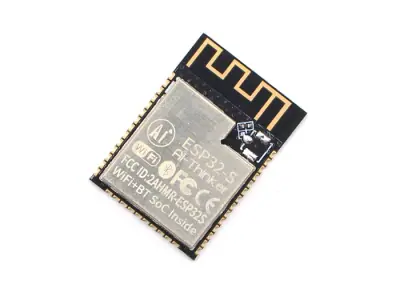
WiFi Espressif ESP32
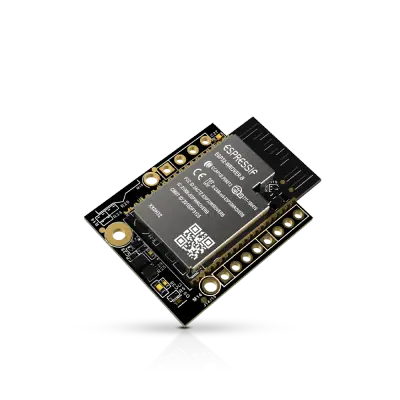
WiFi and BLE Espressif ESP32-WROVER — RAK11200 WiFi and BLE Espressf ESP32-WROVER with Arduino Open Source
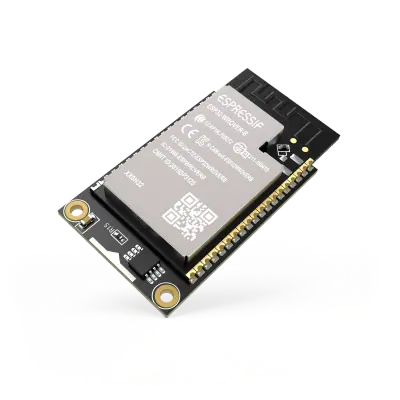
WiFi and BLE Espressif ESP32-WROVER — RAK11200 WiFi and BLE Espressf ESP32-WROVER with Voice Processing
Describe your application and constraints in a request.
What is recorded about the regulatory status and the life of this part.
No compliance statement is recorded for this part. Ask the supplier for the RoHS and REACH declarations and, for a radio product, the EU declaration of conformity.
| Current status | Status not stated |
| Key dates | Not recorded |
| Manufacturer part number | BDE-WF3230SFN |
| Manufacturer | BDE Technology |
Wi-Fi and Bluetooth Modules
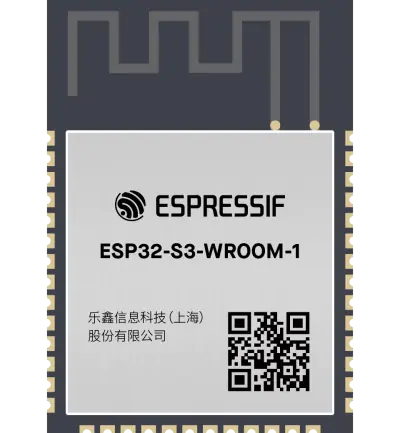
Wi-Fi and Bluetooth LE module with PCB antenna · Ref. : ESP32-S3-WROOM-1-N4R2
Price on request
Wi-Fi and Bluetooth Modules
M.2 2230 Wi-Fi 6 and Bluetooth 5.3 Card · Ref. : AP12275-M2
Price on request
Wi-Fi and Bluetooth Modules
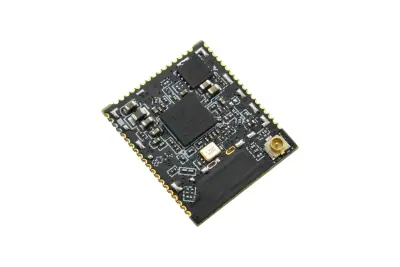
802.11b/g/n Wi-Fi and Bluetooth SoC Module · Ref. : MCC32SESP
Price on request
Wi-Fi and Bluetooth Modules
Wi-Fi and NFC module with ARM Cortex-M3 microcontroller · Ref. : DFR0477
Price on request
No advertising or analytics cookies. A single, strictly necessary cookie is set only if you sign in to your account. Your quote basket and comparison stay in your browser. Details