Product overview
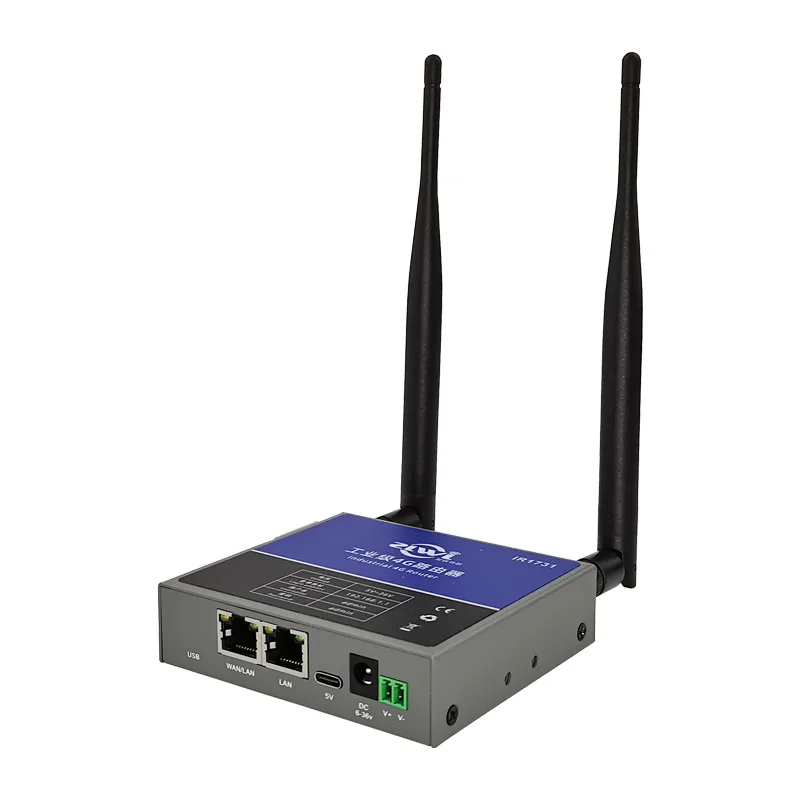
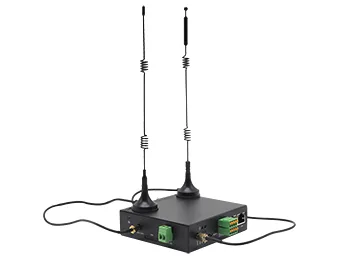
Overview. The Chilink IR1000 is an industrial 4G LTE router from the IR1000 series, designed to keep your equipment reliably connected over cellular networks. It is configured through a web interface or the SingleYun cloud platform.
Main characteristics. 580 MHz CPU, 64 MB DDR2 RAM and 16 MB flash memory. Metal housing measuring 90 x 76 x 26 mm, weighing 234 g. Operating temperature from -30 to 70 °C, storage temperature from -40 to 80 °C, ambient humidity 5 to 95 % non-condensing, protection rating IP30.
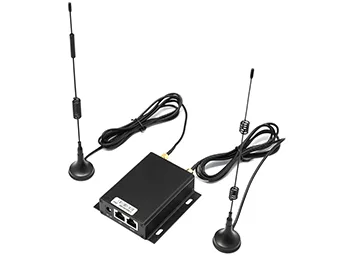
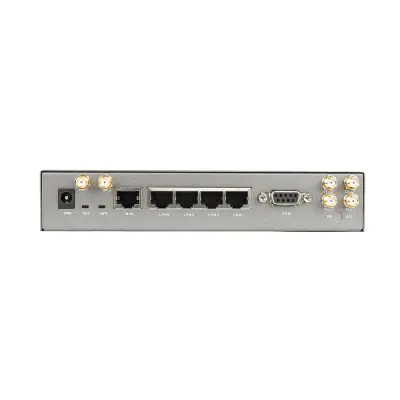
Interfaces and connectivity. Two 10/100 Mbps Ethernet ports (WAN/LAN), 4G connection through an SMA antenna connector and optional Wi-Fi IEEE 802.11b/g/n up to 150 Mbps with an RP-SMA connector. Serial ports: 1 x RS232 and 1 x RS485. Nano SIM card (2FF). Supports GSM/GPRS/EDGE, UMTS/HSPA+/EVDO/TD-SCDMA and TDD LTE/FDD LTE networks, frequencies depending on the ordered version. Network access via APN and VPDN, WAN protocols PPP, PPPoE and DHCP.
Power supply and mounting. DC power supply from 9 to 36 V with over-current protection and reverse connection protection, 2-pin industrial terminal block. Mounting on desktop, on wall or on 35 mm DIN rail.
Security and management. PPTP and L2TP data security, stateful packet inspection (SPI) firewall, DoS attack defense, WEP/AES encryption. Bandwidth and traffic management, system and network status monitoring, traffic alarms, local and remote logs, embedded watchdog with automatic recovery.
Typical uses. Connecting remote equipment to an IP network over 4G, with failover to a wired or Wi-Fi link, and connecting serial devices such as PLCs or sensors through the RS485 or RS232 port.