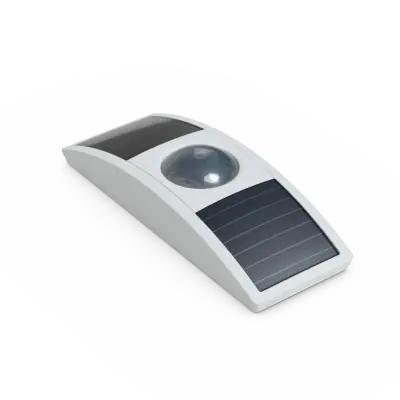
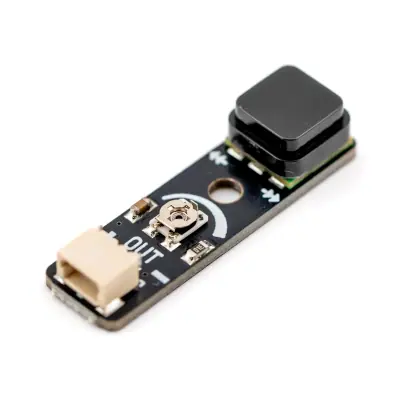
The Hytronik HIM17 is a standalone dual-sense presence sensor combining HF and PIR technologies, designed to control lighting according to occupancy, up to a 6 m mounting height.
Hytronik HIM17. The HIM17 is a standalone Hytronik dual-sense presence sensor combining 5.8 GHz HF and PIR detection. It operates as a trailing edge sensor with tri-level control.
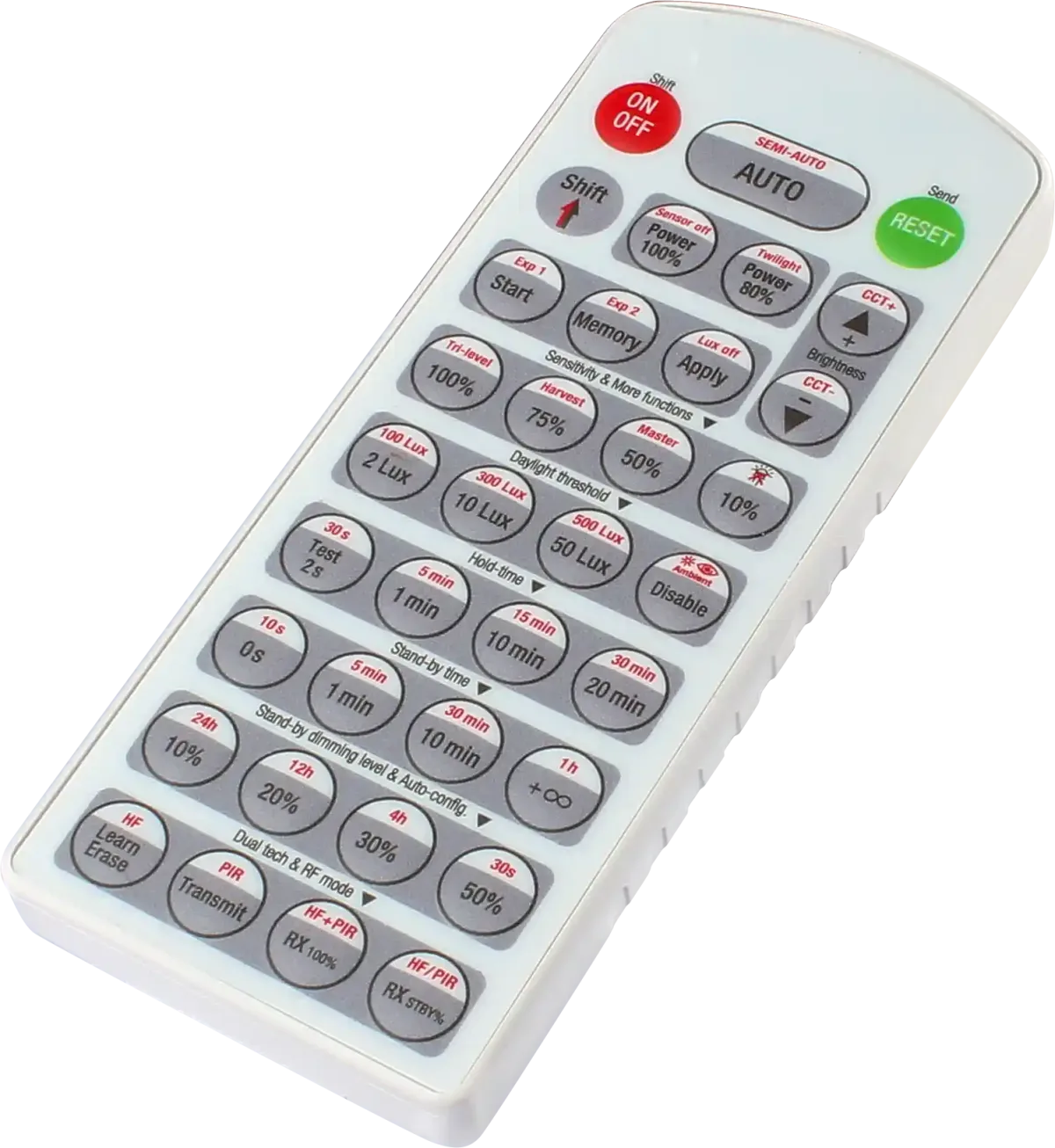
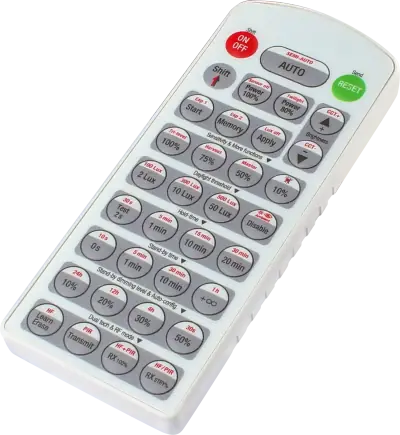
Main characteristics. 360° detection with a 12 x 6 detection diameter, Low-bay lens suited to mounting heights up to 6.0 m, and tri-level corridor function. Commissioning is performed with a one-key infrared remote controller, and the sensor offers a photodiode/photocell daylight sensor option for daylight harvesting.
Interfaces and connectivity. Trailing edge (phase control) dimming output interface, standard 2-cable connection, stand-alone installation. The HIM17 is compatible with the HRC-11 remote controller and the HBGW02 Bluetooth Mesh gateway for full functionality.
Power and environment. Operating voltage 120-277 VAC, IP20, ambient operating temperature -20 °C to 55 °C, storage temperature -40 °C to 70 °C, humidity 10 % to 90 %. Warm-up time 30 s. Dimensions 109 x 109 x 55.2 mm, weight 191 g.
Typical uses. Classrooms with blackboards and student zones, offices with two zones, and corridors thanks to the tri-level function.
No published question about this part yet. Questions are reviewed before publication.
Complete specifications
Every characteristic recorded for HIM17, with where it comes from. Use the filters to find one quickly.
All specifications (35)
Characteristic
Value
Ambient temperature max.:
55 °C
Ambient temperature min.:
-20 °C
Commissioning Methods:
IR Remote Controller
Compact
Standard rectangular sdand alone sensor design
Connector Type
Standard 2 cables
Daylight Harvest:
Yes
Daylight Sensor Option:
Photodiode/Photocell
Detection Angle
360°
Detection Methods:
Dual-Sense (MW+PIR)
Detection range (Diameter):
12x6
Dimming (Output) Interface:
Trailing edge (Phase control)
Features
Tri-level (Corridor Function)
HF operating frequency (Ghz):
5.8Ghz+/-75MHz
Human Centric Lightning (HCL):
No
Humidity max:
90 %
Humidity min:
10 %
Installation Type
Stand-alone
IP Rate
IP20
Lens type
Standard Low-bay
Maximum Mounting Height:
6.0000 m
Mounting height
Low-bay
Mounting Hole
38.6000 mm
Operating Voltage Range
120-277 VAC
Product Height
55.2000 mm
Product Length
109.0000 mm
Product Weight
191.0000 g
Product Width
109.0000 mm
Simple
Trailing edge sensor with tri-level control
Storage temperature max.:
70 °C
Storage temperature min.:
-40 °C
Tri-level (Corridor function):
Yes
User-Friendly
With one-key commissioning with Remote Control
Voltage Type:
AC
Warming-up:
30 s
Zhaga:
No
No specification matches.
Last verification : 2026-11-02
Technical documentation
Official documents and the technical data recorded for HIM17. For a missing document or a specific revision, our experts send it to you.
1. Technical overview
The Hytronik HIM17 is a standalone dual-sense presence sensor combining HF and PIR technologies, designed to control lighting according to occupancy, up to a 6 m mounting height.
Architectures in which HIM17 can play a role, derived from its category. This is not a compatibility statement: check the specifications against your requirements.
Meeting rooms are booked but empty, and some areas are always full. Presence sensors, radars and counting cameras measure how spaces are really used, room by room or at entrances
To check
Presence per room or counting at entrances, or both
Privacy requirements, which favour radar or anonymous counting
Hotel rooms keep heating, cooling and lights on while empty. A room control system links thermostats, switches, door contacts and lighting controllers so the room adapts to the guest’s presence
To check
Wired bus or wireless system, depending on renovation or new build
Link with the property management system for check-in and check-out
Behaviour when the guest is absent (setback temperature, lights off)
Associated system blocks
Climate controlSwitches and panelsPresence detectionLighting control
A building’s energy, comfort and occupancy data sit in separate systems. Sensors, meters and gateways feed one model of the building, room by room, to compare scenarios and steer the installations
To check
Data model and building plans available
Software platform hosting the twin
Sensor density needed for a useful model
Associated system blocks
SensorsMetersGateways
Need a complete solution?
Send a request for HIM17 and the other parts of your project.
Similar parts to answer your needs. Compare the main characteristics. A recorded replacement is a documented relation; a similar product is a similarity only, never a compatibility claim.
Current productHytronik
HIM17
Dual-technology 5.8 GHz and PIR sensor with trailing edge dimming
What is recorded about the regulatory status and the life of this part.
Regulatory compliance
No compliance statement is recorded for this part. Ask the supplier for the RoHS and REACH declarations and, for a radio product, the EU declaration of conformity.
No advertising or analytics cookies. A single, strictly necessary cookie is set only if you sign in to your account. Your quote basket and comparison stay in your browser. Details