Product overview
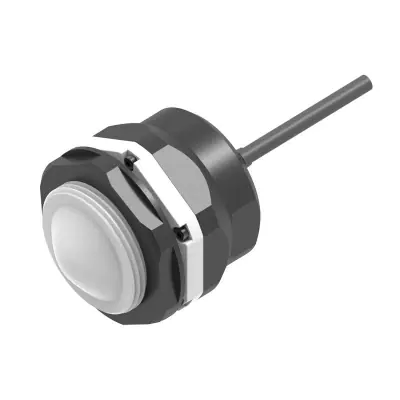
Overview. The Lanbao PST-TM2 is a miniature through-beam photoelectric sensor with separate emitter and receiver, for detecting opaque objects.
Main characteristics. 2 m detection range, minimum detectable target of 3 mm diameter above opaque objects, response time below 1 ms, red light source at 640 nm and light spot of 80 mm at 2 m. ABS housing, PMMA lens.
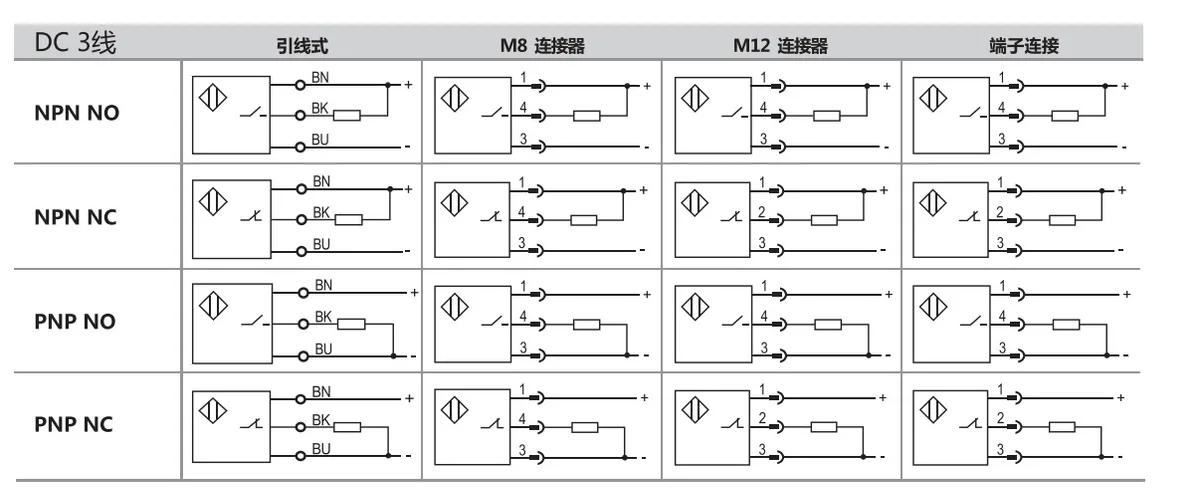
Outputs and connection. NPN or PNP output, normally open (NO) or normally closed (NC) depending on the reference, with load current up to 50 mA and voltage drop up to 1.5 V. 2 m PVC cable. Protection against short circuit, polarity reversal and overload. Green indicator (power and stable signal) and yellow indicator (output).
Power and environment. Supply voltage 10 to 30 VDC, emitter consumption up to 10 mA and receiver consumption up to 15 mA. Operating temperature -20 to 55 °C, storage temperature -30 to 70 °C, IP65 protection. Ambient light immunity: sunlight up to 10,000 lux, incandescent light up to 3,000 lux. CE certified.
Typical uses. Presence or passage detection of opaque objects in confined spaces, thanks to its miniature format and switching output compatible with PLCs or control inputs.
Installation. Supplied with two M3 x 16 mm screws, two nuts and the operation manual.