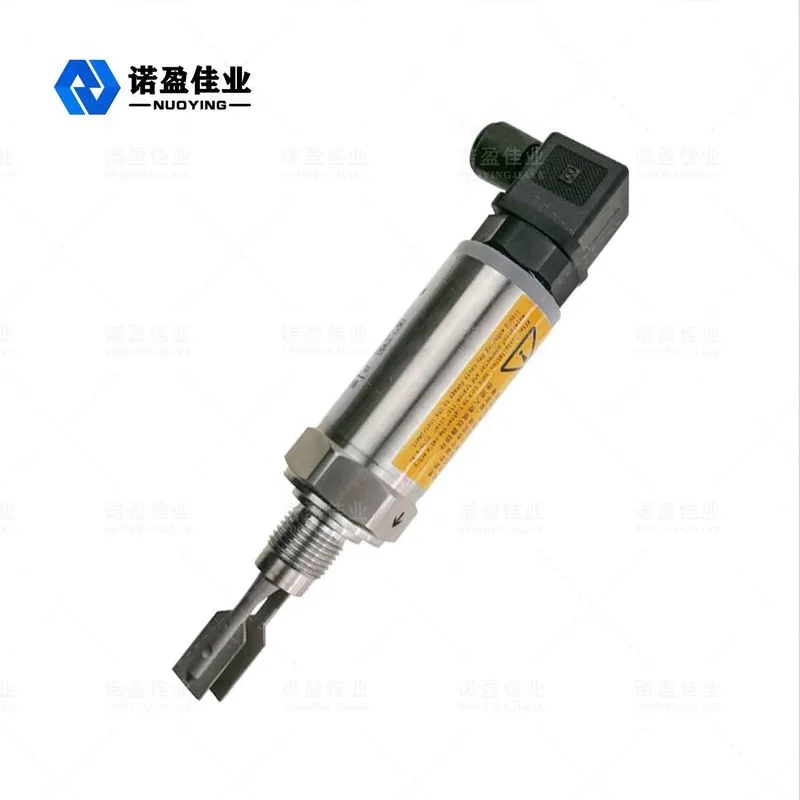
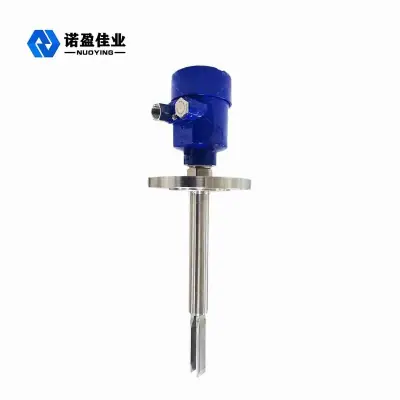
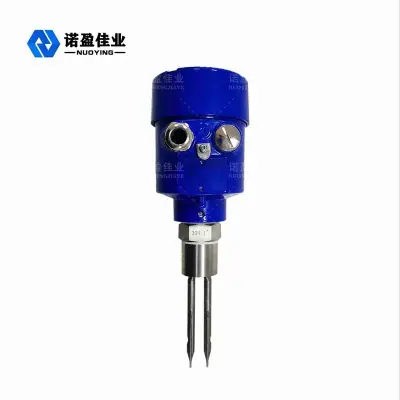
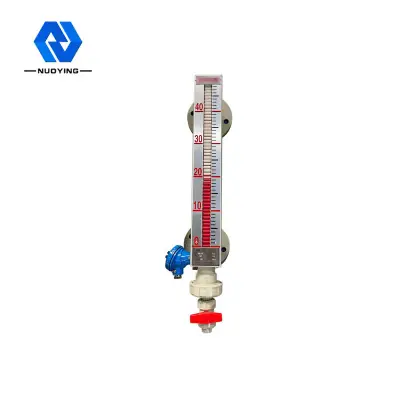
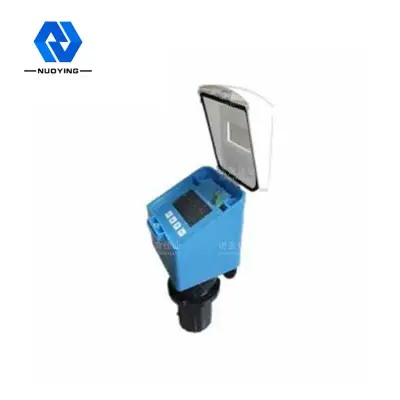
Overview. The Nuoying NYYCUK-A vibrating fork level switch is a tank level detection sensor using vibration, with a 44 mm stainless steel fork.
Main characteristics. The operating principle relies on a pair of piezoelectric crystals that make the fork vibrate at a given resonance frequency. On contact with the medium, the frequency and amplitude change, and the intelligent circuit converts them into a switching signal. The switch requires no adjustment and no maintenance, and it is not affected by foam or eddy currents.
Interfaces and connectivity. Available outputs are SPDT, SPST, PNP and NPN. The process connection is threaded or flanged (optional).
Power and environment. Power supply is 24 VDC or 220 VAC. Protection level is IP67, process stress is below 2.0 MPa, and working temperature is -40 to +130 °C for the fork and -40 to +85 °C for the instrumentation. An explosion-proof version Exd IIBT4 is available as an option, with explosion-proof certificate.
Typical uses. It suits limit level detection of liquids, including viscous, foamy, corrosive or loaded media such as acids, alkalis, slurries or oils.
Integration. Made in China, with a stated supply ability of 300 pieces per month from the manufacturer.
Architectures in which 19751735-00 can play a role, derived from its category. This is not a compatibility statement: check the specifications against your requirements.
Free parking spaces, lifted manhole covers and full bins are only seen during rounds. Wireless sensors on the road report occupancy, tilt and level through outdoor gateways
To check
Installation on or in the road surface
Radio range from below a vehicle or a cast-iron cover
Battery life with the expected number of events
Associated system blocks
Road sensorsGateway
Need a complete solution?
Send a request for 19751735-00 and the other parts of your project.
Similar parts to answer your needs. Compare the main characteristics. A recorded replacement is a documented relation; a similar product is a similarity only, never a compatibility claim.
With your consent, we use Google cookies to measure the site’s audience and our advertising. Your quote basket and comparison stay in your browser either way. Details