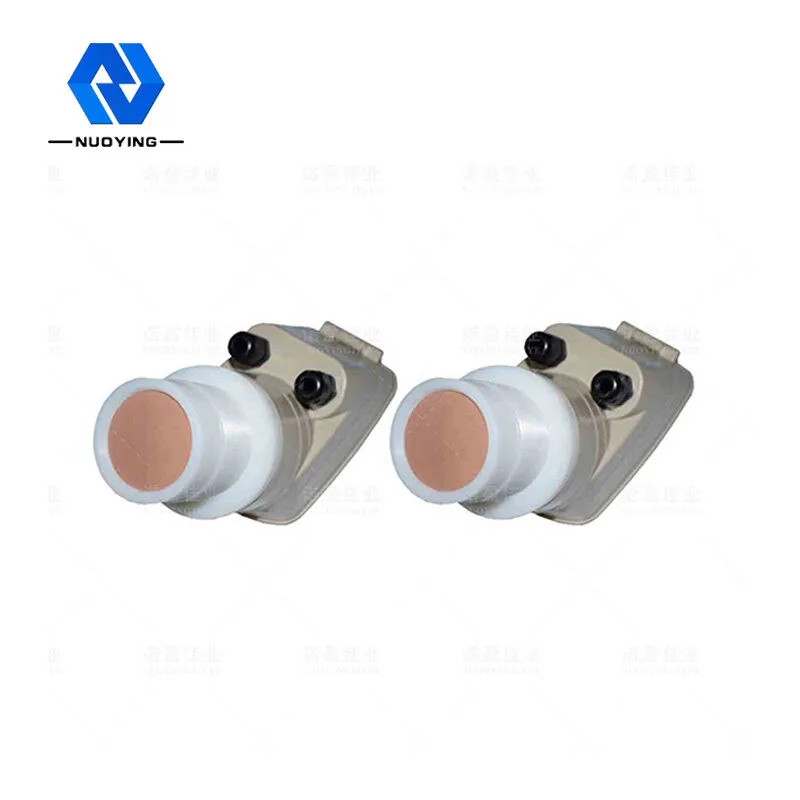
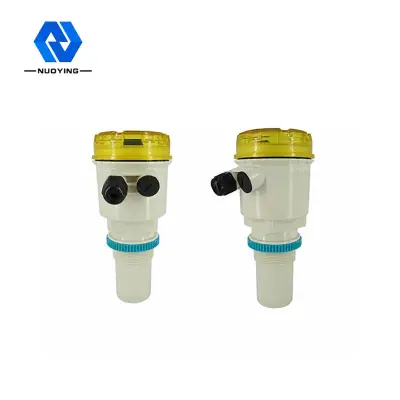
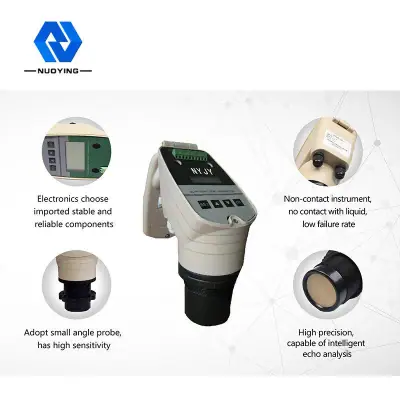
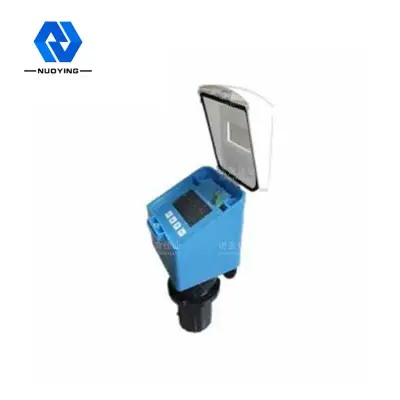
Non-contact ultrasonic level transmitter with integrated probe for measuring liquid level and distance, with 4-20mA output and optional HART and RS485 outputs.
Pressure rangeNormal Pressure
Frequency Range40KHz,100KHz
Measuring Range0~20m
CertificationExplosion proof certificate
Connector Material:PP/PVC/PTFE/304(optional)
DisplayLCD
Product overview
Nuoying NYCSUL-501. The NYCSUL-501 is an ultrasonic level transmitter with integrated probe manufactured by Nuoying, designed for non-contact liquid level measurement.
Main characteristics. Measuring range 0 to 20 m, measuring angle 10°, measurement accuracy below 0.25% for a range under 20 m, ultrasonic frequency 40 kHz and 100 kHz. The device displays the liquid level and the distance (empty height) on an LCD screen. It features temperature compensation, automatic gain control and an interference signal suppression function.
Outputs and connectivity. 4-20mA output with HART protocol and optional RS485. Upper and lower limit setting.
Power and environment. Power supply 24VDC or 220VAC. Process temperature -20 to +70 °C, normal process pressure. Protection class IP65 and IP67. Polypropylene/aluminum housing.
Materials and mounting. Probe in PP, PVC, PTFE or 304 stainless steel, optional. Process connection by thread, flange or bracket mounting.
Certification. Explosion-proof rating Exia II CT6 Ga.
Typical uses. Liquid level measurement in water tanks, sludge and wastewater. The HART signal and RS485 output allow integration into a supervision system or a PLC.
No published question about this part yet. Questions are reviewed before publication.
Complete specifications
Every characteristic recorded for 19762335-00, with where it comes from. Use the filters to find one quickly.
All specifications (23)
Characteristic
Value
Pressure range
Normal Pressure
Certification
Explosion proof certificate
Connector Material:
PP/PVC/PTFE/304(optional)
Display
LCD
Display Mode
Liquid level, distance (empty height)
Explosion-proofgrade
ExiaⅡCT6 Ga
Frequency Range
40KHz,100KHz
Measurement accura
<0.25%(Range<20m)
Measuring Range
0~20m
Measuringangle
10°
Model Number
NYCSUL-501
Output
4-20mA Hart RS485(optional)
Power supply
24VDC,220VAC
Probe Type
Integrated
ProbeMaterial
PP/PVC/PTFE/304(optional)
Process Connection
Thread, Flange, Bracket mounting (optional)
Process pressure
Normal pressure
Process Temperature
-20~+70℃
Protection Class
IP65,IP67
Setting output
Upper limit setting, lower limit setting
Shell material
Polypropylene/Aluminum
Signal Output
4...20mA/HART/RS485...
Typical application
Liquid level measurement
No specification matches.
Last verification : 2026-11-02
Technical documentation
Official documents and the technical data recorded for 19762335-00. For a missing document or a specific revision, our experts send it to you.
1. Technical overview
Non-contact ultrasonic level transmitter with integrated probe for measuring liquid level and distance, with 4-20mA output and optional HART and RS485 outputs.
Pressure rangeNormal Pressure
Frequency Range40KHz,100KHz
Measuring Range0~20m
CertificationExplosion proof certificate
Connector Material:PP/PVC/PTFE/304(optional)
2. Datasheet extract (recorded values)
Parameter
Value
Pressure range
Normal Pressure
Certification
Explosion proof certificate
Connector Material:
PP/PVC/PTFE/304(optional)
Display
LCD
Display Mode
Liquid level, distance (empty height)
Explosion-proofgrade
ExiaⅡCT6 Ga
Frequency Range
40KHz,100KHz
Measurement accura
<0.25%(Range<20m)
Measuring Range
0~20m
Measuringangle
10°
Model Number
NYCSUL-501
Output
4-20mA Hart RS485(optional)
Power supply
24VDC,220VAC
Probe Type
Integrated
ProbeMaterial
PP/PVC/PTFE/304(optional)
Process Connection
Thread, Flange, Bracket mounting (optional)
Process pressure
Normal pressure
Process Temperature
-20~+70℃
Protection Class
IP65,IP67
Setting output
Upper limit setting, lower limit setting
Shell material
Polypropylene/Aluminum
Signal Output
4...20mA/HART/RS485...
Typical application
Liquid level measurement
Applications and use cases
Architectures in which 19762335-00 can play a role, derived from its category. This is not a compatibility statement: check the specifications against your requirements.
Free parking spaces, lifted manhole covers and full bins are only seen during rounds. Wireless sensors on the road report occupancy, tilt and level through outdoor gateways
To check
Installation on or in the road surface
Radio range from below a vehicle or a cast-iron cover
Battery life with the expected number of events
Associated system blocks
Road sensorsGateway
Need a complete solution?
Send a request for 19762335-00 and the other parts of your project.
Similar parts to answer your needs. Compare the main characteristics. A recorded replacement is a documented relation; a similar product is a similarity only, never a compatibility claim.
Current productNuoying
19762335-00
24VDC ultrasonic liquid level transmitter with PTFE probe
With your consent, we use Google cookies to measure the site’s audience and our advertising. Your quote basket and comparison stay in your browser either way. Details