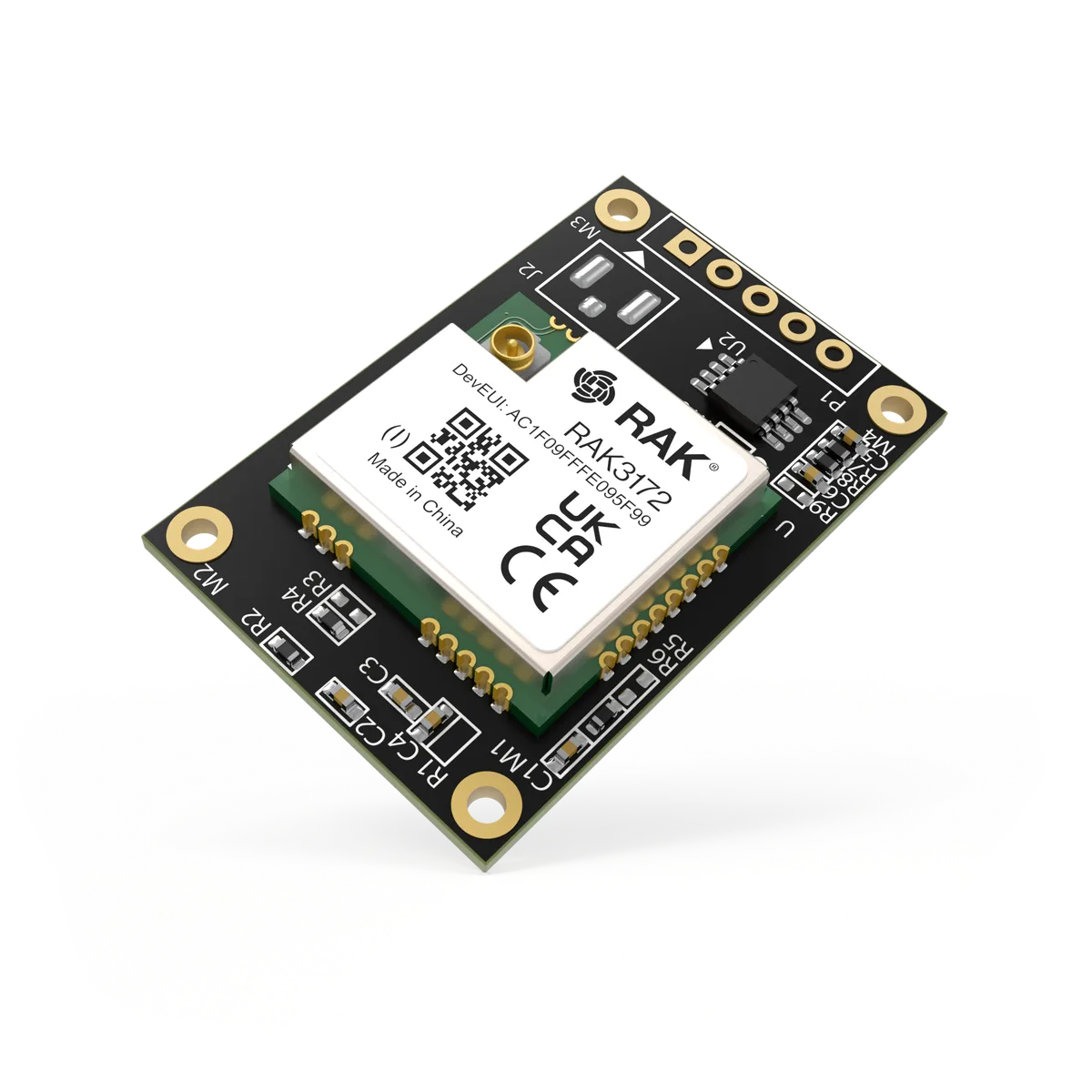
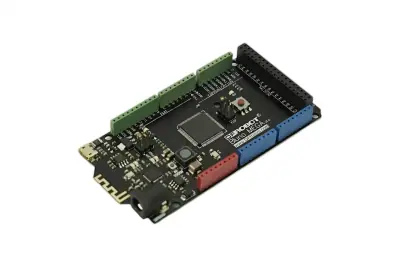
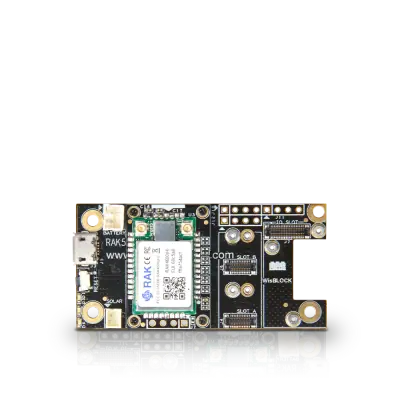
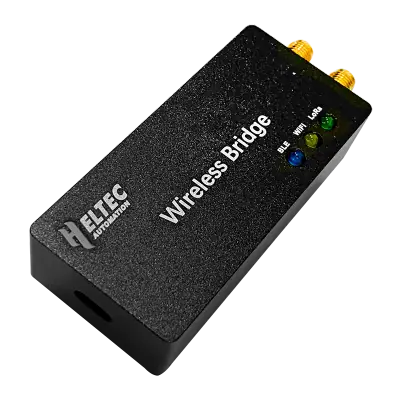
LoRa and LoRaWAN core module based on the STM32WLE5CC, KR920 version, designed for WisBlock base boards in low-power long-range applications.
Temperature range-40 °C to +85 °C
Frequency Range150 MHz to 960 MHz
Supply voltage2.0 ~ 3.6 V
Ultra-Low Power Consumption1.69 μA in sleep mode
Frequency bandKR920
ModelRAK3372
Product overview
Overview. The RAK3372 from RAKwireless is a LoRa and LoRaWAN core module, KR920 version, based on the STM32WLE5CC microcontroller from STMicroelectronics. It plugs into WisBlock base boards, to which WisBlock sensor and IO modules also connect.
Main characteristics. The radio covers 150 MHz to 960 MHz. The module is supplied at 2.0 to 3.6 V, draws 1.69 μA in sleep and 87 mA in TX at 20 dBm on 868 MHz, with 5.22 mA in RX mode. Its operating temperature range is -40 °C to +85 °C.
Interfaces and connectivity. The module supports Class A, B and C of LoRaWAN 1.0.4 and connects to platforms such as TheThingsNetwork (TTN), Chirpstack or Helium. It also supports LoRa Point-to-Point (P2P) mode. The pins expose UART ports (TXD0/RXD0, TXD1/RXD1), I2C buses, an SPI bus, analogue inputs AIN0 and AIN1, and several digital inputs/outputs.
Operation and integration. The module can run standalone with custom firmware based on RUI3, whose APIs let you create tailored functionality. It can also act as a LoRa modem driven by a host through AT and Binary commands over UART. This version is set for the KR920 band.
Check the exact pin assignment and the application circuit in the datasheet, or ask our experts.
Implementation checklist
Power : plan for a supply compatible with 2.0 ~ 3.6 V.
Applications and use cases
Architectures in which 118031 can play a role, derived from its category. This is not a compatibility statement: check the specifications against your requirements.
RAKwireless WisGate gateways run WisGateOS 2 and are managed from WisDM, RAKwireless’ cloud device management platform with a built-in network server, alongside RAK sensor nodes, radio modules and concentrators
To check
WisDM built-in network server, or a third-party one (ChirpStack, TTN/TTS, AWS IoT Core, Actility)
Remote configuration and updates of the gateways from WisDM
Regional frequency plan of the gateways and nodes
Associated system blocks
GatewaysSensors and modulesDevelopment boardsMounting
Seeed SenseCAP sensors connect to Seeed’s SenseCAP cloud platform and app, and Seeed edge computers, camera modules, Grove and XIAO boards complete the chain for custom devices and local processing
To check
SenseCAP cloud platform and app, or the customer’s own network server
Prototype on Grove and XIAO, then move to industrial versions
Local processing on the edge computers or in the cloud
Associated system blocks
SensorsEdge computingDevelopment boards
Need a complete solution?
Send a request for 118031 and the other parts of your project.
Similar parts to answer your needs. Compare the main characteristics. A recorded replacement is a documented relation; a similar product is a similarity only, never a compatibility claim.
Current productRAKwireless
118031
LoRa STM32WLE5 core module LoRaWAN KR920 low power
What is recorded about the regulatory status and the life of this part.
Regulatory compliance
No compliance statement is recorded for this part. Ask the supplier for the RoHS and REACH declarations and, for a radio product, the EU declaration of conformity.
No advertising or analytics cookies. A single, strictly necessary cookie is set only if you sign in to your account. Your quote basket and comparison stay in your browser. Details