Product overview
RAKwireless RAK7289CV2 border gateway with LTE and RAK7267 and RAK7289V2 relay gateways — this outdoor LoRaWAN gateway kit for sub-GHz mesh networking is supplied in the configuration of 2 relay gateways and 1 border gateway, for the 900 MHz region, with LTE Cat-4 EG95-E and UK power plug.
Main characteristics. The Gateway Mesh protocol, co-developed by ChirpStack and RAKwireless, forms a multi-hop LoRaWAN network with a maximum of 8 hops, 3 to 4 recommended. The relay gateways offer selectable SF, BW and TX power, with channel hopping, and use 8 RX and 1 TX radio channels. LoRaWAN versions 1.0.0 to 1.0.4 and 1.1.0 are supported. The network monitors its state through heartbeat messages and an info page on the LNS. Distances between gateways range from 2 to 10 km depending on locations, and a network typically supports 1000 sensors depending on topology and messages per day.
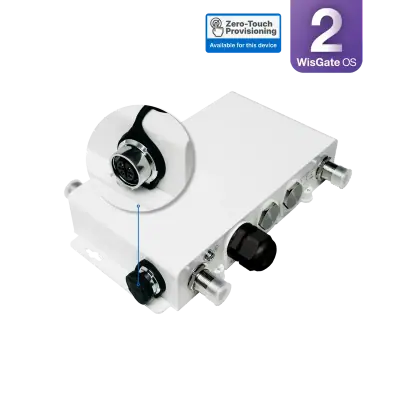
Connectivity. The RAK7289CV2 border gateway provides Ethernet, Wi-Fi and cellular backhaul, with LTE, Wi-Fi and GPS antennas built into the enclosure. The RAK7267 relay gateway has built-in antennas for LoRa, Wi-Fi and GPS, with Cat-1 LTE. The RAK7289V2 relay gateway uses an external LoRa antenna and Wi-Fi and Ethernet interfaces.
Power and environment. The relay gateways accept DC 9-36 V input and are compatible with the RAK Battery Plus off-grid system (battery and solar). The RAK7289V2 accepts PoE 802.3af with surge protection, or DC 12 V. The IP67/NEMA-6 industrial enclosure with cable glands and the dying gasp function protect against power failures. Installation is by pole mount.
Typical uses. This kit suits outdoor LoRaWAN networks where range is the primary goal, such as agricultural fields, remote monitoring sites and large industrial facilities, for message volumes in the low thousands per day. As the sub-GHz band is shared with end devices, network capacity may be reduced.
Integration. The pre-flashed ChirpStack Gateway OS with the Gateway Mesh protocol allows direct operation of the network, with a shared key for MIC checking of messages between gateways and a per-gateway message ID cache against network flooding.