Product overview
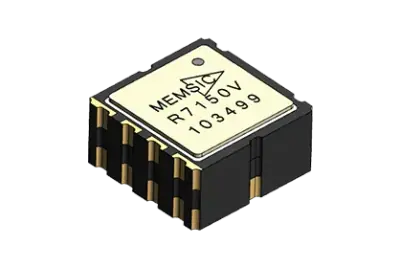
Overview. The Supmea SUP-TRC 400 is a residual chlorine meter, an industrial transmitter that continuously measures the free chlorine concentration in water. The sensor measures the electrical potential generated by the interaction between free chlorine and the sensor electrode, using MEMS microelectronics technology and a special membrane structure.
Main characteristics. The residual chlorine measuring range is 0 to 5 mg/L, with a maximum chlorine concentration of at least 5 ppm. Accuracy is ±0.01 mg/L when the value is at or below 0.1 mg/L, and ±5% of the measured value or ±0.02 mg/L, whichever is greater, when it is at or above 0.1 mg/L. The resolution is 0.01 and the response time is less than 30 s after polarization is completed. Temperature is measured from 0.1 to 40.0 ℃ with a Pt1000 sensor featuring built-in automatic compensation. The device has a 7-inch touch screen.
Interfaces and connectivity. Digital communication uses MODBUS RS485. A 4 to 20 mA transmit output is available as an option. Load resistance is 750 Ω or less. The connection is a 5-pin waterproof aviation plug, and the standard cable length is 3 metres, with other lengths available on request.
Power and environment. The power supply is 220 VAC and power consumption is 1.56 W. The ingress protection rating is IP43, the maximum pressure is 4 bar, and the thread size is NPT 3/4. The operating temperature ranges from 0 to 40 ℃ (non-condensing), and the permissible environmental humidity is 95% or less with no condensation. The wetted materials are PVC and Viton® O-ring seals.
Operating conditions. The minimum conductivity required is 100 µS/cm, and the device cannot be used for ultrapure water. The pH must be between 5 and 9, as a value below 5 will damage the membrane head. The recommended flow rate in the flow cell is at least 0.03 m/s. On first use, pass chlorinated water through the device for 2 hours, then power it on for half an hour.
Integration. Thanks to its Modbus RS485 output, the analyzer can be connected to a programmable logic controller or a supervisory system. The 4 to 20 mA signal allows connection to PID controllers or two-position controllers.