IRT40C
Isolated 10~60V to 12V 40W DC/DC Converter Module
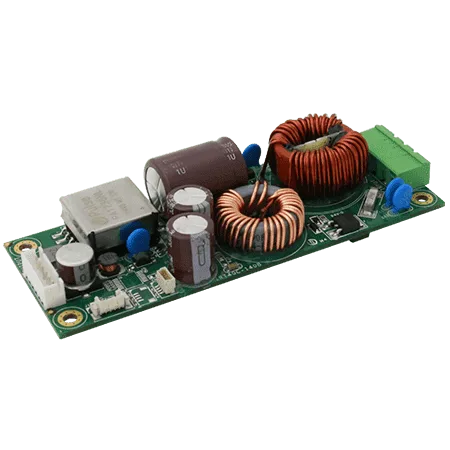
Limited record: this part has neither specifications nor a datasheet in the catalog yet. It is shown for reference and is not indexed.
Isolated 10~60V to 12V 40W DC/DC Converter Module
Explore Winmate IRT40C, a DC-DC converter module featuring High efficiency DC-DC Converter, Low inrush current for industrial power integration and mobile…
KEY FEATURES
High efficiency DC-DC Converter
Low inrush current
Output over-current protection
Wide range voltage input
Optional Ignition Control Function
CERTIFICATIONS
FCC" title="FCC CE" title="CE
DATASHEET RESOURCE ADD TO INQUIRY
ADD TO COMPARE
IRT40C
Isolated 10~60V to 12V 40W DC/DC Converter Module
IRT40C | Isolated 10~60V to 12V 40W DC/DC Converter Module IRT40C | Isolated 10~60V to 12V 40W DC/DC Converter Module IRT40C | Isolated 10~60V to 12V 40W DC/DC Converter Module
IRT40C | Isolated 10~60V to 12V 40W DC/DC Converter Module IRT40C | Isolated 10~60V to 12V 40W DC/DC Converter Module IRT40C | Isolated 10~60V to 12V 40W DC/DC Converter Module
Overview Specification Product FAQs
Product Details
Modular DC-DC System Design Done Right
The common drawbacks of using one part to span an ultra-wide input voltage range include: Lower efficiency, Lower power density, and Higher cost By contrast, deploying two or more converters can deliver higher power densities and reduce size.
OV, OC, UV, short circuit & thermal protection
The IRT40C, Isolated 10~60V to 12V 40W DC/DC, Regulated DC Converter is a DC-DC converter, operating from an unregulated, wide-range input to generate an isolated 12V 3A output.
Output over-current protection
With its high-frequency zero-voltage switching (ZVS) topology, the IRT40C converter consistently delivers high efficiency across the input line range. Modular IRT40C converters and downstream DC-DC products support efficient power distribution, providing superior power system performance and connectivity from a variety of unregulated power sources to the point-of-load.
Specification
System Specification
Input Voltage
10V to 60V DC
Load Range
12V 3.3A
Power Consumption
40W
Isolation
Yes
Ripple And Noise
Less than 120mV
Line Regulation
Less than ±1% at rated 10~60V input voltage
Load Regulation
Less than ±5%
Efficiency
Up to 90% (Full loading)
Protection
OCP protection OVP protection
Certification
Certification
CE, FCC
Environment
Operating Humidity
10% to 90% RH, Non-Condensing
Operating Temperature
0°C to 50°C
Storage Temperature
-20°C to 70°C
Altitude
0 to 10000ft
Mechanical
Dimension
120 x 45 x 24.6 mm
Product FAQs
What is the Winmate IRT40C DC/DC converter module used for?
The IRT40C converts 10–60 V DC input to a 12 V DC output with a listed 40 W rating. It is a power-conversion component for compatible industrial or mobile equipment, not a complete power system.
What input voltage does IRT40C accept?
The detailed input specification lists 10–60 V DC. Check the actual supply, transients and connector wiring before integration.
What output voltage, current and power are listed for IRT40C?
The page lists 12 V, 3.3 A in its load-range entry and 40 W as nominal power. Size the continuous load using the rated power and account for temperature; do not treat the current figure alone as a system guarantee.
Does IRT40C provide electrical isolation?
The detailed specification explicitly lists isolation for this model. Confirm its isolation test level if the project needs a quantified withstand rating.
What conversion efficiency and ripple are specified for IRT40C?
Efficiency is listed as up to 90% at full load, with ripple and noise below 120 mV. These are stated specification values, not a site-level performance guarantee.
What output protections are documented for IRT40C?
The detailed table lists over-current protection (OCP) and over-voltage protection (OVP). Evaluate upstream fusing and system-level protection for the installed equipment.
What operating temperature and humidity apply to IRT40C?
The listed operating range is 0–50°C and 10–90% RH, non-condensing. Assess heat dissipation inside the finished enclosure.
What are the dimensions of IRT40C?
The detailed mechanical entry lists 120 × 45 × 24.6 mm. Confirm clearances, fasteners and cable access against the mechanical drawing.
Which compliance or certification entries are listed for IRT40C?
The detailed certification entry lists CE and FCC. Do not apply a component-level statement to the finished vehicle or system without separate assessment.
What should be checked before integrating IRT40C into mobile or field equipment?
Match 10–60 V input, 12 V output, 40 W rating, startup demand and environmental design. The official key features also list ignition control as optional. Confirm the ordered revision and wiring diagram.
Isolation DC converters are critical components in a wide range of electronic devices, from household appliances to industrial machinery. They are designed to convert DC voltage from one level to another, while isolating the output voltage from the input voltage, providing an additional level of safety and protection for both the device and the user. What is an Isolation DC Converter? An isolation DC converter is a type of DC to DC converter that uses isolation techniques to provide a safe, isolated output voltage that is independent of the input voltage. The isolation is achieved by using a transformer or an optocoupler, which separates the input and output circuits electrically, preventing any potential difference between them. Isolation DC converters are commonly used in applications where safety is a critical concern, such as in medical devices, electric vehicles, and power supplies for industrial equipment. They are also used in many consumer electronics applications, such as laptop and smartphone chargers, as well as in home appliances like refrigerators and air conditioners. Advantages of Isolation DC Converters The primary advantage of an isolation DC converter is that it provides an isolated output voltage, which protects the device and the user from electrical shock. The isolation also helps to reduce noise and interference in the output voltage, resulting in a cleaner and more stable signal. Another advantage of isolation DC converters is their high efficiency. Because they use DC to DC conversion, they are able to achieve higher efficiencies than AC to DC converters, which can result in significant energy savings over the lifetime of the device. Types of Isolation DC Converters There are several types of isolation DC converters, including: Flyback Converter: The flyback converter is a popular type of isolation DC converter that uses a transformer to provide isolation between the input and output circuits. It is widely used in low-power applications and is relatively simple and inexpensive to implement. Forward Converter: The forward converter is similar to the flyback converter but uses a transformer with a center-tapped secondary winding to provide a more efficient power transfer. It is commonly used in medium to high power applications. Push-Pull Converter: The push-pull converter uses a center-tapped transformer and two switches to provide isolation and regulate the output voltage. It is commonly used in high-power applications. Full-Bridge Converter: The full-bridge converter uses four switches and a transformer to provide isolation and regulate the output voltage. It is commonly used in high-power applications and can achieve very high efficiencies. Conclusion Isolation DC converters are essential components in many electronic devices, providing a safe and efficient way to convert DC voltage from one level to another. With their high efficiency, low cost, and wide range of applications, isolation DC converters will continue to play an important role in the electronics industry for years to come.
RELATED LINKS
Blog
Understanding Input Voltage and Wide Input Voltage
No published question about this part yet. Questions are reviewed before publication.
Official documents and the technical data recorded for IRT40C. For a missing document or a specific revision, our experts send it to you.
Explore Winmate IRT40C, a DC-DC converter module featuring High efficiency DC-DC Converter, Low inrush current for industrial power integration and mobile…
Similar parts to answer your needs. Compare the main characteristics. A recorded replacement is a documented relation; a similar product is a similarity only, never a compatibility claim.
Isolated 10~60V to 12V 40W DC/DC Converter Module
CUWB YMD-6WR3
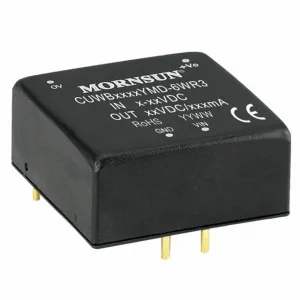
SMD Unregulated Output (0.2-2W)
SIP/DIP Unregulated Output (0.25-3W)
Describe your application and constraints in a request.
What is recorded about the regulatory status and the life of this part.
No compliance statement is recorded for this part. Ask the supplier for the RoHS and REACH declarations and, for a radio product, the EU declaration of conformity.
| Current status | Status not stated |
| Key dates | Not recorded |
| Manufacturer part number | IRT40C |
| Manufacturer | Winmate |
Non-Isolated DC/DC Converters
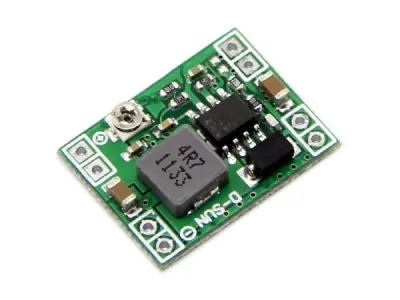
Adjustable Step-Down DC/DC Converter 3A · Ref. : 106990005
Price on request
Non-Isolated DC/DC Converters
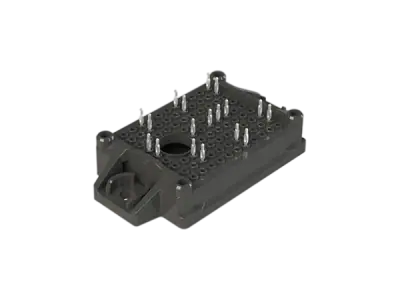
1200 V 150 A SiC power module, three-phase · Ref. : HCS09FC120E1Q1
Price on request
Non-Isolated DC/DC Converters
1600 W non-isolated DC/DC converter, 3.3 V output · Ref. : 10-1600W
Price on request
Non-Isolated DC/DC Converters
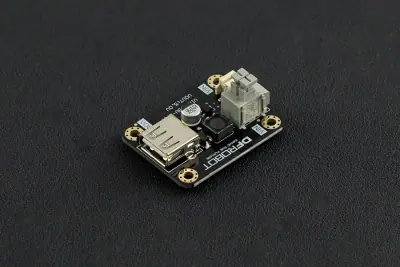
DC-DC Boost Converter Module with 5 V USB Output · Ref. : FIT0471
Price on request
No advertising or analytics cookies. A single, strictly necessary cookie is set only if you sign in to your account. Your quote basket and comparison stay in your browser. Details