
AC Type 2 and DC CCS2 Architectures for Commercial Fleets
Sizing a commercial EV Chargers deployment begins with matching vehicle dwell times to electrical power conversion topologies. AC EV Chargers operating in Type 2 Mode 3 suit workplace parking lots, hotels, and corporate fleets where vehicles remain parked for several hours. Supplying three-phase 400 VAC directly to the vehicle onboard charger keeps hardware footprints compact and moderates peak demand on the facility distribution panel.
Conversely, DC Fast Chargers bypass the onboard rectifier to feed high-voltage direct current straight into the traction battery through CCS2 connectors across a 150 V DC to 1000 V DC operating window. This architecture serves logistics hubs, transit depots, and high-turnover commercial fleets requiring rapid energy replenishment. Buyers should verify continuous current ratings, thermal derating curves, and upstream breaker requirements in each product datasheet before procurement.
OCPP Back-End Integration, Dynamic Load Balancing, and 4 G Links
Back-end interoperability is critical when deploying multi-site charging networks. Support for OCPP 1.6J and OCPP 2.0.1 enables central supervision platforms to authorize sessions, monitor fault codes, collect meter telemetry, and deploy firmware updates remotely. Hardwired Ethernet connections provide reliable backhaul in underground garages with shielded concrete structures, while integrated 4 G LTE cellular modems simplify deployment in outdoor parking areas without local IT cabling.
Dynamic load balancing protects the site grid connection by distributing available amperage across active charging points in real time. Linked to an upstream energy meter or smart controller, the charging cluster modulates output current as building loads fluctuate or on-site solar generation varies. Procurement teams should verify in the manufacturer documentation which external current transformers, energy meters, and local controller topologies are supported.
MID Metering, RFID Authorization, and Environmental Protection
Commercial parking operators, shared corporate fleets, and public charging hosts rely on accurate energy measurement for cost allocation and billing workflows. Integrating a MID-compliant energy meter records active kilowatt-hour consumption per session independently from vehicle telemetry. Access control typically combines RFID or NFC card readers for local badge authentication with mobile application triggers or automated vehicle identification protocols depending on site policy.
Outdoor and industrial charging bays expose enclosures to dust, driving rain, temperature swings, and corrosive atmospheres. Commercial hardware spans IP55 to IP66 ingress protection with minimum operating temperatures down to -30 °C and C5 anti-corrosion protection for coastal or chemical facilities. Buyers must also check attached cable lengths, wall or pedestal mounting clearances, and residual current protection requirements during electrical engineering review.
Commercial AC EV Chargers Available in the Atlas Catalogue
Within the AC EV Chargers category, the Beny TYPE-2-MODE-3-EV-CHARGER offers dual Type 2 Mode 3 sockets in a 350 x 550 x 152 mm enclosure rated IP65 down to -30 °C, featuring Bluetooth, CP signal short-circuit protection, and OCPP 1.6-J support. For tethered installations, the Dahua D-VOLT-PRO-CABLE-VERSION provides an integrated cable, 400 VAC ± 15% output, 4 G LTE connectivity, IP66 sealing, auto timing, and auto-resume charging.
Sites integrating solar PV and storage can specify the Huawei FusionSolar SCHARGER-7KS-S0, supporting 4 G LTE via the Smart Dongle - 4 G and pairing with compatible energy controllers from the same ecosystem. Also listed under AC EV Chargers in the catalogue, the Sungrow IDC30E delivers 30 kW air-cooled DC CCS2 charging with IP65 sealing, C5 anti-corrosion protection, 4 G LTE connectivity, and RFID-card, Plug & Play, or Auto-charge authentication.
High-Power DC Fast Chargers and Quotation Specification Checklist
For high-throughput depots under DC Fast Chargers, the Star Charge JUPITERV 5 supplies 120 kW through dual 5 m CCS2 connectors with 150-1000Vdc output, a 10.4 inch touch screen, IP55 enclosure protection, and a 750 x 1600 x 600 mm cabinet. Where space constraints favor a single 10 m CCS2 cable, the Star Charge TRITONV 2 delivers up to 380 A across 150-1000 V DC within a compact 500 x 500 x 300 mm footprint rated IP55.
All charging hardware is supplied strictly on quotation so electrical specifications, Ethernet or 4 G LTE backhaul options, and mounting accessories align with site constraints. To prepare an accurate quotation request, buyers should document available transformer capacity at the main distribution board, simultaneous bay count, indoor or outdoor exposure, target cable lengths, and OCPP supervision server compatibility requirements.
Frequently asked questions
How should buyers choose between AC Type 2 wallboxes and DC CCS2 fast chargers?
AC EV Chargers deliver 400 VAC three-phase power in Type 2 Mode 3 and rely on the vehicle onboard charger, making them suitable for workplace, hotel, and overnight fleet parking. DC Fast Chargers convert AC to 150-1000 V DC internally and connect via CCS2 directly to the battery for rapid turnaround in logistics depots and transit stations. Buyers should check vehicle onboard charger limits and daily turnaround windows in project specifications.
What should be verified regarding OCPP 1.6J/2.0.1 and Ethernet versus 4 G LTE connectivity?
OCPP 1.6J remains widely deployed across commercial charge point management systems, as seen on the Beny TYPE-2-MODE-3-EV-CHARGER, while OCPP 2.0.1 introduces enhanced security profiles, device management, and ISO 15118 support. Ethernet is preferred inside concrete garages with weak cellular reception, whereas 4 G LTE suits outdoor parking bays lacking local network cabling. Buyers should verify supported OCPP versions and SIM card requirements in the datasheet.
How does dynamic load balancing protect the electrical connection of a commercial site?
Dynamic load balancing monitors real-time site consumption via an external energy meter or smart controller and adjusts the charging current sent to connected vehicles so the main utility feeder is not overloaded. When combining chargers with photovoltaic inverters or storage, buyers must check controller compatibility, current transformer ratios, and supported communication interfaces in the technical documentation.
When are MID metering, RFID authorization, and IP65/C5 ratings necessary?
A MID-compliant energy meter is required when charging sessions are billed by kilowatt-hour or allocated across cost centers, while RFID or NFC readers restrict access to authorized drivers and fleet badges. For outdoor or coastal installations, buyers should verify enclosure sealing between IP55 and IP66, minimum operating temperatures down to -30 °C, and C5 anti-corrosion protection as specified on models like the Sungrow IDC30E.
Products mentioned
TYPE-2-MODE-3-EV-CHARGER
AC EV Chargers
Type 2 Mode 3 AC EV charger with dual sockets · Ref. : TYPE-2-MODE-3-EV-CHARGER
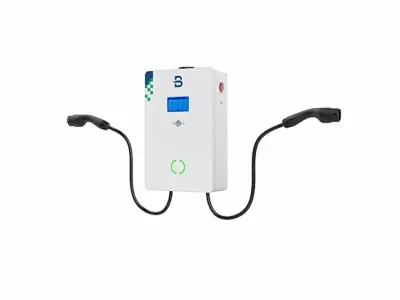
- ✔
- W350 x H550 x D152 mm
- OCPP1.6-J
Price on request
D-Volt Pro
AC EV Chargers
Intelligent 22 kW EV charger with integrated cable
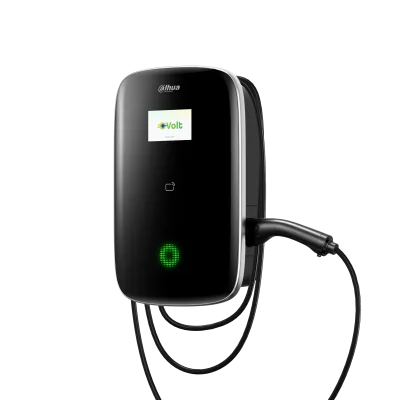
- Yes
- PC
- Mode 3 charging
Price on request
SCharger-7KS-S0
AC EV Chargers
Intelligent dynamic EV charging station · Ref. : SCHARGER-7KS-S0
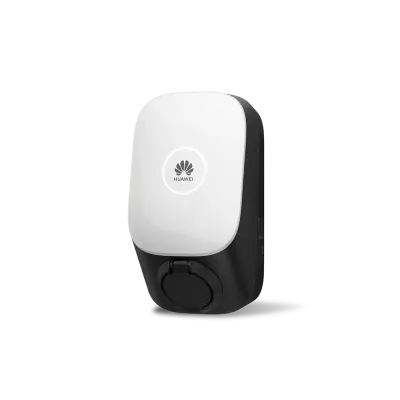
Price on request
SCharger-7KS-S0 / 22KT-S0
AC EV Chargers
Smart AC electric vehicle charging station · Ref. : SCHARGER-7KS-S0
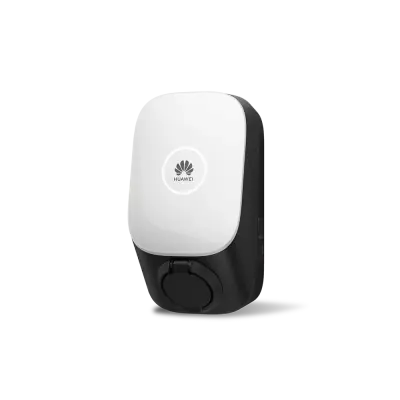
Price on request
Triton V2
DC Fast Chargers
DC fast charger 380 A with one CCS2 connector · Ref. : TRITON_V2
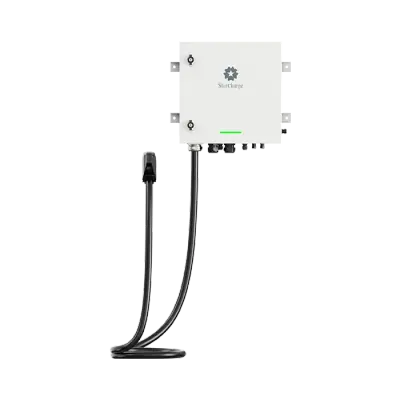
- 10m
- 1 x CCS2 plug
- 500 x 500 x 300mm
Price on request
JUPITER V5
DC Fast Chargers
120 kW DC fast charger with dual CCS2 connectors · Ref. : JUPITER_V5
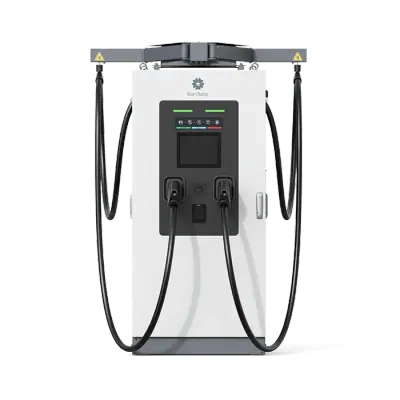
- 5m
- 750*1600*600mm
- 10.4-inch touch screen
Price on request
IDC30E
AC EV Chargers
30 kW CCS2 DC EV charger with air cooling · Ref. : IDC30E
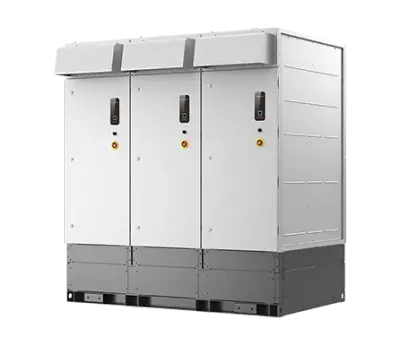
- C5
- 5 m
- CE, CB, UKCA
Price on request
A project? Our engineers build the solution with you.
Send your requirements: Atlas proposes the architecture, the bill of materials and a quotation, then follows the supply.
Request a quotationRelated pages
 WikiRFID and NFC: what it is and how it is usedTechnical definition, operating principles, industrial standards, and datasheet selection criteria for hardware integration projects supported by Atlas engineers.
 Use caseEnergy Microgrid and Collective Self-Consumption in Automotive & Electric MobilityHardware architecture and field deployment guide addressing operational requirements. Certified industrial hardware, custom integration, and supply on quotation.
 OfferEnergy Microgrid and Collective Self-Consumption kit for Automotive & Electric MobilityComplete hardware package ready for industrial deployment. Verified components, architecture review by Atlas engineering desk, and procurement on quotation.
 ProjectHardware for Automotive & Electric Mobility projectsSource the right industrial hardware for your deployment. Validated architectures, rugged components, bill of materials review, and full supply on quotation.
- ArticleHow to choose hardware for Automotive & Electric MobilityTechnical buying guide for sizing on-board electronics, CAN bus telematics, GNSS/4 G LTE links, and AC or DC EV charging hardware on quotation.
 Use caseIn-Vehicle Video for Fleets in Automotive & Electric MobilityHardware architecture and field deployment guide addressing operational requirements. Certified industrial hardware, custom integration, and supply on quotation.
- Use caseTransportation & Fleet in Automotive & Electric MobilityHardware architecture and field deployment guide addressing operational requirements. Certified industrial hardware, custom integration, and supply on quotation.
 Use caseRemote Device Fleet Management in Automotive & Electric MobilityHardware architecture and field deployment guide addressing operational requirements. Certified industrial hardware, custom integration, and supply on quotation.
 Use caseDigital Signage and LED Walls in Retail & CommerceHardware architecture and field deployment guide addressing operational requirements. Certified industrial hardware, custom integration, and supply on quotation.