
ETSI 865-868 MHz Band & UHF RFID Reader Architecture
European industrial deployments rely on the ETSI 865-868 MHz frequency band to operate passive UHF RFID Readers. Because regional spectrum rules govern radiated power and channel allocation, engineering buyers should always check regional frequency compliance and RF output limits in the manufacturer datasheet prior to site rollout. Unlike 13.56 MHz near-field HF links, UHF technology supports multi-meter read zones for high-throughput tracking of pallets, returnable containers, and metal tooling.
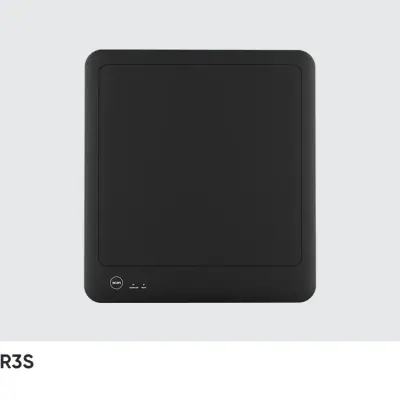
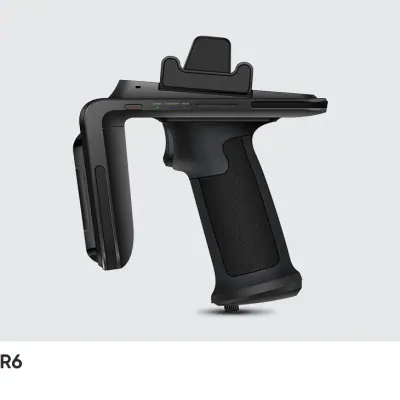
Selecting between desktop encoders and mobile terminals depends directly on physical workflow constraints. Within the RFID Readers portfolio, the Chainway R3S all-in-one desktop unit measures 255 x 235 x 18 mm and combines an Impinj E Series platform with Gen2X support for benchtop commissioning. For warehouse rounds and mobile asset audits, the Chainway R6RFIDSLEDREADER attaches to a smartphone and provides IP54 to IP64 environmental sealing.
Circular vs. Linear Polarization for RFID Antennas
Electromagnetic field geometry directly governs read rates when RFID Tags pass through portals or along automated conveyors. Circularly polarized RFID Antennas distribute RF energy across two orthogonal planes, enabling reliable capture of tags oriented randomly on mixed cartons or totes. For handheld inventory without strict line-of-sight alignment, the Chainway R6RFIDSLEDREADER integrates a circular polarized antenna suited to rapid scanning in dense storage aisles.
Conversely, linearly polarized antennas concentrate radiated energy into a single plane to achieve longer read ranges when tag orientation remains fixed and predictable. This configuration fits controlled production lines where parts travel in a consistent fixture while limiting stray reads from adjacent lanes. Buyers must verify antenna gain, beamwidth, and coaxial cable attenuation in the datasheet before finalizing portal layouts.
Mitigating On-Metal Detuning with UHF RFID Tags
Applying a standard passive inlay directly onto steel or aluminum causes severe antenna detuning and signal reflection, preventing chip wake-up. To overcome this capacitive coupling, specialized on-metal UHF RFID Tags incorporate a dielectric spacer layer that restores impedance matching over conductive surfaces. Buyers should inspect datasheet specifications for substrate thickness, industrial adhesive backing, and thermal ratings matched to the target asset.
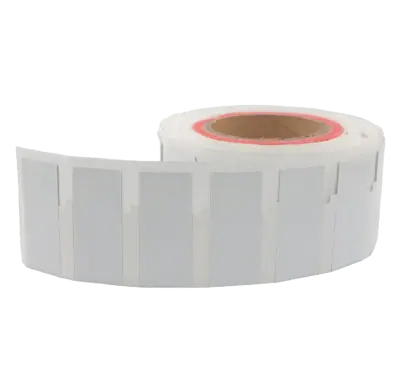
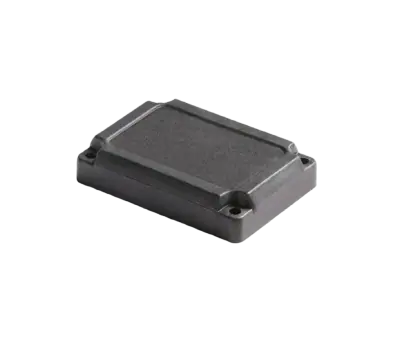
For curved metal assets or racks, the flexible SpeedingIoT R7030 measures 70 x 30 x 1.0 mm with an NXP Ucode 8 chip, whereas the compact SpeedingIoT R5515 spans 55 x 15 x 1.25 mm with an Impinj Monza R6P chip; both operate down to -40 °C or lower. For harsh chemical or high-temperature environments, the rigid SpeedingIoT K6229 uses an NXP Ucode 8 chip in an IP65 62 x 29 mm housing.
PoE, RS-485 Interfaces & HF and NFC Readers Integration
Field bus and network interfaces determine how smoothly RFID Readers integrate with warehouse management systems and factory PLCs. Power over Ethernet PoE simplifies fixed deployment by carrying data and DC power over a single cable, as implemented on the Chainway R3S with its PoE-enabled Ethernet port and Bluetooth 5.0 connectivity. Where legacy industrial buses prevail, RS-485 serial links remain common and require checking pinouts, isolation, and protocol framing in the datasheet.
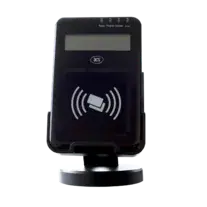
For close-range operator authentication, badge control, or cryptographic transactions, 13.56 MHz HF and NFC Readers complement UHF infrastructure. The ACS ACR1222L connects via a 1.5 m fixed USB Type A cable, includes an LCD display and three SAM slots, and supports Windows, Linux, MAC OS, Solaris, and Android 3.1 or above.
Technical Specification Checklist for Supply on Quotation
Preparing a robust RF bill of materials requires aligning environmental ratings and mechanical form factors before requesting supply on quotation. Confirm ambient operating bounds carefully: the Chainway R3S and Chainway R6RFIDSLEDREADER are rated from -20 °C to +50 °C, whereas the SpeedingIoT R7030, SpeedingIoT R5515, and SpeedingIoT K6229 tags endure -40 °C or lower. Exposure to washdowns, oils, or impact calls for IP65 enclosures such as the SpeedingIoT K6229.
When submitting a technical brief for supply on quotation, specify the number of read zones, metallic versus non-metallic mounting surfaces, required PoE, USB, or RS-485 interfaces, and any custom barcode printing or EPC encoding needs. Atlas Electronics supports industrial procurement teams with complete datasheets and structured quotations tailored to annual project volumes.
Frequently asked questions
Why is ETSI 865-868 MHz compliance critical when sourcing UHF RFID Readers?
European industrial sites must operate within the ETSI 865-868 MHz band, which defines specific channel spacing and radiated power limits. When sourcing UHF RFID Readers, verify in the datasheet that the RF module supports ETSI frequencies and regional power profiles, and pair it with UHF RFID Tags tuned for broadband or ETSI resonance.
When should I choose circular vs. linear polarization for RFID Antennas?
Circular polarization, as built into the Chainway R6RFIDSLEDREADER, reads tags at arbitrary orientations on mixed pallets or shelves. Linear polarization focuses energy in a single plane for longer range when tag alignment is fixed on a conveyor. Check antenna gain and beamwidth in the datasheet before selecting portal hardware.
How do anti-metal UHF RFID Tags prevent detuning on conductive surfaces?
Bare metal shifts the resonant frequency of standard inlays and reflects RF energy, blocking chip activation. Anti-metal tags incorporate a dielectric spacer to restore tuning on steel or aluminum. Select flexible SpeedingIoT R7030 or R5515 labels for curved surfaces down to -40 °C or lower, and rigid IP65 SpeedingIoT K6229 tags for harsh chemical or high-temperature processes.
How do PoE, RS-485, and USB interfaces compare across UHF and NFC readers?
The Chainway R3S includes one PoE-capable Ethernet port and Bluetooth 5.0 for streamlined IT integration over a single network cable, while industrial PLC setups often rely on RS-485 serial links whose pinouts and protocols should be checked in the datasheet. For close-range operator authentication, the ACS ACR1222L provides USB Type A connectivity, an LCD, and three SAM slots.
Products mentioned
ACR1222L
HF and NFC Readers
USB NFC Reader with LCD and 3 SAM Slots · Ref. : ACR1222L
Price on request
R3S
UHF RFID Readers
All-in-one desktop UHF RFID reader with Impinj E Series and Gen2X
- About Chainway
- Near-Field Antenna
- BLE 5.0
Price on request
R6
UHF RFID Readers
UHF RFID sled reader for smartphones · Ref. : R6_RFID_SLED_READER
Price on request
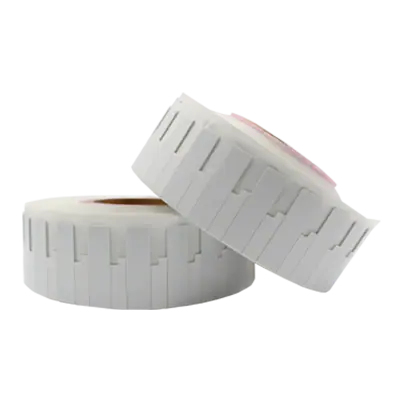
R5515
UHF RFID Tags
Flexible Anti-metal RFID UHF Label 55 x 15 mm
- metal surface
- Impinj Monza R6P
- > 10 years
Price on request
R7030
UHF RFID Tags
Flexible anti-metal UHF RFID label 70 x 30 mm
- metal surface
- NXP Ucode 8
- > 10 years
Price on request
K6229
UHF RFID Tags
High temperature and chemical resistant UHF on-metal RFID tag · Ref. : K6229
Price on request
A project? Our engineers build the solution with you.
Send your requirements: Atlas proposes the architecture, the bill of materials and a quotation, then follows the supply.
Request a quotationRelated pages
 Buying guideHow to choose RFID AntennasReference guide for selecting the right equipment from the Atlas catalogue. Technical criteria, architectures, design pitfalls, and bill of materials quotation by our engineers.
- WikiRFID and NFC: what it is and how it is usedTechnical definition, operating principles, industrial standards, and datasheet selection criteria for hardware integration projects supported by Atlas engineers.
 Use caseGuard Tour Control in Logistics & WarehousingHardware architecture and field deployment guide addressing operational requirements. Certified industrial hardware, custom integration, and supply on quotation.
 Use caseUHF RFID Inventory and Traceability in Electronics & OEM/ODMHardware architecture and field deployment guide addressing operational requirements. Certified industrial hardware, custom integration, and supply on quotation.
 Use caseUHF RFID Inventory and Traceability in Logistics & WarehousingHardware architecture and field deployment guide addressing operational requirements. Certified industrial hardware, custom integration, and supply on quotation.
 Use caseUHF RFID Inventory and Traceability in Retail & CommerceHardware architecture and field deployment guide addressing operational requirements. Certified industrial hardware, custom integration, and supply on quotation.
 OfferUHF RFID Inventory and Traceability kit for Electronics & OEM/ODMComplete hardware package ready for industrial deployment. Verified components, architecture review by Atlas engineering desk, and procurement on quotation.
- OfferUHF RFID Inventory and Traceability kit for Logistics & WarehousingComplete hardware package ready for industrial deployment. Verified components, architecture review by Atlas engineering desk, and procurement on quotation.
 OfferUHF RFID Inventory and Traceability kit for Retail & CommerceComplete hardware package ready for industrial deployment. Verified components, architecture review by Atlas engineering desk, and procurement on quotation.