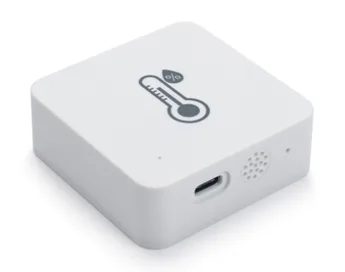
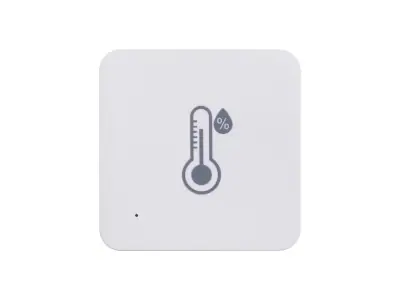
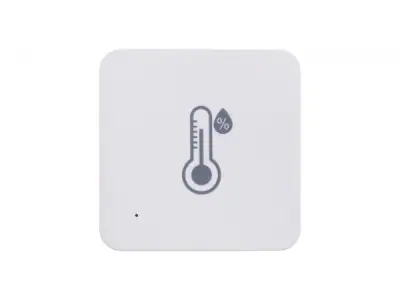
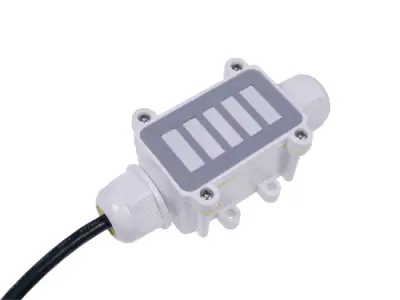
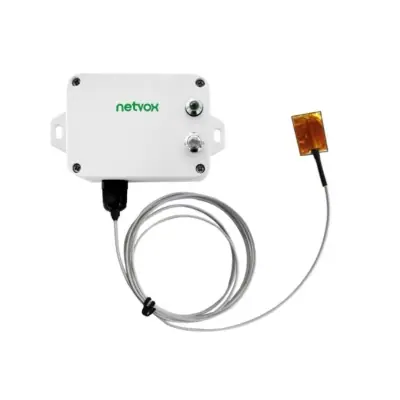
Indoor LoRaWAN sensor measuring ambient temperature and humidity, designed for professional wireless sensor networks, with optional external probe.
Accuracy ToleranceTyp ±0.3 °C
IP ratingIP52
Long-term Drift< 0.02 °C/yr
Resolution0.01 °C
Product overview
Dragino LHT52 LoRaWAN sensor. wall-attachable LoRaWAN temperature and humidity sensor for monitoring indoor environments.
Main characteristics. The built-in temperature sensor has a resolution of 0.01 °C, a typical accuracy tolerance of ±0.3 °C and a long-term drift below 0.02 °C/yr. The built-in humidity sensor has a resolution of 0.1 %RH, a typical accuracy tolerance of ±3 %RH and a long-term drift below 0.25 RH/yr, for an operating range of 0 to 99.0 %RH (no dew).
Interfaces and connectivity. LoRaWAN v1.0.3 Class A protocol is supported, fully compatible with standard LoRaWAN gateways. Available frequency bands are CN470, EU433, KR920, US915, EU868, AS923 and AU915. A USB Type-C sensor connector allows an external probe such as the AS-01 temperature probe to be connected. Parameters can be changed with AT commands or remotely via LoRaWAN downlink, and the firmware can be upgraded through the program port.
Power and environment. The sensor runs on two AAA LR03 batteries. Power consumption is 5 µA idle and 110 mA maximum when transmitting; with the AS-01 external probe, idle consumption is 6 µA. The operating range is -10 to 50 °C or -40 to 60 °C depending on battery type. The IP rating is IP52.
Data features. The Datalog feature records the value of every uplink, retrievable by the LoRaWAN server via downlink. The temperature alarm feature sends uplinks at a short interval when temperature exceeds preset limits.
Typical uses. Smart buildings and home automation, logistics and supply chain management, smart metering, smart agriculture, smart cities and smart factories.
-10 ~ 50 °C or -40 ~ 60 °C (depends on battery type, see FAQ)
Resolution
0.01 °C
Applications and use cases
Architectures in which LHT52 can play a role, derived from its category. This is not a compatibility statement: check the specifications against your requirements.
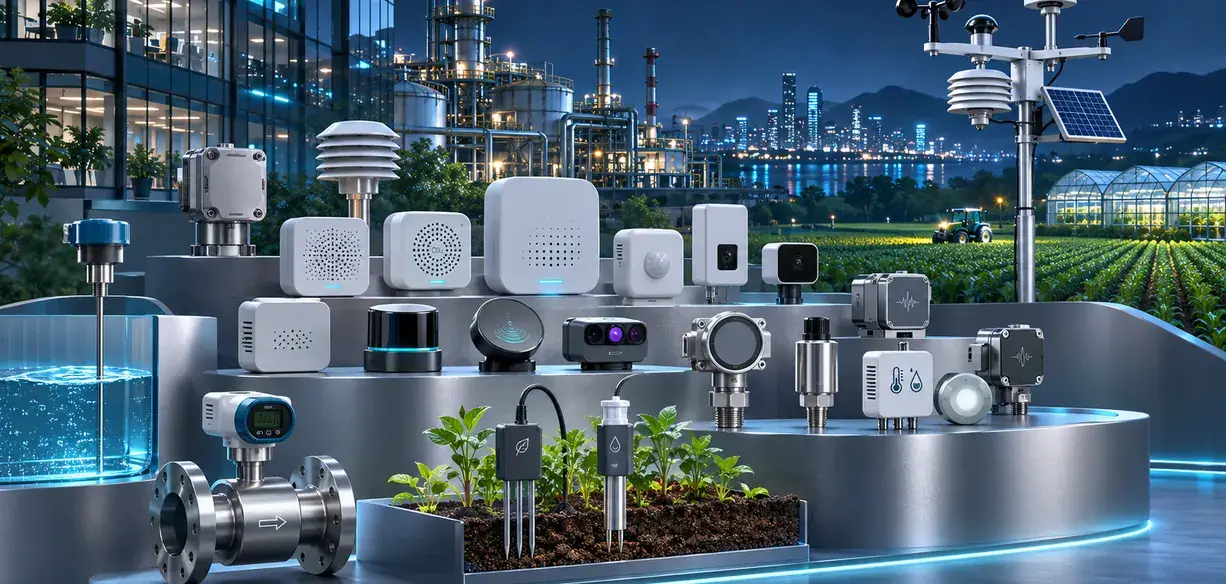
Diseases and water stress are noticed once the crop is already affected. A weather station, soil probes and sensor nodes in the field report conditions through an outdoor gateway
To check
Crops, plots and measurement depth of the soil probes
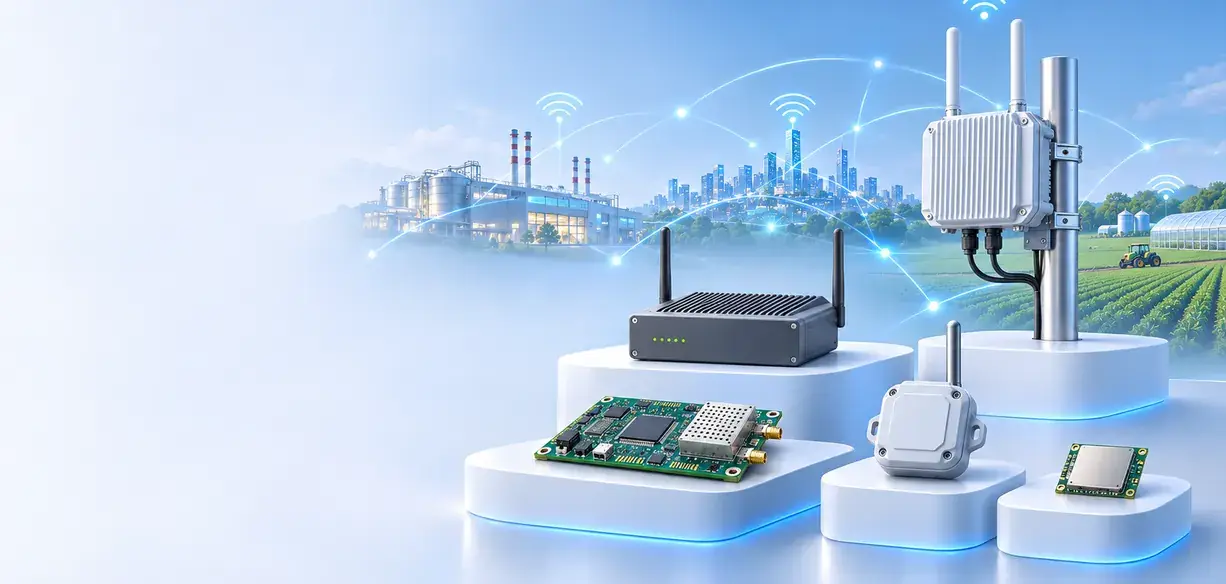
A LoRaWAN project needs sensors, gateways, a network server and an application that work together. Sensor nodes report to indoor or outdoor gateways, which forward the data to the network server and the customer’s platform
To check
Regional frequency plan (EU868, US915 and others)
Network server: public, private or embedded in the gateway
Milesight sensors, LoRaWAN gateways and cellular routers can be brought together on the Milesight Development Platform, which manages the devices and passes their data to other applications through an API and webhooks
To check
Development Platform for device management, API and webhooks, or another network server and application
Devices provisioned through Milesight RPS must have that provisioning removed before being added to the Development Platform
Data flows to the customer’s own application through webhooks
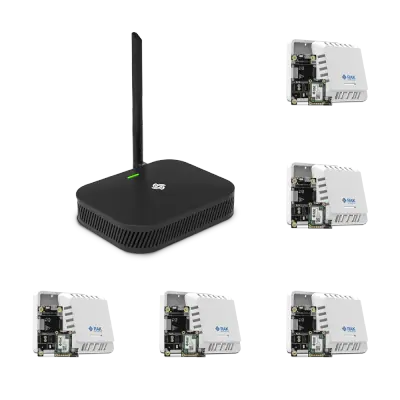
RAKwireless WisGate gateways run WisGateOS 2 and are managed from WisDM, RAKwireless’ cloud device management platform with a built-in network server, alongside RAK sensor nodes, radio modules and concentrators
To check
WisDM built-in network server, or a third-party one (ChirpStack, TTN/TTS, AWS IoT Core, Actility)
Remote configuration and updates of the gateways from WisDM
Regional frequency plan of the gateways and nodes
Associated system blocks
GatewaysSensors and modulesDevelopment boardsMounting
Seeed SenseCAP sensors connect to Seeed’s SenseCAP cloud platform and app, and Seeed edge computers, camera modules, Grove and XIAO boards complete the chain for custom devices and local processing
To check
SenseCAP cloud platform and app, or the customer’s own network server
Prototype on Grove and XIAO, then move to industrial versions
Local processing on the edge computers or in the cloud
Associated system blocks
SensorsEdge computingDevelopment boards
Need a complete solution?
Send a request for LHT52 and the other parts of your project.
Similar parts to answer your needs. Compare the main characteristics. A recorded replacement is a documented relation; a similar product is a similarity only, never a compatibility claim.
SenseCAP SOLO CO2 5000 (A1) - NDIR CO2 Sensor, MODBUS-RTU RS485 & SDI-12
A
The default output of the sensor is RS485 and the slave address is 1. If you need to use SDI-12 output, you need to open the cover and push the button on the board to ''1'' and ''2''. At the same time, check whether the wire sequence is correct.
No advertising or analytics cookies. A single, strictly necessary cookie is set only if you sign in to your account. Your quote basket and comparison stay in your browser. Details