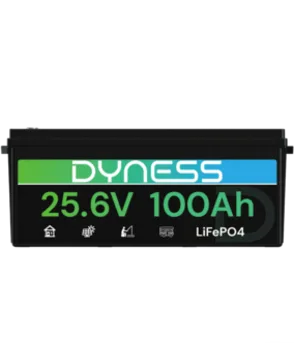
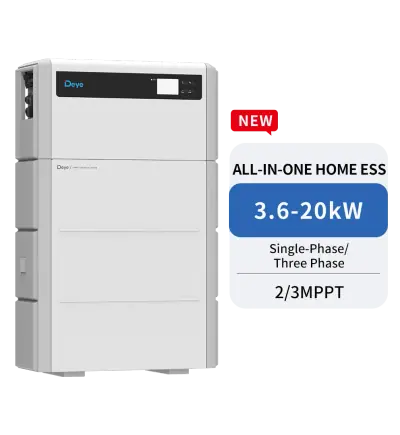
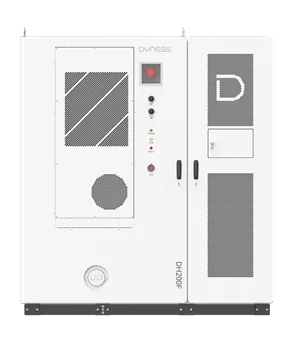
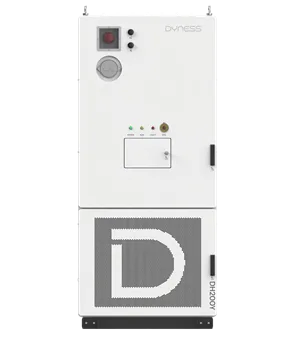
The Dyness AR2.5 is a modular 100Ah LiFePO4 energy storage system with IP65 protection, designed for residential energy storage and solar installations.
Battery TypeLiFePO4
Cycle Life[1]≥3000 cycles
Dimension (W×D×H)531mm*206mm*218mm
Expansion2 in series and 4 in parallel
Net weight<23.5kg
Nominal Capacity100Ah
Product overview
Overview. The Dyness AR2.5 is a modular LiFePO4 energy storage battery rated 100Ah, designed for residential storage and solar installations. It is a low voltage energy storage system (Low Voltage ESS) from manufacturer Dyness.
Main characteristics. The battery offers a nominal capacity of 100Ah, a cycle life of at least 3000 cycles and a net weight below 23.5 kg, which simplifies installation. Its dimensions are 531 mm × 206 mm × 218 mm (W×D×H).
Protection and environment. The enclosure is rated IP65, providing protection for the equipment. The protection level matches the IP65 rating listed in the technical data.
Expansion. The system is modular and can be expanded in a 2 in series and 4 in parallel configuration, allowing the storage capacity to be adapted to the needs of the installation.
Typical uses. This battery suits energy storage in residential installations and solar systems, as a replacement for lead-acid batteries.
No published question about this part yet. Questions are reviewed before publication.
Complete specifications
Every characteristic recorded for AR2.5, with where it comes from. Use the filters to find one quickly.
All specifications (8)
Characteristic
Value
Battery Type
LiFePO4
Cycle Life[1]
≥3000 cycles
Dimension (W×D×H)
531mm*206mm*218mm
Expansion
2 in series and 4 in parallel
Net weight
<23.5kg
Nominal Capacity
100Ah
Product Model
AR2.5
Protection Level
IP65
No specification matches.
Last verification : 2026-11-02
Technical documentation
Official documents and the technical data recorded for AR2.5. For a missing document or a specific revision, our experts send it to you.
1. Technical overview
The Dyness AR2.5 is a modular 100Ah LiFePO4 energy storage system with IP65 protection, designed for residential energy storage and solar installations.
Battery TypeLiFePO4
Cycle Life[1]≥3000 cycles
Dimension (W×D×H)531mm*206mm*218mm
Expansion2 in series and 4 in parallel
Net weight<23.5kg
2. Datasheet extract (recorded values)
Parameter
Value
Battery Type
LiFePO4
Cycle Life[1]
≥3000 cycles
Dimension (W×D×H)
531mm*206mm*218mm
Expansion
2 in series and 4 in parallel
Net weight
<23.5kg
Nominal Capacity
100Ah
Product Model
AR2.5
Protection Level
IP65
Applications and use cases
Architectures in which AR2.5 can play a role, derived from its category. This is not a compatibility statement: check the specifications against your requirements.
Solar panels produce most when nobody is home, and the surplus goes to the grid. A battery with its inverter stores this energy and returns it in the evening, with a meter measuring what the home draws
To check
Panel power and the inverter compatibility of the battery
Usable capacity compared with the evening and night consumption
Local grid connection rules for balcony and home systems
Solar production, storage and charging points on one site are often managed separately. Inverters, batteries, MPPT controllers, meters and chargers form a local energy system that shares production between users
To check
Regulatory framework for collective self-consumption in the country
Energy management system steering storage and charging
Metering accuracy for sharing between participants
Associated system blocks
ProductionStorageMeteringCharging
Need a complete solution?
Send a request for AR2.5 and the other parts of your project.
Similar parts to answer your needs. Compare the main characteristics. A recorded replacement is a documented relation; a similar product is a similarity only, never a compatibility claim.
What is recorded about the regulatory status and the life of this part.
Regulatory compliance
No compliance statement is recorded for this part. Ask the supplier for the RoHS and REACH declarations and, for a radio product, the EU declaration of conformity.
No advertising or analytics cookies. A single, strictly necessary cookie is set only if you sign in to your account. Your quote basket and comparison stay in your browser. Details