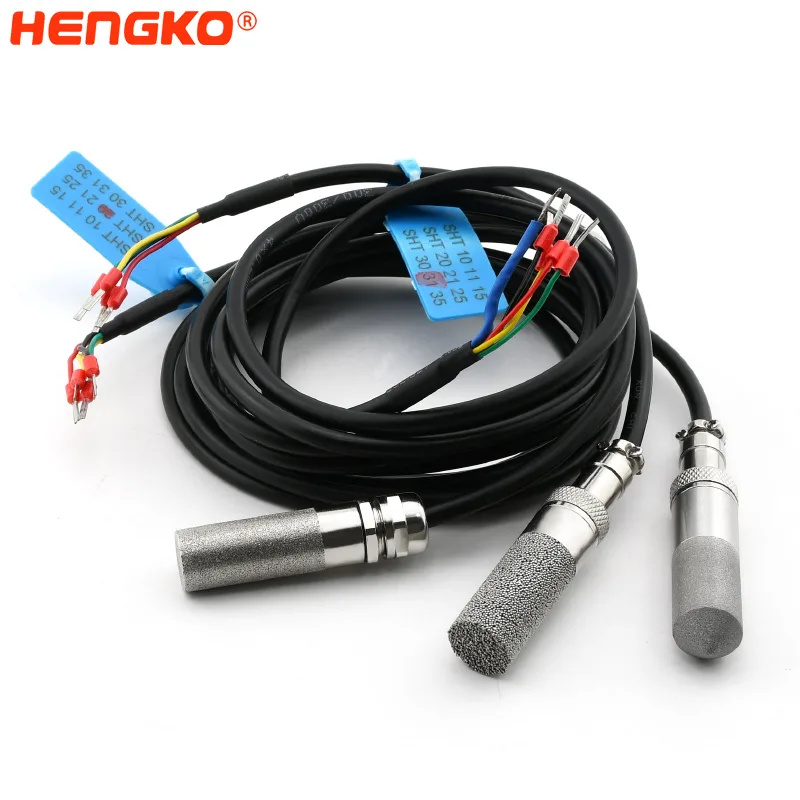
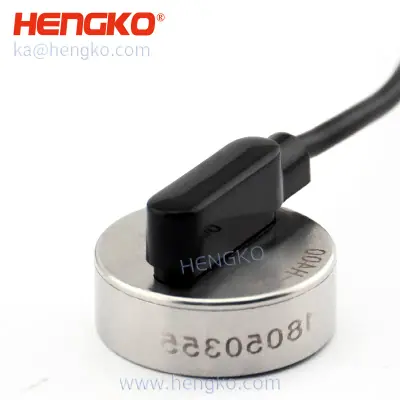
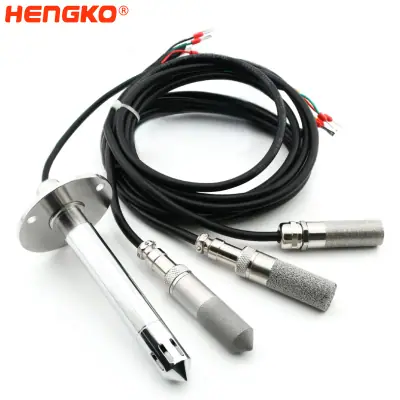
HENGKO RHT-H relative humidity and temperature probe with I2C digital output, in an IP67 stainless steel enclosure and exchangeable without rewiring, for environmental monitoring.
Working current≤50mA
OutputI2C
RemarksCustom designs and fittings available
TypeRHT-H series sensor
Working voltageDC (3-5)V
Product overview
HENGKO RHT-H. The HENGKO RHT-H is a cable-type relative humidity and temperature probe in the digital temperature and humidity sensor series, with calibrated digital output in standard I2C format.
Main characteristics. The sensor includes an improved capacitive humidity sensing element and a standard energy gap temperature sensing element. Accuracy is ±0.5 °C at 25 °C for temperature and ±2 % RH for humidity between 20 and 80 % RH.
Interfaces and connectivity. The output is I2C. The probe is plug-and-play compatible with HENGKO HT802 series transmitters and can be used as a standalone digital Modbus RTU transmitter.
Power and environment. The working voltage is DC 3 to 5 V, with a working current of 50 mA or less. The stainless steel enclosure is rated IP67.
Maintenance and integration. The probe can be removed and replaced without adjusting the transmitter, allowing quick recalibration in the field. Custom designs and fittings are available on request.
Typical uses. Humidity and temperature monitoring in electronic control cabinets, machine rooms, storehouses, greenhouses and production sites.
Official documents and the technical data recorded for 30-40UM. For a missing document or a specific revision, our experts send it to you.
1. Technical overview
HENGKO RHT-H relative humidity and temperature probe with I2C digital output, in an IP67 stainless steel enclosure and exchangeable without rewiring, for environmental monitoring.
Working current≤50mA
OutputI2C
RemarksCustom designs and fittings available
TypeRHT-H series sensor
Working voltageDC (3-5)V
2. Datasheet extract (recorded values)
Parameter
Value
Accuracy
temperature ±0.5℃@25℃ humidity: ±2% RH@(20~80)% RH
Next
Corrosion-resistant IP65/IP66 housing used in compressed air systems
Architectures in which 30-40UM can play a role, derived from its category. This is not a compatibility statement: check the specifications against your requirements.
A fridge that drifts at night can ruin a whole stock. Temperature loggers in cold rooms and trucks report through a gateway or a tracker and raise an alert when a threshold is crossed
To check
Temperature range and accuracy required by the product
Record keeping required by the applicable regulations
A building’s energy, comfort and occupancy data sit in separate systems. Sensors, meters and gateways feed one model of the building, room by room, to compare scenarios and steer the installations
To check
Data model and building plans available
Software platform hosting the twin
Sensor density needed for a useful model
Associated system blocks
SensorsMetersGateways
Need a complete solution?
Send a request for 30-40UM and the other parts of your project.
Similar parts to answer your needs. Compare the main characteristics. A recorded replacement is a documented relation; a similar product is a similarity only, never a compatibility claim.
Current productHENGKO
30-40UM
IP67 exchangeable humidity and temperature probe, I2C output
What is recorded about the regulatory status and the life of this part.
Regulatory compliance
No compliance statement is recorded for this part. Ask the supplier for the RoHS and REACH declarations and, for a radio product, the EU declaration of conformity.
With your consent, we use Google cookies to measure the site’s audience and our advertising. Your quote basket and comparison stay in your browser either way. Details