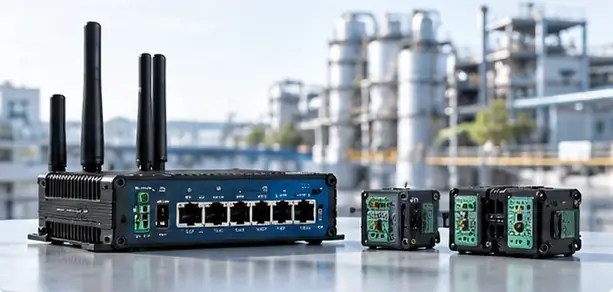
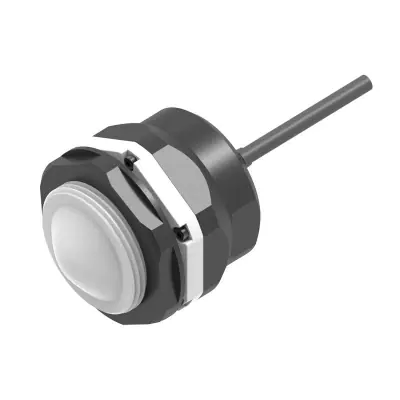
Overview. The Lanbao PST-TM2-F3 is a miniature through-beam photoelectric sensor with separate emitter and receiver. It detects opaque objects over a 2 m range using a 640 nm red light source.
Main characteristics. Response time below 1 ms, minimum target of 3 mm diameter above opaque objects, light spot of 80 mm at 2 m, and ambient light immunity: sunlight interference up to 10,000 lux, incandescent light interference up to 3,000 lux. Lens in PMMA, housing in ABS.
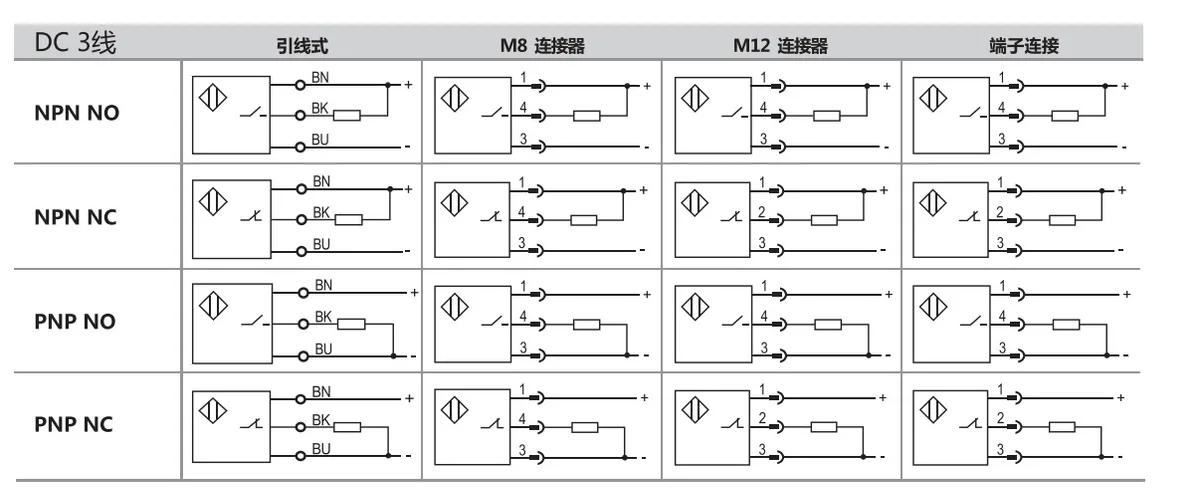
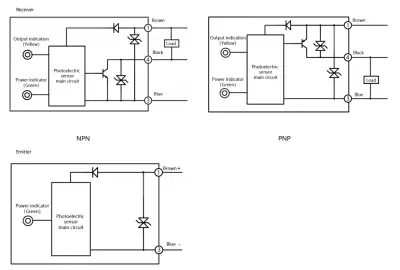
Outputs and connection. NPN or PNP outputs, normally open or normally closed depending on the reference (PST-TM2DNOR-F3, PST-TM2DNCR-F3, PST-TM2DPOR-F3, PST-TM2DPCR-F3). Connection by 20 cm PVC cable with 3-pin M8 connector. Voltage drop of 1.5 V or less and load current of 50 mA maximum.
Power and environment. Supply voltage 10 to 30 VDC, consumption of 10 mA maximum for the emitter and 15 mA maximum for the receiver. Protected against short circuit, polarity reversal and overload. IP65 protection rating, operating temperature -20 to 55 °C, storage temperature -30 to 70 °C.
Integration. Green indicator for power and stability, yellow indicator for output. Supplied with two M3 × 16 mm screws, two nuts and the operation manual. CE certified.
Points to check before using PST-TM2-F3 in a design. They are derived from the recorded characteristics, not from the manufacturer's application circuits.
1Powerplan for a supply compatible with 10...30VDC.
2Thermalrated operating range -20...55 º c — check it against the installation environment.
Power and communication
Supply voltage
10...30VDC
Consumption Current
Emitter:≤ 10mA; Receiver:≤ 15mA
Load Current
≤ 50mA
Voltage drop
≤ 1.5V
Check the exact pin assignment and the application circuit in the datasheet, or ask our experts.
Implementation checklist
Power : plan for a supply compatible with 10...30VDC.
Thermal : rated operating range -20...55 º c — check it against the installation environment.
Applications and use cases
Architectures in which PST-TM2-F3 can play a role, derived from its category. This is not a compatibility statement: check the specifications against your requirements.
Similar parts to answer your needs. Compare the main characteristics. A recorded replacement is a documented relation; a similar product is a similarity only, never a compatibility claim.
With your consent, we use Google cookies to measure the site’s audience and our advertising. Your quote basket and comparison stay in your browser either way. Details