AGLWCT
2-Channel Non-invasive AC Current Monitor LoRaWAN

Limited record: this part has neither specifications nor a datasheet in the catalog yet. It is shown for reference and is not indexed.
2-Channel Non-invasive AC Current Monitor LoRaWAN
Maker, Prototyping, Open-Hardware & Developer Boards
Two-channel non-invasive AC current monitor for remote current monitoring over LoRaWAN, with an integrated temperature and humidity sensor.
Overview. The Makerfabs AGLWCT, listed as AgroSense 2 Channel Non-invasive AC Current Monitor LoRaWAN Class C, is a two-channel non-invasive AC current monitor for remote monitoring. It measures current by clamping the live wire, without modifying or interrupting the circuit.
Main characteristics. Each channel uses a non-invasive AC transformer rated 100A/1V. The module includes a temperature and humidity sensor with a temperature measurement range of -40°C to 80°C, an accuracy of ±0.5°C and a resolution of 0.1°C, and a humidity measurement range of 0% to 100% RH with an accuracy of ±2%. The ADC is 12-bit.
Interfaces and connectivity. The module follows the standard LoRaWAN protocol V1.0.3 in OTAA Class C network access mode, with a receiver sensitivity of -137dBm/125kHz SF=12 and a maximum transmit power of 22dBm. It supports the EU868 and US915 frequency bands. It reports every 60 seconds by default, adjustable up to 24 hours through downlink. Local storage holds up to 3,300+ records to retain data during connectivity gaps.
Power and environment. DC 12-24V power supply. Operating temperature from -40°C to 85°C. Dimensions 95 × 90 × 40 mm, wall mounting.
Typical uses. Energy consumption counting, overload or no-load detection, run hour counting, machine health monitoring, safety, energy and production monitoring, with fire and flood warnings from the environmental sensor.
Integration. Works with TTN, Datacake and CloudStudio for data upload and remote control, and is configurable through AT commands.
No published question about this part yet. Questions are reviewed before publication.
Official documents and the technical data recorded for AGLWCT. For a missing document or a specific revision, our experts send it to you.
Two-channel non-invasive AC current monitor for remote current monitoring over LoRaWAN, with an integrated temperature and humidity sensor.
Similar parts to answer your needs. Compare the main characteristics. A recorded replacement is a documented relation; a similar product is a similarity only, never a compatibility claim.
2-Channel Non-invasive AC Current Monitor LoRaWAN
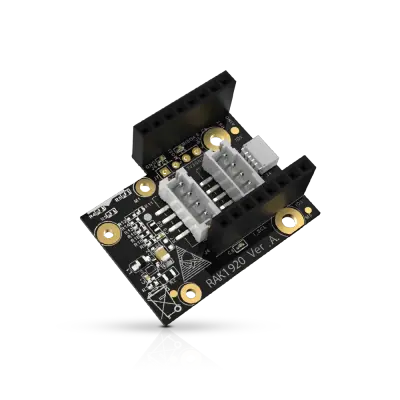
Sensor Adapter for Click, QWIIC and Grove Modules
RS485 Module 3PEAK TP8485E

4-20mA Module STMicroelectronics LM2902

Describe your application and constraints in a request.
What is recorded about the regulatory status and the life of this part.
No compliance statement is recorded for this part. Ask the supplier for the RoHS and REACH declarations and, for a radio product, the EU declaration of conformity.
| Current status | Status not stated |
| Key dates | Not recorded |
| Manufacturer part number | AGLWCT |
| Manufacturer | Makerfabs |
Maker, Prototyping, Open-Hardware & Developer Boards
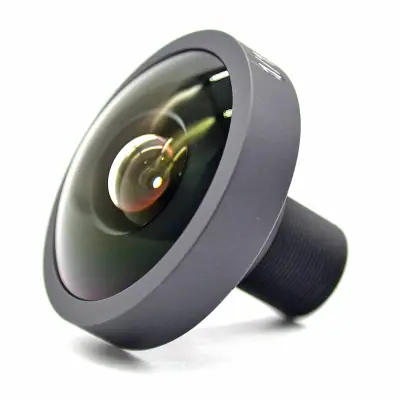
M12 fisheye lens for camera module · Ref. : M12_FISHEYE
Price on request
Maker, Prototyping, Open-Hardware & Developer Boards
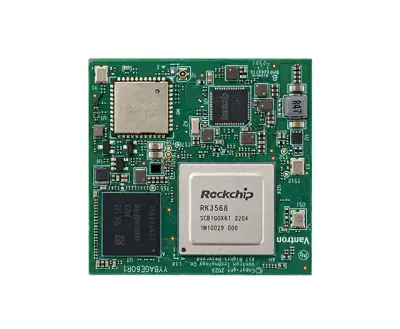
RK3568 System-on-Module with 1 TOPS NPU
Price on request
Maker, Prototyping, Open-Hardware & Developer Boards
RK3568 Android tablet mainboard with DTV tuner · Ref. : K3-3568
Price on request
Maker, Prototyping, Open-Hardware & Developer Boards
Boost converter module 3.3 V to 12 V 50 mA · Ref. : 110155
Price on request
No advertising or analytics cookies. A single, strictly necessary cookie is set only if you sign in to your account. Your quote basket and comparison stay in your browser. Details