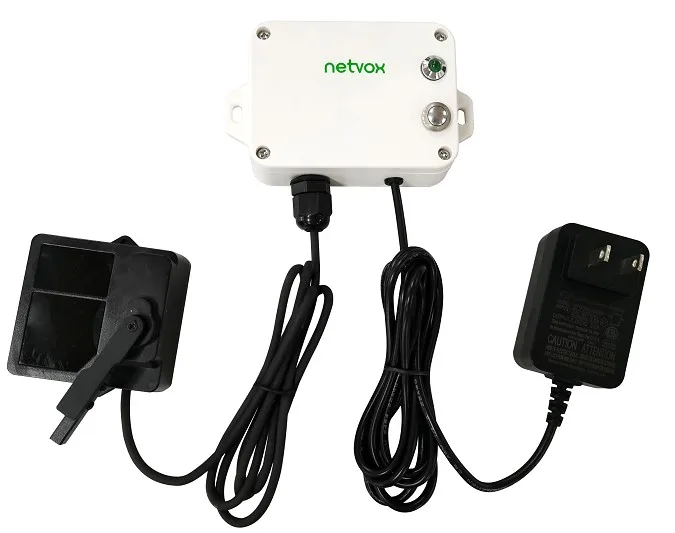
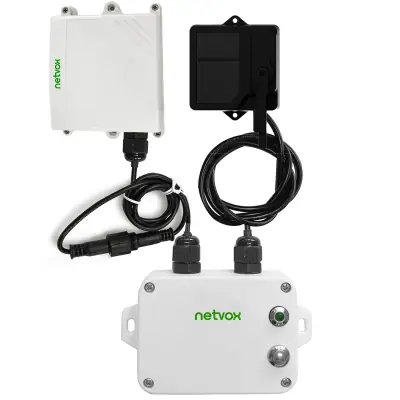
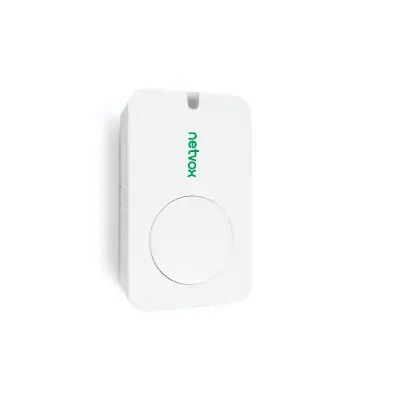
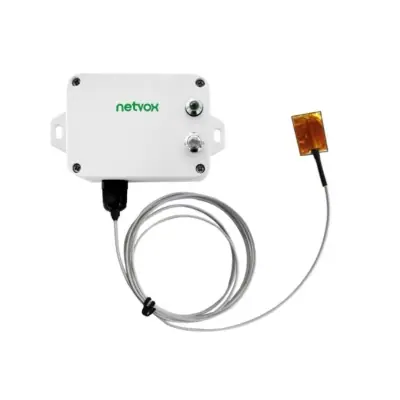
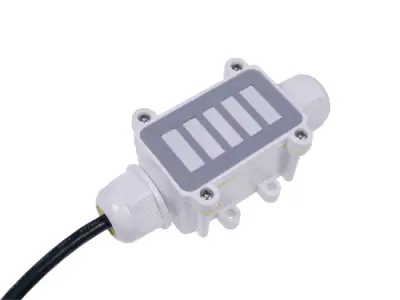
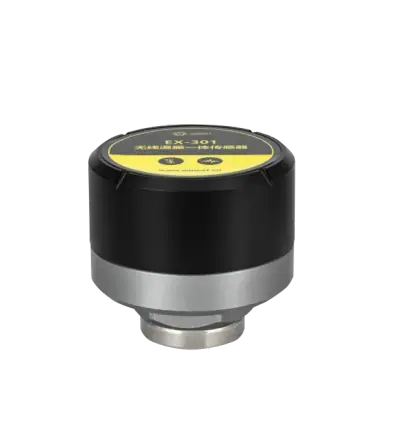
Overview. The Netvox R718PE02D is a DC-powered wireless LiDAR material level sensor designed to measure the distance to a material surface, with a range of 0.1 to 25 m depending on reflectivity and lighting conditions.
Measurement performance. Accuracy is ±6 cm from 0.1 to 6 m and ±1% from 6 to 25 m, with 1 cm resolution. The blind zone spans 0 to 0.1 m and the detection angle is 3º.
Connectivity. The sensor communicates over LoRaWAN using LoRa or FSK modulation on the EU863-870, US902-928, AU915-928, KR920-923 and CN470-510 bands, the band being configured before shipment. Range reaches 10 km in line of sight, actual transmission distance depending on the environment. The antenna is built in.
Power and environment. DC 5V/2A power supply through a transformer with a 1.5 m cable, consumption of 2 W or less, peak current of 1 A. The main body measures 112 mm x 88.19 mm x 32 mm and the sensor 85 mm x 59 mm x 43 mm, connected by a 120 cm cable. Operating temperature from -20 °C to 60 °C, ambient humidity below 60 %RH without condensation.
Typical uses. Suited to material level monitoring in tanks, silos or vessels, with measurements reported over a LoRaWAN network.
Points to check before using R718PE02D in a design. They are derived from the recorded characteristics, not from the manufacturer's application circuits.
1Thermalrated operating range -20℃ to 60℃ — check it against the installation environment.
2Thermalrated operating range -20℃ to 60℃ — check it against the installation environment.
Check the exact pin assignment and the application circuit in the datasheet, or ask our experts.
Implementation checklist
Thermal : rated operating range -20℃ to 60℃ — check it against the installation environment.
Thermal : rated operating range -20℃ to 60℃ — check it against the installation environment.
Applications and use cases
Architectures in which R718PE02D can play a role, derived from its category. This is not a compatibility statement: check the specifications against your requirements.
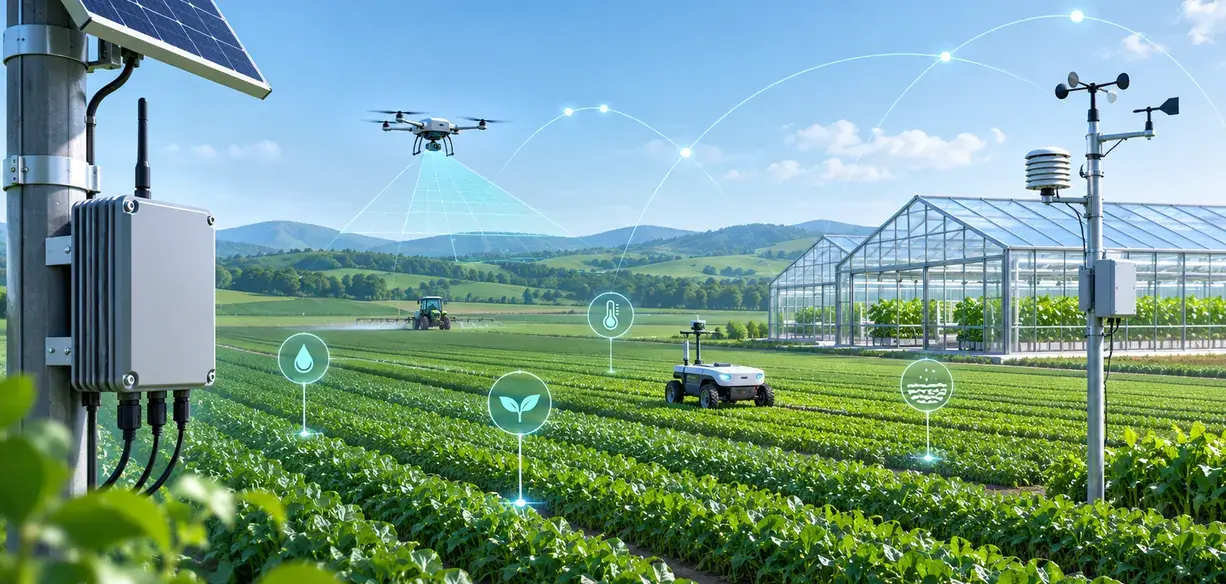
Diseases and water stress are noticed once the crop is already affected. A weather station, soil probes and sensor nodes in the field report conditions through an outdoor gateway
To check
Crops, plots and measurement depth of the soil probes
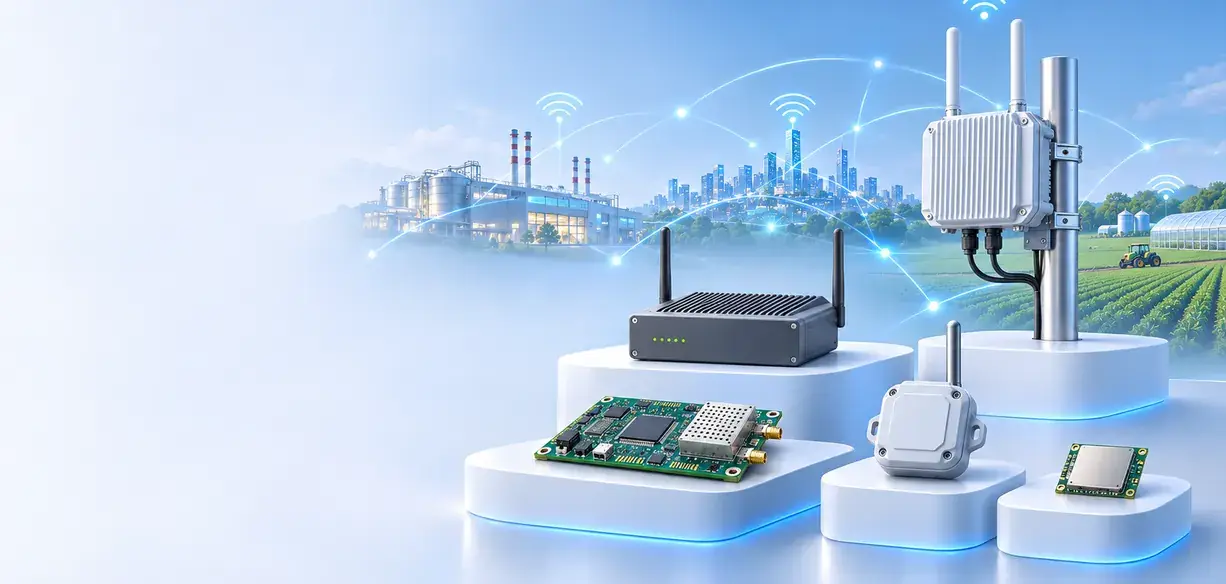
A LoRaWAN project needs sensors, gateways, a network server and an application that work together. Sensor nodes report to indoor or outdoor gateways, which forward the data to the network server and the customer’s platform
To check
Regional frequency plan (EU868, US915 and others)
Network server: public, private or embedded in the gateway
Milesight sensors, LoRaWAN gateways and cellular routers can be brought together on the Milesight Development Platform, which manages the devices and passes their data to other applications through an API and webhooks
To check
Development Platform for device management, API and webhooks, or another network server and application
Devices provisioned through Milesight RPS must have that provisioning removed before being added to the Development Platform
Data flows to the customer’s own application through webhooks
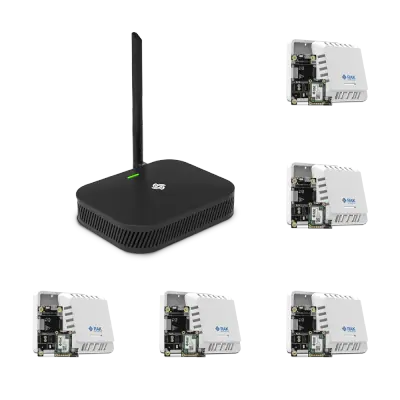
RAKwireless WisGate gateways run WisGateOS 2 and are managed from WisDM, RAKwireless’ cloud device management platform with a built-in network server, alongside RAK sensor nodes, radio modules and concentrators
To check
WisDM built-in network server, or a third-party one (ChirpStack, TTN/TTS, AWS IoT Core, Actility)
Remote configuration and updates of the gateways from WisDM
Regional frequency plan of the gateways and nodes
Associated system blocks
GatewaysSensors and modulesDevelopment boardsMounting
Seeed SenseCAP sensors connect to Seeed’s SenseCAP cloud platform and app, and Seeed edge computers, camera modules, Grove and XIAO boards complete the chain for custom devices and local processing
To check
SenseCAP cloud platform and app, or the customer’s own network server
Prototype on Grove and XIAO, then move to industrial versions
Local processing on the edge computers or in the cloud
Associated system blocks
SensorsEdge computingDevelopment boards
Need a complete solution?
Send a request for R718PE02D and the other parts of your project.
Answers to the questions that the recorded characteristics of R718PE02D can answer. A question is not asked when nothing is recorded to answer it.
1Does it support LoRaWAN?
Yes — recorded under "Available LoRaWAN Band": EU863-870, US902-928, AU915-928, KR920-923, AS923, IN865, CN470-510; (Note: The frequency band is optional and needs to be configured before shipment).
2What is the operating temperature range?
-20℃ to 60℃ (source: LiDAR Sensor Operating Temperature).
Similar parts to answer your needs. Compare the main characteristics. A recorded replacement is a documented relation; a similar product is a similarity only, never a compatibility claim.
What is recorded about the regulatory status and the life of this part.
Regulatory compliance
No compliance statement is recorded for this part. Ask the supplier for the RoHS and REACH declarations and, for a radio product, the EU declaration of conformity.
With your consent, we use Google cookies to measure the site’s audience and our advertising. Your quote basket and comparison stay in your browser either way. Details