NBL-COD-208-ONLINE-COD-WATER-SENSOR
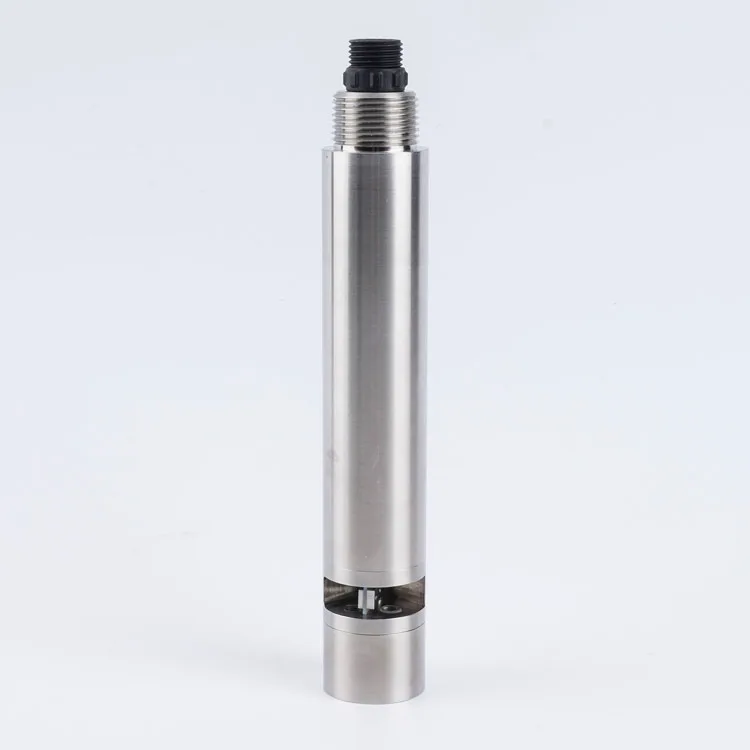
Online COD Water Quality Sensor with UV Absorption
- Scale range
- COD
- Power consumption
- 0.3W@12V
- Storage Temperature
- -5~65℃
- Turbidity — Accuracy
- ±5%F.S.
Online COD Water Quality Sensor with UV Absorption
Water Quality Analyzers and Probes
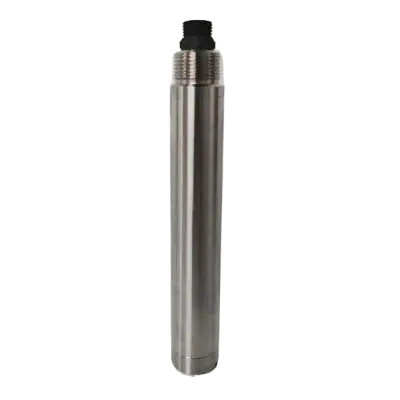
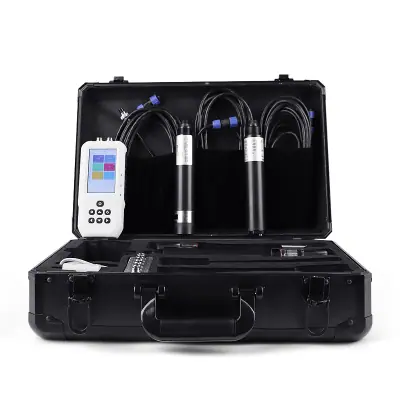
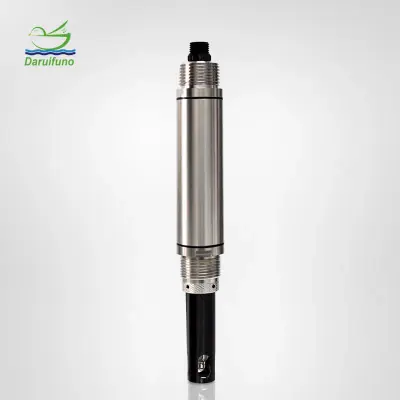
Digital online chemical oxygen demand (COD) sensor for immersion installation, measuring COD and turbidity by 254 nm UV absorption without reagents, with RS-485 Modbus RTU output.
Overview. The Niubol NBL-WQ-COD is an immersion-type online COD sensor for continuous water quality monitoring. It measures chemical oxygen demand by ultraviolet absorption at 254 nm and also measures turbidity and temperature.
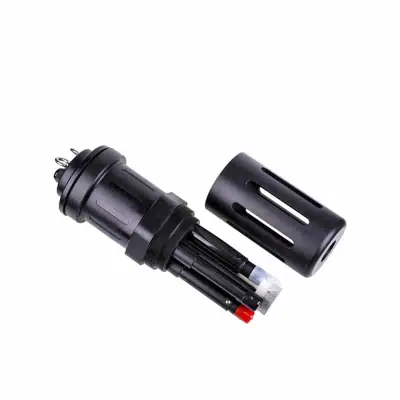
Measuring principle. Two light sources are used: ultraviolet light for COD and reference light for turbidity. Optical path attenuation is compensated by a specific algorithm, reducing the interference of particulate suspended matter. No reagents are required.
Main characteristics. COD accuracy ±5 %F.S., COD resolution 0.1 mg/L. Turbidity accuracy ±5 %F.S., turbidity resolution 0.1 NTU. Two-point calibration. Built-in cleaning brush against bio-adhesion. 5-metre cable, other lengths can be customized.
Interfaces and connectivity. Digital RS-485 output with Modbus RTU protocol, allowing integration into a data acquisition system or PLC.
Power and environment. Power supply 12 to 24 VDC, consumption 0.3 W at 12 V. Protection level IP68, sensor housing in 316L stainless steel. Working conditions 0 to 45 °C, below 0.1 MPa; storage temperature -5 to 65 °C.
Typical uses. Continuous monitoring of organic pollution in water, on site or in basins, with measurements sent to a supervision system via Modbus RTU.
No published question about this part yet. Questions are reviewed before publication.
Every characteristic recorded for NBL-COD-208-ONLINE-COD-WATER-SENSOR, with where it comes from. Use the filters to find one quickly.
| Characteristic | Value |
|---|---|
| Cable Length | 5 meters, other lengths can be customized |
| Calibration method | Two-point calibration |
| COD Precision | ±5%F.S. |
| COD Resolution | 0.1mg/L |
| Installation Method | Immersion installation |
| Measuring Principle | Dual wavelength ultraviolet absorption method |
| Output Method | RS-485 (Modbus/ RTU ) |
| Power consumption | 0.3W@12V |
| Power supply | 12~24VDC |
| Products | Weather Stations |
| Protection Level | IP68 |
| Scale range | COD |
| Sensor housing material | 316L stainless steel |
| Storage Temperature | -5~65℃ |
| Turbidity — Accuracy | ±5%F.S. |
| Turbidity — Resolution | 0.1NTU |
| Working Conditions | 0~45℃、<0.1MPa |
No specification matches.
Last verification : 2026-11-02
Official documents and the technical data recorded for NBL-COD-208-ONLINE-COD-WATER-SENSOR. For a missing document or a specific revision, our experts send it to you.
Digital online chemical oxygen demand (COD) sensor for immersion installation, measuring COD and turbidity by 254 nm UV absorption without reagents, with RS-485 Modbus RTU output.
| Parameter | Value |
|---|---|
| Cable Length | 5 meters, other lengths can be customized |
| Calibration method | Two-point calibration |
| COD Precision | ±5%F.S. |
| COD Resolution | 0.1mg/L |
| Installation Method | Immersion installation |
| Measuring Principle | Dual wavelength ultraviolet absorption method |
| Output Method | RS-485 (Modbus/ RTU ) |
| Power consumption | 0.3W@12V |
| Power supply | 12~24VDC |
| Products | Weather Stations |
| Protection Level | IP68 |
| Scale range | COD |
| Sensor housing material | 316L stainless steel |
| Storage Temperature | -5~65℃ |
| Turbidity — Accuracy | ±5%F.S. |
| Turbidity — Resolution | 0.1NTU |
| Working Conditions | 0~45℃、<0.1MPa |
Answers to the questions that the recorded characteristics of NBL-COD-208-ONLINE-COD-WATER-SENSOR can answer. A question is not asked when nothing is recorded to answer it.
Yes — recorded under "Output Method": RS-485 (Modbus/ RTU ).
Yes — recorded under "Cable Length": 5 meters, other lengths can be customized.
Yes — recorded under "Output Method": RS-485 (Modbus/ RTU ).
Similar parts to answer your needs. Compare the main characteristics. A recorded replacement is a documented relation; a similar product is a similarity only, never a compatibility claim.
Online COD Water Quality Sensor with UV Absorption
NBL-WQ-COD Dual-Wavelength Ultraviolet Online COD Sensor Monitoring of Wastewater Treatment, Industrial Wastewater
Blue Green Algae Sensor
Digital Chlorophyll Sensor
Describe your application and constraints in a request.
What is recorded about the regulatory status and the life of this part.
No compliance statement is recorded for this part. Ask the supplier for the RoHS and REACH declarations and, for a radio product, the EU declaration of conformity.
| Current status | Status not stated |
| Key dates | Not recorded |
| Manufacturer part number | NBL-COD-208-ONLINE-COD-WATER-SENSOR |
| Manufacturer | Niubol |
Water Quality Analyzers and Probes
Online UV fluorescence BOD sensor, reagent-free · Ref. : WQ-BOD-4S
Price on request
Water Quality Analyzers and Probes
Portable ORP analyzer with digital electrode and touch screen
Price on request
Water Quality Analyzers and Probes
Multiparameter Water Quality Sensor · Ref. : KPS-400
Price on request
Water Quality Analyzers and Probes
316L Online Digital ORP Sensor for Water Measurement · Ref. : DRH890
Price on request
With your consent, we use Google cookies to measure the site’s audience and our advertising. Your quote basket and comparison stay in your browser either way. Details