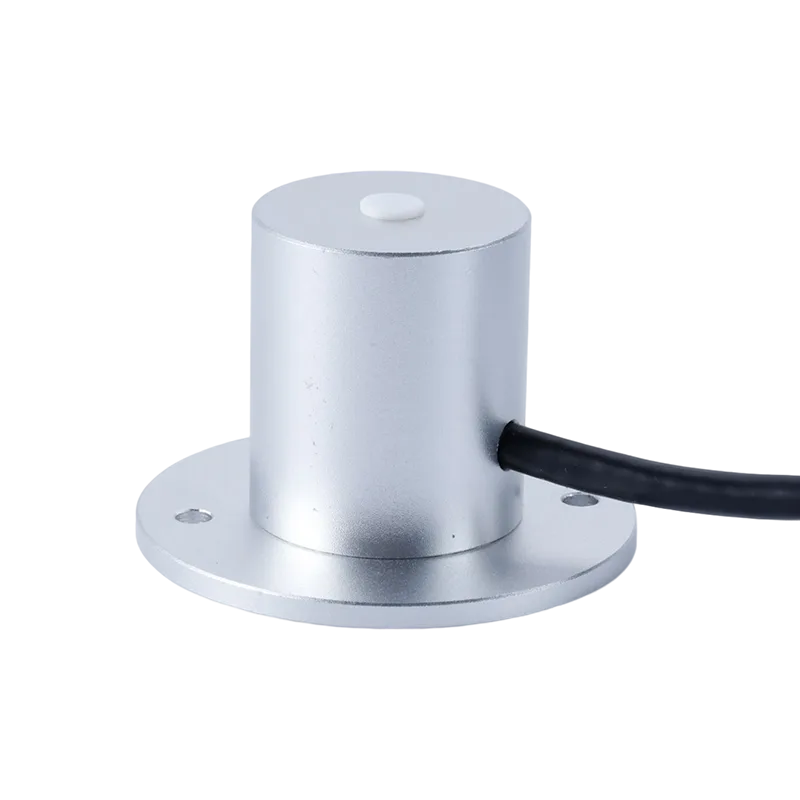
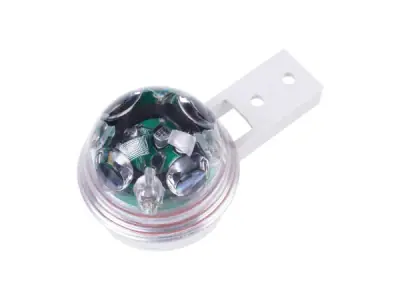
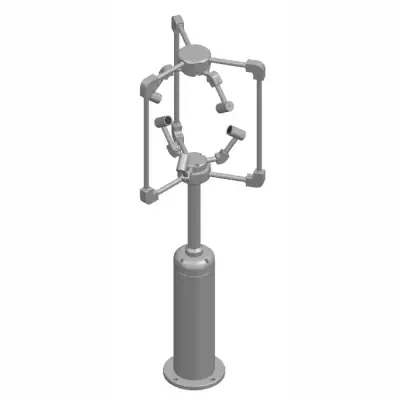
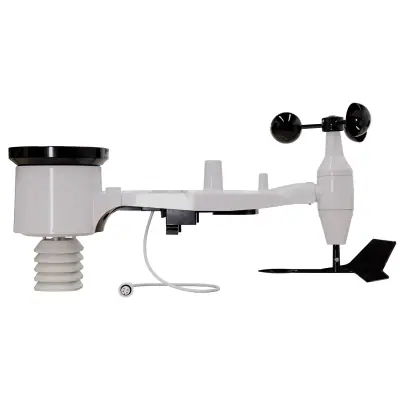
NBL-W-PARS photosynthetically active radiation sensor measuring plant-usable light between 400 and 700 nm, for greenhouses, crop growth and weather stations. Available on quotation from Atlas Electronics.
Operating Temperature-40 to 65°C
Specified Measuring Range0–2000 W/m²
Spectral range400–700 nm
Response timeApprox. 1 s (99%)
Cosine correctionUp to 80° incidence angle
HousingAluminum alloy
Product overview
Overview. The Niubol NBL-W-PARS photosynthetically active radiation (PAR) sensor measures plant-usable light within the 400 to 700 nm spectral range. It is suitable for greenhouses, farms, plant growth research, agricultural meteorology and weather monitoring systems.
Measurement principle. The sensor uses a silicon photodetector combined with an optical filter that restricts its response to the photosynthetically active wavelength range. A cosine-corrected sensing surface accounts for light arriving at different angles, with correction up to an incidence angle of 80°. The specified measuring range is 0 to 2000 W/m², with a sensitivity of 5 to 50 μV per μmol·m⁻²·s⁻¹ and a response time of approximately 1 s (99%).
Outputs and connectivity. The sensor is available with RS485 Modbus, 0–5 V or 0–2.5 V outputs and is powered from DC 12–24 V. The RS485 Modbus output allows connection to PLCs, greenhouse controllers, data loggers and agricultural IoT gateways. The standard cable length is 2.5 m.
Environmental conditions. The aluminum alloy housing supports an operating temperature of -40 to 65 °C and an operating humidity of 0–100% RH. The temperature dependence is at most 0.05%/°C.
Typical uses. Monitoring of usable light for greenhouse crops, evaluation of shade curtain effects, monitoring of the contribution of compatible supplemental grow-light systems, crop response research and outdoor ecological monitoring.
Integration. The output signal is proportional to light intensity and must be converted using the sensitivity coefficient supplied with each sensor. Install the sensing surface horizontally when measuring incident PAR on a horizontal plane, and keep it clean and free from unintended shadows.
No published question about this part yet. Questions are reviewed before publication.
Complete specifications
Every characteristic recorded for PAR-SENSOR, with where it comes from. Use the filters to find one quickly.
All specifications (43)
Characteristic
Value
Response time
Approx. 1 s (99%)
Avoid Shadows
Keep poles, structures, greenhouse frames and other equipment from casting unnecessary shadows on the sensing surface.
Cable
Inspect outdoor cable sections and connectors for damage or loose connections.
Calibration
Use the sensitivity or calibration coefficient supplied with the individual sensor when converting raw analog signals.
Cosine correction
Up to 80° incidence angle
Cosine Corrector
Improves response to light arriving at different incidence angles.
Crop Research
Compare crop responses with measured light conditions and other environmental parameters.
Greenhouse Use
Choose whether PAR should be measured above the crop canopy, within the canopy or at another defined reference height, and keep this position consistent.
Housing
Aluminum alloy
Installation Item
Recommendation
Main Measurement
Plant-relevant radiation
Measurement Plane
Install the sensing surface horizontally when measuring incident PAR on a horizontal plane.
Measurement — What It Represents
Typical Unit
Monitoring Objective
How PAR Data Can Help
Mounting Level
Verify the measurement plane after maintenance, storms or movement of the mounting structure.
Natural Light Monitoring
Observe changes in usable plant light during the day and between weather conditions.
Operating Humidity
0–100%RH
Operating Temperature
-40 to 65°C
Optical Filter
Restricts the sensor response to the required photosynthetically active wavelength range.
Outdoor Farm Monitoring
Ecological Research
Outdoor Site
For outdoor monitoring, provide as clear a view of the sky as practical and avoid obstacles near sunrise and sunset directions.
Output Options
RS485 / 0–5 V / 0–2.5 V
Output — Typical Connection
Recommended Use
PAR — Radiation within the photosynthetically active 400–700 nm wavelength range
W/m² or photon-based units depending on sensor calibration
Power supply
DC 12–24 V
PPFD — Photosynthetic photon flux density reaching a surface
μmol·m⁻²·s⁻¹
Product Name
Photosynthetically Active Radiation Sensor / PAR Sensor
Products
Weather Stations
Representative Location
Place the sensor where the measured light represents the crop or experimental area of interest.
Digital monitoring, remote systems and multi-sensor networks
Sensing Surface
Keep the cosine-correction surface clean and free from dust, water deposits, snow and other material that blocks incoming light.
Sensitivity
5–50 μV per μmol·m⁻²·s⁻¹
Shade Curtain Evaluation
Compare PAR before and after shading to quantify reduction in plant-usable light.
Shading
Check periodically that new structures, plants or equipment are not casting unintended shadows on the sensor.
Signal Output
Provides digital or voltage output according to the selected configuration.
Silicon Photodetector
Converts incident light into an electrical signal proportional to light intensity.
Specified Measuring Range
0–2000 W/m²
Spectral range
400–700 nm
Standard Cable Length
2.5 m
Supplemental Lighting
Monitor light contribution from compatible greenhouse grow-light systems.
Temperature Dependence
Maximum 0.05%/°C
Typical application
Greenhouses, crop growth and plant-light research
Typical Output Quantity
PAR / PPFD-related measurement
No specification matches.
Last verification : 2026-11-02
Technical documentation
Official documents and the technical data recorded for PAR-SENSOR. For a missing document or a specific revision, our experts send it to you.
1. Technical overview
NBL-W-PARS photosynthetically active radiation sensor measuring plant-usable light between 400 and 700 nm, for greenhouses, crop growth and weather stations. Available on quotation from Atlas Electronics.
Operating Temperature-40 to 65°C
Specified Measuring Range0–2000 W/m²
Spectral range400–700 nm
Response timeApprox. 1 s (99%)
Cosine correctionUp to 80° incidence angle
2. Datasheet extract (recorded values)
Parameter
Value
Response time
Approx. 1 s (99%)
Avoid Shadows
Keep poles, structures, greenhouse frames and other equipment from casting unnecessary shadows on the sensing surface.
Cable
Inspect outdoor cable sections and connectors for damage or loose connections.
Calibration
Use the sensitivity or calibration coefficient supplied with the individual sensor when converting raw analog signals.
Cosine correction
Up to 80° incidence angle
Cosine Corrector
Improves response to light arriving at different incidence angles.
Crop Research
Compare crop responses with measured light conditions and other environmental parameters.
Greenhouse Use
Choose whether PAR should be measured above the crop canopy, within the canopy or at another defined reference height, and keep this position consistent.
Housing
Aluminum alloy
Installation Item
Recommendation
Main Measurement
Plant-relevant radiation
Measurement Plane
Install the sensing surface horizontally when measuring incident PAR on a horizontal plane.
Measurement — What It Represents
Typical Unit
Monitoring Objective
How PAR Data Can Help
Mounting Level
Verify the measurement plane after maintenance, storms or movement of the mounting structure.
Natural Light Monitoring
Observe changes in usable plant light during the day and between weather conditions.
Operating Humidity
0–100%RH
Operating Temperature
-40 to 65°C
Optical Filter
Restricts the sensor response to the required photosynthetically active wavelength range.
Outdoor Farm Monitoring
Ecological Research
Outdoor Site
For outdoor monitoring, provide as clear a view of the sky as practical and avoid obstacles near sunrise and sunset directions.
Output Options
RS485 / 0–5 V / 0–2.5 V
Output — Typical Connection
Recommended Use
PAR — Radiation within the photosynthetically active 400–700 nm wavelength range
W/m² or photon-based units depending on sensor calibration
Power supply
DC 12–24 V
PPFD — Photosynthetic photon flux density reaching a surface
μmol·m⁻²·s⁻¹
Product Name
Photosynthetically Active Radiation Sensor / PAR Sensor
Products
Weather Stations
Representative Location
Place the sensor where the measured light represents the crop or experimental area of interest.
Digital monitoring, remote systems and multi-sensor networks
Sensing Surface
Keep the cosine-correction surface clean and free from dust, water deposits, snow and other material that blocks incoming light.
Sensitivity
5–50 μV per μmol·m⁻²·s⁻¹
Shade Curtain Evaluation
Compare PAR before and after shading to quantify reduction in plant-usable light.
Shading
Check periodically that new structures, plants or equipment are not casting unintended shadows on the sensor.
Signal Output
Provides digital or voltage output according to the selected configuration.
Silicon Photodetector
Converts incident light into an electrical signal proportional to light intensity.
Specified Measuring Range
0–2000 W/m²
Spectral range
400–700 nm
Standard Cable Length
2.5 m
Supplemental Lighting
Monitor light contribution from compatible greenhouse grow-light systems.
Temperature Dependence
Maximum 0.05%/°C
Typical application
Greenhouses, crop growth and plant-light research
Typical Output Quantity
PAR / PPFD-related measurement
Integration
Points to check before using PAR-SENSOR in a design. They are derived from the recorded characteristics, not from the manufacturer's application circuits.
1Thermalrated operating range -40 to 65°C — check it against the installation environment.
Power and communication
Power supply
DC 12–24 V
Check the exact pin assignment and the application circuit in the datasheet, or ask our experts.
Implementation checklist
Thermal : rated operating range -40 to 65°C — check it against the installation environment.
Applications and use cases
Architectures in which PAR-SENSOR can play a role, derived from its category. This is not a compatibility statement: check the specifications against your requirements.
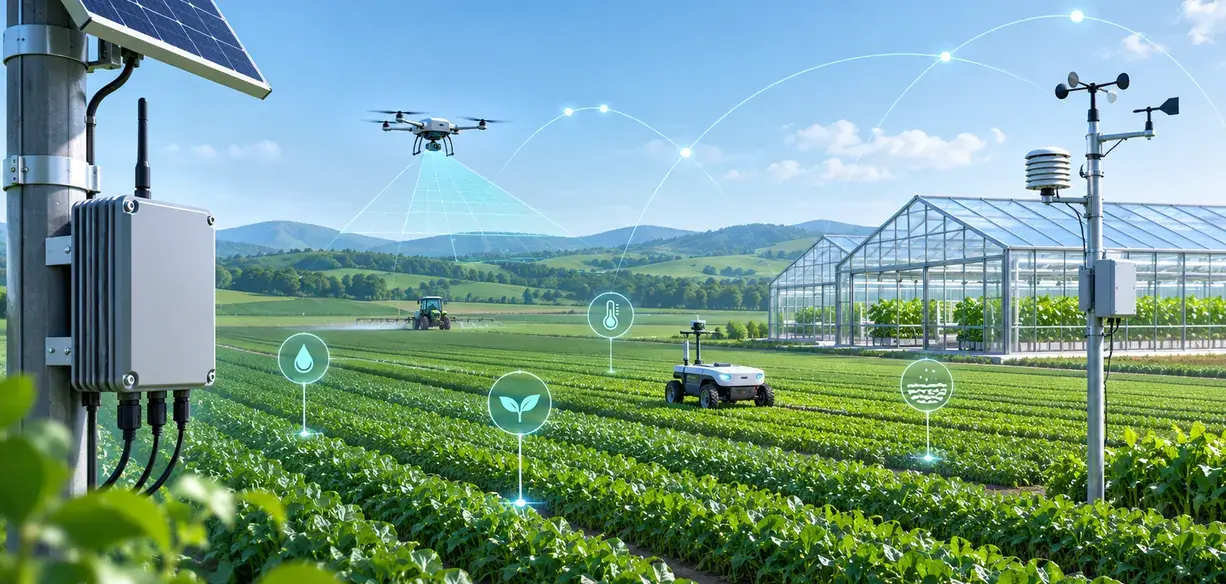
Diseases and water stress are noticed once the crop is already affected. A weather station, soil probes and sensor nodes in the field report conditions through an outdoor gateway
To check
Crops, plots and measurement depth of the soil probes
Power of the field devices (battery, solar)
Gateway coverage over the farm
Associated system blocks
Weather stationSoil and field sensorsGateway
Need a complete solution?
Send a request for PAR-SENSOR and the other parts of your project.
Answers to the questions that the recorded characteristics of PAR-SENSOR can answer. A question is not asked when nothing is recorded to answer it.
1Does it support RS-485?
Yes — recorded under "Output Options": RS485 / 0–5 V / 0–2.5 V.
2Does it support CAN bus?
Yes — recorded under "Monitoring Objective": How PAR Data Can Help.
3Does it support Modbus?
Yes — recorded under "RS485 Modbus — PLC / greenhouse controller / data logger / IoT gateway": Digital monitoring, remote systems and multi-sensor networks.
Similar parts to answer your needs. Compare the main characteristics. A recorded replacement is a documented relation; a similar product is a similarity only, never a compatibility claim.
Current productNiubol
PAR-SENSOR
PAR Sensor RS485 Modbus for Greenhouse Light Monitoring
No advertising or analytics cookies. A single, strictly necessary cookie is set only if you sign in to your account. Your quote basket and comparison stay in your browser. Details