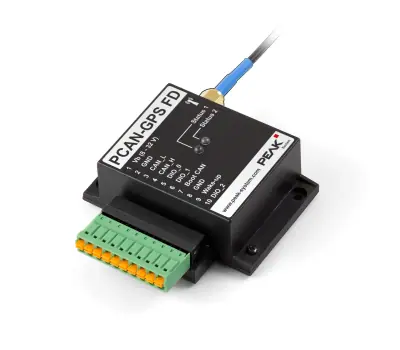
PCAN-GPS PRO FD
Configurable GNSS, inertial and magnetic sensor module with CAN FD
- Feature
- Maximum update rate 25 Hz
- Feature
- 2 RGB LEDs for status signaling
- Feature
- 5 V supply via USB for configuration
- Feature
- Setting the LED brightness
Configurable GNSS, inertial and magnetic sensor module with CAN FD
Sensor module pairing a u-blox NEO-M9N satellite receiver with gyroscope, accelerometer and magnetic sensors, for feeding position and motion data onto a CAN FD bus in measuring chains.
Position and orientation sensing. The PEAK-System PCAN-GPS Pro FD is a configurable sensor module that measures position, orientation and acceleration and sends the data over CAN or CAN FD. Its u-blox NEO-M9N receiver tracks four navigation systems at the same time from GPS, Galileo, BeiDou, GLONASS, SBAS and QZSS, with update rates up to 25 Hz. The ISM330DLC three-axis gyroscope and accelerometer and the IIS2MDC three-axis magnetic field sensor, both from ST, complement the motion and orientation measurements.
GNSS antenna supply and fast start. The supply for active GNSS antennas is set to 3.3 V or 5.0 V, or switched off. A supercap keeps the RTC and the GPS data so that the time to first fix (TTFF) is shortened. The STM32H745 dual-core microcontroller (Arm® Cortex® M7 and M4) has 2 MByte flash, supplemented by 8 MByte QSPI flash and 4 GByte eMMC.
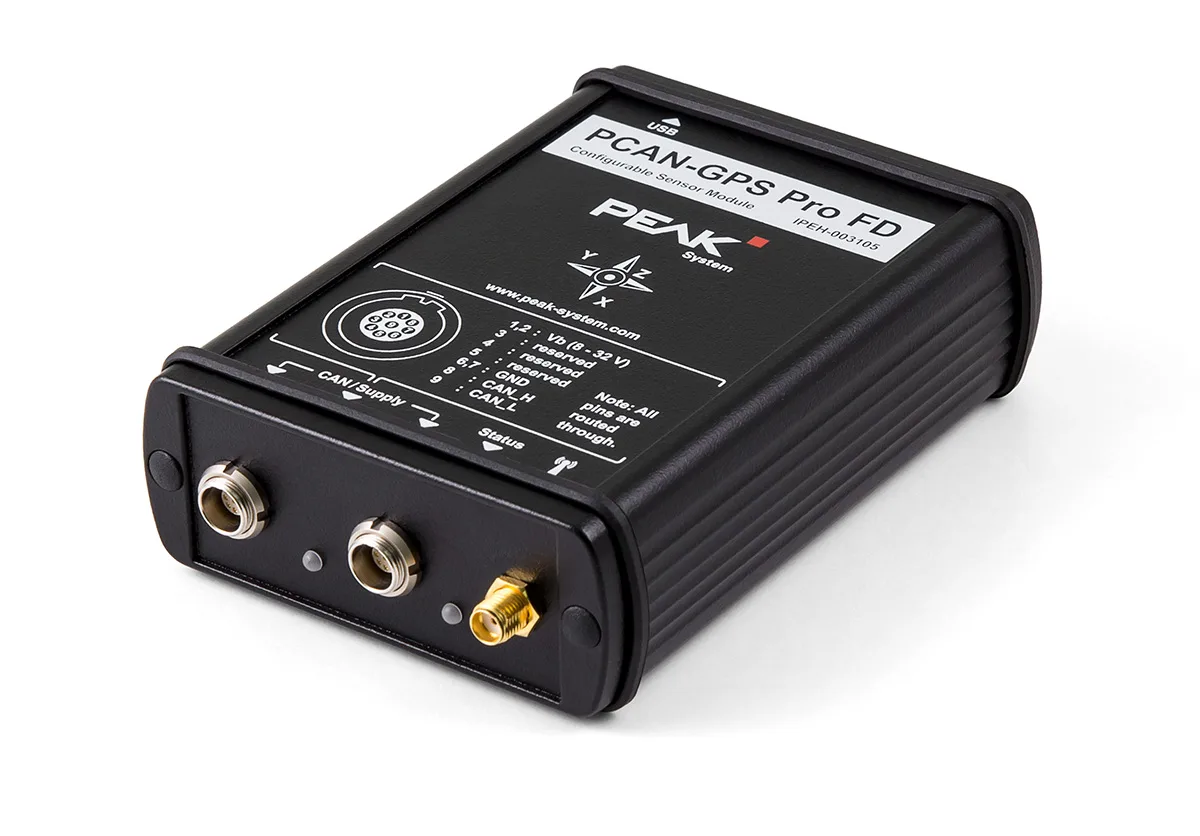
CAN FD connection and wiring. The NXP TJA1043 transceiver provides a high-speed CAN connection compliant with ISO 11898-2 and the CAN 2.0 A/B and FD specifications. CAN bit rates run from 40 kbit/s to 1 Mbit/s, and CAN FD data field bit rates (64 bytes max.) from 40 kbit/s to 10 Mbit/s. CAN termination can be activated. CAN and supply pass through two interconnected 9-pin LEMO circular connectors with Alpha coding (30°), pin-assigned to M-CAN for integration into measuring chains. Operating supply ranges from 8 to 32 V.
Configuration over USB. Device parameters, sensor data capture and CAN message transmission are set through the USB 2.0 port (USB-C), which also provides a 5 V supply for configuration, using the Windows® software included in the scope of supply. The software sets the antenna supply, LED brightness and CAN or CAN FD bit rates, and for each CAN message its activation, CAN ID and cycle time. Sensor data is sent in a predefined CAN message layout. Custom bit rates are calculated with the separate Bit Rate Calculation Tool. An overview page shows the current sensor states. Once configured, the module runs as an independent CAN node, and direct access to the u-blox via USB is available as an option.
Housing and temperature range. The robust aluminum casing carries an Ingress Protection rating of IP50. The extended operating temperature range runs from -40 to +85 °C (-40 to +185 °F). Two RGB LEDs signal the module status.
No published question about this part yet. Questions are reviewed before publication.
Every characteristic recorded for PCAN-GPS PRO FD, with where it comes from. Use the filters to find one quickly.
| Characteristic | Value |
|---|---|
| Feature | STM32H745 microcontroller with Arm® Cortex® M7 and M4 dual core and 2 MByte flash |
| Feature | Simultaneous reception of 4 navigation systems |
| Feature | Maximum update rate 25 Hz |
| Feature | Configurable supply of active GPS antennas with 3.3 V or 5 V |
| Feature | Optional direct access to the u-blox via USB |
| Feature | Gyroscope and three-axis accelerometer ISM330DLC from ST |
| Feature | Electronic three-axis magnetic field sensor IIS2MDC from ST |
| Feature | Memory: 8 MByte QSPI flash and 4 GByte eMMC |
| Feature | Extended operating temperature range from -40 to +85 °C (-40 to +185 °F) |
| Feature | 2 RGB LEDs for status signaling |
| Feature | Configuration with a Windows® software via USB |
| Feature | High-speed CAN connection (ISO 11898-2) Complies with CAN specifications 2.0 A/B and FD |
| Feature | Voltage supply from 8 to 32 V via LEMO circular connectors for operation |
| Feature | 5 V supply via USB for configuration |
| Feature | Supercap for preserving the RTC and the GPS data to shorten the TTFF (Time To First Fix) |
| Feature | Aluminum casing with Ingress Protection IP50 |
| Feature | Windows® program for configuring the PCAN-GPS Pro FD via USB |
| Feature | Setting the antenna supply: 3.3 V / 5.0 V / off |
| Feature | Setting the LED brightness |
| Feature | Setting the CAN CC or CAN FD bit rates, if required with bit rate string from separate "Bit Rate Calculation Tool" software for own bit rate parameters |
| Feature | CAN messages: Predefined layout of sensor and device data in CAN messages |
| Feature | Customization possibilities: CAN message enabled, CAN ID, cycle time |
| Feature | CAN FD bit rates for the data field (64 bytes max.) from 40 kbit/s up to 10 Mbit/s |
| Feature | Monitoring the current sensor states on an overview page |
| Feature | CAN bit rates from 40 kbit/s up to 1 Mbit/s |
| Feature | NXP TJA1043 CAN transceiver |
| Feature | CAN termination can be activated |
| Feature | CAN connection and supply via 9-pin LEMO circular connectors with Alpha coding (30°) 2 interconnected connectors with pin assignment according to M-CAN for integration in measuring chains |
| Feature | High-speed USB 2.0 via USB-C connector |
| Feature | Receiver for navigation satellites u-blox NEO-M9N Supported navigation and supplementary systems: GPS, Galileo, BeiDou, GLONASS, SBAS, and QZSS |
No specification matches.
Last verification : 2026-11-25
Official documents and the technical data recorded for PCAN-GPS PRO FD. For a missing document or a specific revision, our experts send it to you.
Sensor module pairing a u-blox NEO-M9N satellite receiver with gyroscope, accelerometer and magnetic sensors, for feeding position and motion data onto a CAN FD bus in measuring chains.
| Parameter | Value |
|---|---|
| Feature | STM32H745 microcontroller with Arm® Cortex® M7 and M4 dual core and 2 MByte flash |
| Feature | Simultaneous reception of 4 navigation systems |
| Feature | Maximum update rate 25 Hz |
| Feature | Configurable supply of active GPS antennas with 3.3 V or 5 V |
| Feature | Optional direct access to the u-blox via USB |
| Feature | Gyroscope and three-axis accelerometer ISM330DLC from ST |
| Feature | Electronic three-axis magnetic field sensor IIS2MDC from ST |
| Feature | Memory: 8 MByte QSPI flash and 4 GByte eMMC |
| Feature | Extended operating temperature range from -40 to +85 °C (-40 to +185 °F) |
| Feature | 2 RGB LEDs for status signaling |
| Feature | Configuration with a Windows® software via USB |
| Feature | High-speed CAN connection (ISO 11898-2) Complies with CAN specifications 2.0 A/B and FD |
| Feature | Voltage supply from 8 to 32 V via LEMO circular connectors for operation |
| Feature | 5 V supply via USB for configuration |
| Feature | Supercap for preserving the RTC and the GPS data to shorten the TTFF (Time To First Fix) |
| Feature | Aluminum casing with Ingress Protection IP50 |
| Feature | Windows® program for configuring the PCAN-GPS Pro FD via USB |
| Feature | Setting the antenna supply: 3.3 V / 5.0 V / off |
| Feature | Setting the LED brightness |
| Feature | Setting the CAN CC or CAN FD bit rates, if required with bit rate string from separate "Bit Rate Calculation Tool" software for own bit rate parameters |
| Feature | CAN messages: Predefined layout of sensor and device data in CAN messages |
| Feature | Customization possibilities: CAN message enabled, CAN ID, cycle time |
| Feature | CAN FD bit rates for the data field (64 bytes max.) from 40 kbit/s up to 10 Mbit/s |
| Feature | Monitoring the current sensor states on an overview page |
| Feature | CAN bit rates from 40 kbit/s up to 1 Mbit/s |
| Feature | NXP TJA1043 CAN transceiver |
| Feature | CAN termination can be activated |
| Feature | CAN connection and supply via 9-pin LEMO circular connectors with Alpha coding (30°) 2 interconnected connectors with pin assignment according to M-CAN for integration in measuring chains |
| Feature | High-speed USB 2.0 via USB-C connector |
| Feature | Receiver for navigation satellites u-blox NEO-M9N Supported navigation and supplementary systems: GPS, Galileo, BeiDou, GLONASS, SBAS, and QZSS |
Answers to the questions that the recorded characteristics of PCAN-GPS PRO FD can answer. A question is not asked when nothing is recorded to answer it.
Yes — recorded under "Feature": High-speed CAN connection (ISO 11898-2) Complies with CAN specifications 2.0 A/B and FD.
Yes — recorded under "Feature": Configurable supply of active GPS antennas with 3.3 V or 5 V.
Yes — recorded under "Feature": Optional direct access to the u-blox via USB.
Similar parts to answer your needs. Compare the main characteristics. A recorded replacement is a documented relation; a similar product is a similarity only, never a compatibility claim.
Configurable GNSS, inertial and magnetic sensor module with CAN FD
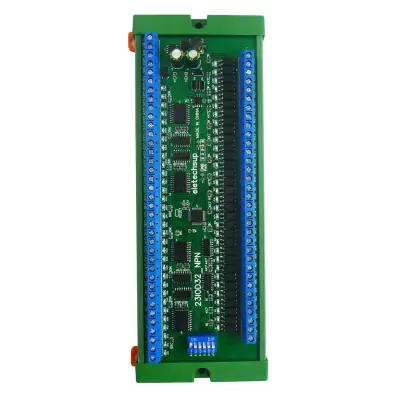
23IOD32 32CH RS485 IO Master-Slave Remote Control Switch Board NPN/PNP Isolation Input 300MA MOS Output Modbus RTU PLC Expansion Module
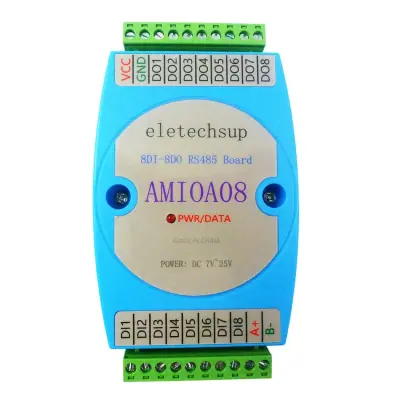
DC12V/24V 8DI8DO RS485 MODBUS RTU PLC Module Isolated Digital I/O for Arduino Raspberry Pi Home Industrial Automation
Describe your application and constraints in a request.
What is recorded about the regulatory status and the life of this part.
No compliance statement is recorded for this part. Ask the supplier for the RoHS and REACH declarations and, for a radio product, the EU declaration of conformity.
| Current status | Status not stated |
| Key dates | Not recorded |
| Manufacturer part number | PCAN-GPS PRO FD |
| Manufacturer | PEAK-System |
Mixed Signal I/O Modules
Programmable CAN FD position and orientation module
Price on request
Mixed Signal I/O Modules
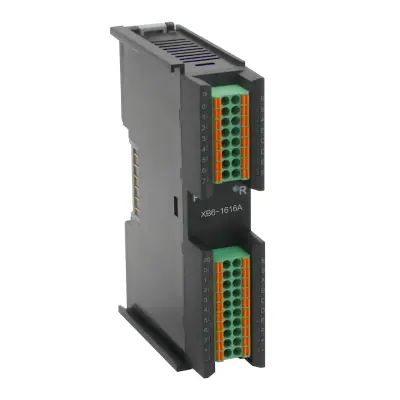
16-channel NPN mixed digital I/O module on X-bus backplane · Ref. : XB6-1616A
Price on request
Mixed Signal I/O Modules
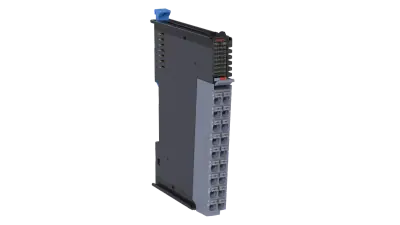
24 VDC mixed I/O blade module, 8 inputs and 8 outputs · Ref. : GL20-0808ETN-INT
Price on request
Mixed Signal I/O Modules
32-channel RS485 Modbus RTU I/O expansion module · Ref. : 23IOD32_NPN
Price on request
No advertising or analytics cookies. A single, strictly necessary cookie is set only if you sign in to your account. Your quote basket and comparison stay in your browser. Details