PIM377
Breakout Garden for Raspberry Pi (I2C)
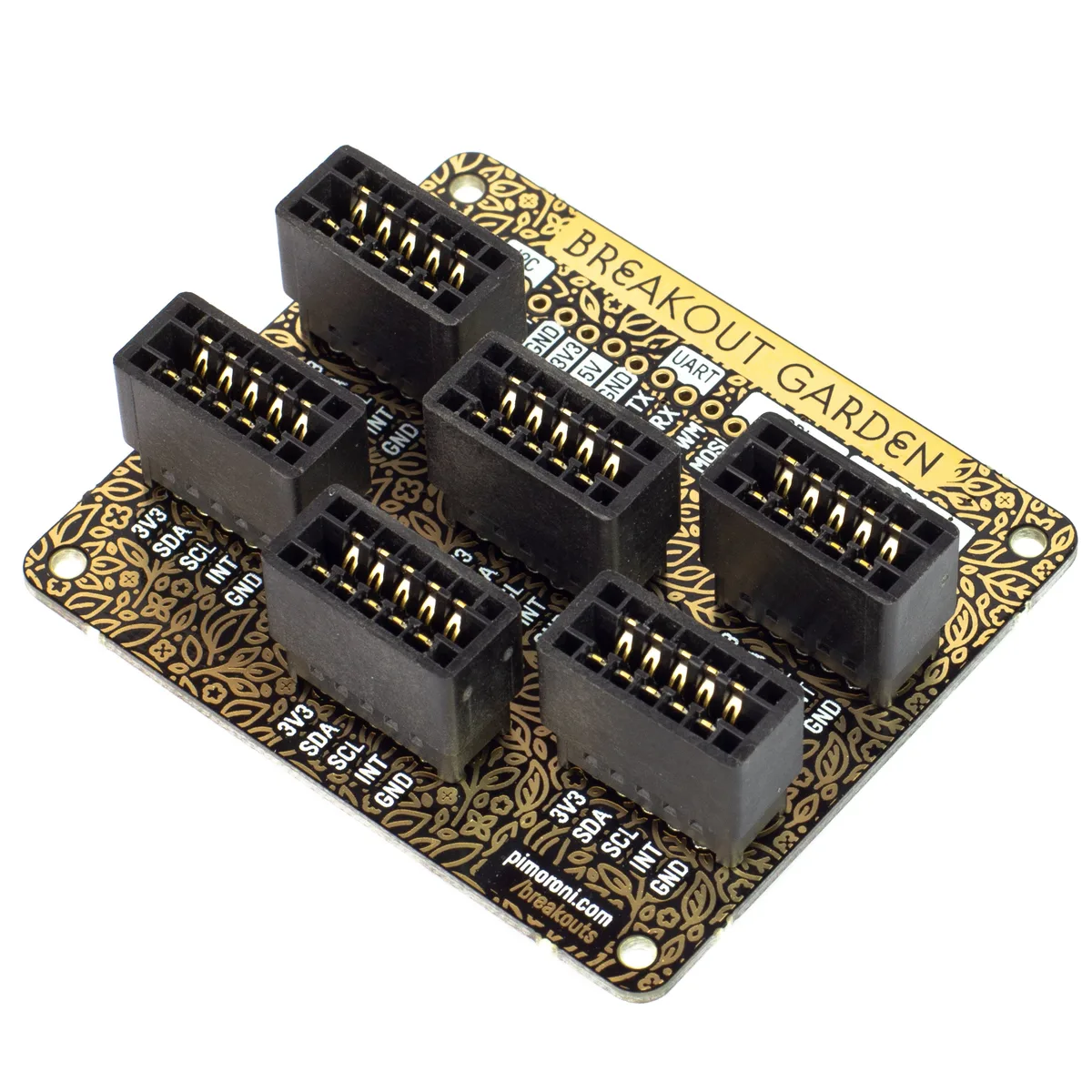
Limited record: this part has neither specifications nor a datasheet in the catalog yet. It is shown for reference and is not indexed.
Breakout Garden for Raspberry Pi (I2C)
Maker, Prototyping, Open-Hardware & Developer Boards
Pimoroni PIM377, listed under “Maker, Prototyping, Open-Hardware & Developer Boards”.
Grow your projects on Breakout Garden. It's the easiest way to use breakouts with your Raspberry Pi. There's no soldering required, just pop up to six Pimoroni breakouts (6x I2C only) into the slots on Breakout Garden and get started coding and creating.
Note that this version of Breakout Garden does not support our SPI breakouts! If you want to use Pimoroni SPI breakouts, then you should get the newer version of Breakout Garden HAT.
It's ideal for prototyping projects without the need for complicated wiring, soldering, or breadboards, and you've always got the option of changing your setup thanks to the way that Breakout Garden works.
The six sturdy slots on Breakout Garden are edge connectors that connect the five pins on each Pimoroni breakout to the power and I2C (for data) pins on your Raspberry Pi. Because I2C is a bus, you can use multiple I2C devices at the same time, providing they don't have the same address (we've made sure that all of our breakouts have different addresses).
We've also broken out a load of useful pins along the top of Breakout Garden, so you can connect other devices and integrate them into your Breakout Garden projects. If you have Pimoroni breakouts to which you've already soldered headers, then you can use this top row of pins to use them alongside other breakouts on Breakout Garden.
Features
Six sturdy edge-connector slots for Pimoroni breakouts
0.1" pitch, 5 pin connectors
Broken-out pins (1x20 strip of male header included)
Standoffs (M2.5, 10mm height) included to hold your Breakout Garden securely
Reverse polarity protection (built into breakouts)
HAT format board
Using Breakout Garden
We'd suggest using the included standoffs to attach Breakout Garden firmly to your Raspberry Pi. Pop the screws through the mounting holes on your Raspberry Pi, from below, and then screw the standoffs onto the screws. Push Breakout Garden onto your Pi's GPIO pins, and then screw through each mounting hole into the standoffs to hold everything steady and secure.
Because of the way that I2C (the protocol that Breakout Garden uses) works, it doesn't matter which slot on Breakout Garden you plug your Pimoroni breakout into. Each I2C device has an address (you'll see it on the back of each breakout) that it uses to identify itself to other I2C devices, so it's effectively saying to your Raspberry Pi, "Hey, it's me, Bob!"
We've built reverse polarity protection into our Pimoroni breakouts, meaning that there's no magic blue smoke if you accidentally plug one in the wrong way round. However, the correct way to plug them in is to make sure that the labels on the pins on your breakout and the labels on each Breakout Garden slot match up.
Software
Head over to the Breakout Garden GitHub repo and give our automagic installer a go. Just pop a few breakouts into Breakout Garden, run the installer, and SHAZAM!, the software for the appropriate breakouts will be installed. We've also got a few nice examples to show you what's possible.
Here's a few other project ideas to get you thinking:
A laser tape measure with VL53L1X Time of Flight Breakout and 1.12" OLED
An environmental display with BME680 Breakout, BH1745 Luminance and Colour Sensor Breakout, and 1.12" OLED
A really sophisticated presence detector with MLX90640 Thermal Camera Breakout, LSM303D 6DoF Breakout, and the BH1745 Luminance and Colour Sensor Breakout
Notes
The marking on the HAT for GPIO pin 20 is incorrect and should read 26.
No published question about this part yet. Questions are reviewed before publication.
Official documents and the technical data recorded for PIM377. For a missing document or a specific revision, our experts send it to you.
Pimoroni PIM377, listed under “Maker, Prototyping, Open-Hardware & Developer Boards”.
Similar parts to answer your needs. Compare the main characteristics. A recorded replacement is a documented relation; a similar product is a similarity only, never a compatibility claim.
Breakout Garden for Raspberry Pi (I2C)
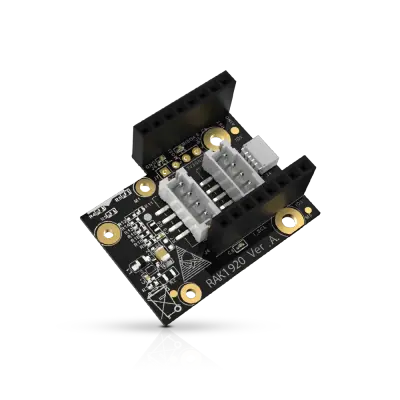
Sensor Adapter for Click, QWIIC and Grove Modules
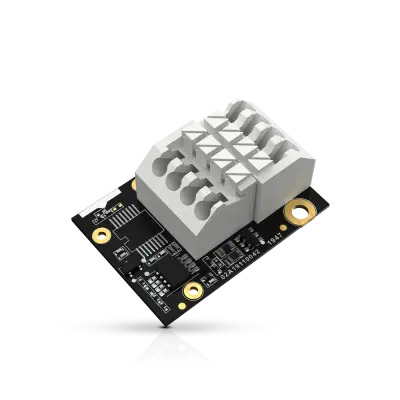
RS485 Module 3PEAK TP8485E
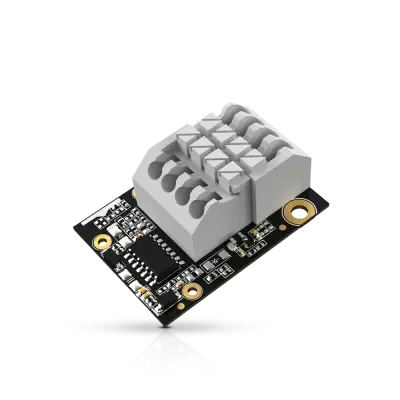
4-20mA Module STMicroelectronics LM2902
Describe your application and constraints in a request.
What is recorded about the regulatory status and the life of this part.
No compliance statement is recorded for this part. Ask the supplier for the RoHS and REACH declarations and, for a radio product, the EU declaration of conformity.
| Current status | Status not stated |
| Key dates | Not recorded |
| Manufacturer part number | PIM377 |
| Manufacturer | Pimoroni |
Maker, Prototyping, Open-Hardware & Developer Boards
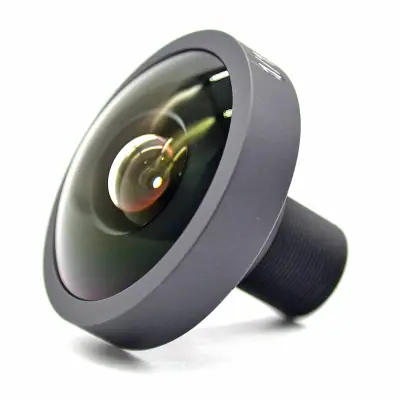
M12 fisheye lens for camera module · Ref. : M12_FISHEYE
Price on request
Maker, Prototyping, Open-Hardware & Developer Boards
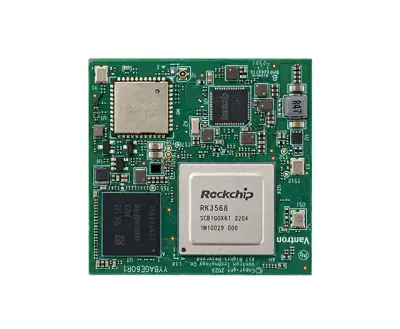
RK3568 System-on-Module with 1 TOPS NPU
Price on request
Maker, Prototyping, Open-Hardware & Developer Boards
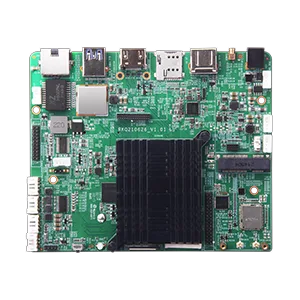
RK3568 Android tablet mainboard with DTV tuner · Ref. : K3-3568
Price on request
Maker, Prototyping, Open-Hardware & Developer Boards
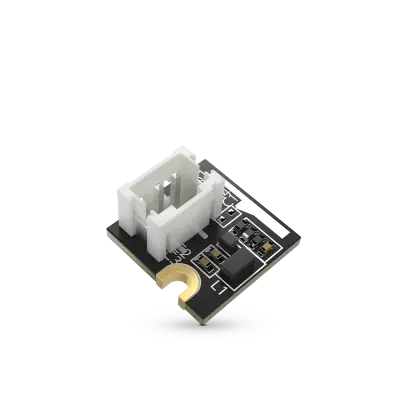
Boost converter module 3.3 V to 12 V 50 mA · Ref. : 110155
Price on request
No advertising or analytics cookies. A single, strictly necessary cookie is set only if you sign in to your account. Your quote basket and comparison stay in your browser. Details