MAIXCAM
AI vision and audio development board with camera and touch screen

Limited record: this part has neither specifications nor a datasheet in the catalog yet. It is shown for reference and is not indexed.
AI vision and audio development board with camera and touch screen
Maker, Prototyping, Open-Hardware & Developer Boards
Sipeed MAIXCAM development board for rapid deployment of AI vision, audio and AIoT projects, with SG2002 processor, camera, 2.3-inch touch screen and wireless connectivity.
Overview. The Sipeed MAIXCAM is a prototyping development board for AI vision and audio applications, based on the SOPHGO SG2002 processor. It lets you quickly validate a prototype before moving to mass production.
Main characteristics. Dual-core processor with a 1 GHz RISC-V C906 big core for Linux, a 700 MHz RISC-V C906 small core running RTOS and a 25 to 300 MHz 8051 low-power core. 256MB DDR3 memory. Camera up to 5MP, officially supporting the 4MP GC4653 and OS04A10 sensors. 2.3-inch HD IPS touch screen, 552x368 resolution, with 2-lane MIPI DSI output. Built-in analog silicon microphone and onboard PA amplifier for speakers of 1W or less.
AI and video processing. 1TOPS@INT8 NPU with BF16 model support and operators for popular models such as Mobilenetv2, YOLOv5 and YOLOv8. Hardware decoding of H.264, H.265 and MJPEG, supporting 2K@30fps encoding and decoding.
Connectivity and interfaces. Onboard WiFi6 and BLE5.4 module, with Ethernet versions available. Type-C USB2.0 port supporting device and host mode and USB cameras. Two 14-pin 2.54mm headers at 800mil spacing, breadboard-compatible, providing I2C, SPI, UART, ADC, PWM and WDT. Storage on TF card or SD NAND boot.
Software and development. Compatible with MaixPy, the Python SDK optimized for MaixCAM, and MaixCDK, its C++ version for C and C++ developers. The MaixVision IDE provides programming, code execution and live image preview. The MaixHub platform allows online AI model training.
Typical uses. Deploying AI models on real hardware, prototyping engineering and connected-device projects, teaching embedded programming and computer vision, adding AI vision functions to existing equipment.
Integration. 3D printed case with two screw mounts for stands. Power and user LEDs, RST button and programmable USER button. Available on quotation from Atlas Electronics.
No published question about this part yet. Questions are reviewed before publication.
Official documents and the technical data recorded for MAIXCAM. For a missing document or a specific revision, our experts send it to you.
Sipeed MAIXCAM development board for rapid deployment of AI vision, audio and AIoT projects, with SG2002 processor, camera, 2.3-inch touch screen and wireless connectivity.
Similar parts to answer your needs. Compare the main characteristics. A recorded replacement is a documented relation; a similar product is a similarity only, never a compatibility claim.
AI vision and audio development board with camera and touch screen
Sensor Adapter for Click, QWIIC and Grove Modules
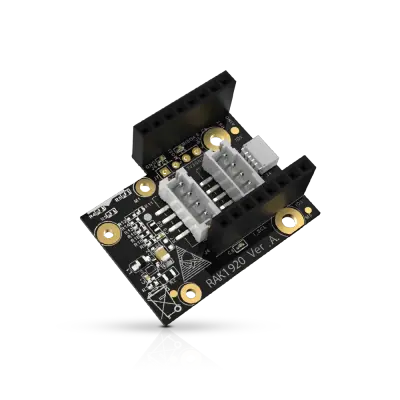
RS485 Module 3PEAK TP8485E

4-20mA Module STMicroelectronics LM2902

Describe your application and constraints in a request.
What is recorded about the regulatory status and the life of this part.
No compliance statement is recorded for this part. Ask the supplier for the RoHS and REACH declarations and, for a radio product, the EU declaration of conformity.
| Current status | Status not stated |
| Key dates | Not recorded |
| Manufacturer part number | MAIXCAM |
| Manufacturer | Sipeed |
Maker, Prototyping, Open-Hardware & Developer Boards
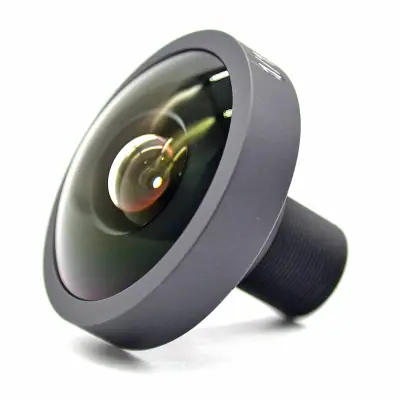
M12 fisheye lens for camera module · Ref. : M12_FISHEYE
Price on request
Maker, Prototyping, Open-Hardware & Developer Boards
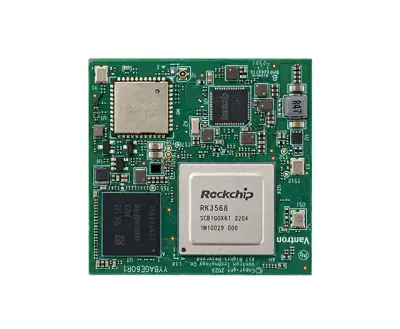
RK3568 System-on-Module with 1 TOPS NPU
Price on request
Maker, Prototyping, Open-Hardware & Developer Boards
RK3568 Android tablet mainboard with DTV tuner · Ref. : K3-3568
Price on request
Maker, Prototyping, Open-Hardware & Developer Boards
Boost converter module 3.3 V to 12 V 50 mA · Ref. : 110155
Price on request
No advertising or analytics cookies. A single, strictly necessary cookie is set only if you sign in to your account. Your quote basket and comparison stay in your browser. Details