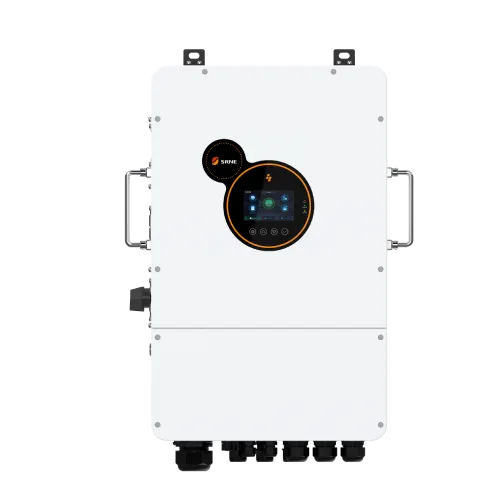
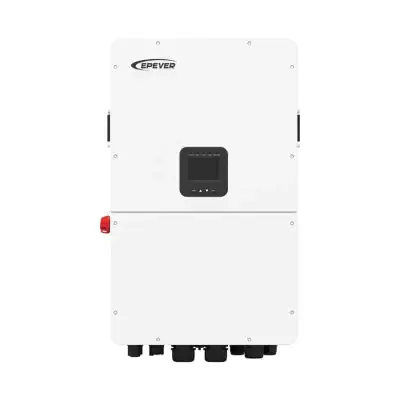
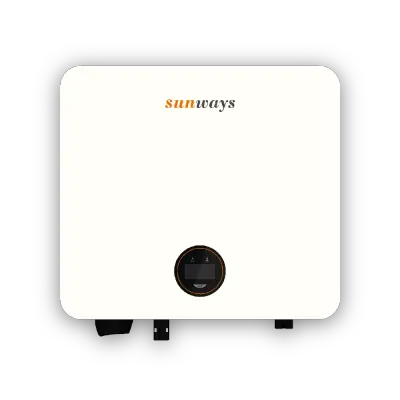
HESP 8-12kW
Three Phase Low Voltage Hybrid Inverter
EU | Three Phase | 2 MPPTs
Download PDF
Contact
Home
| Residential Hybrid Inverter | Three Phase Low Voltage Hybrid Inverter
48V Battery Platform with High Current Capability
The HESP 8-12kW three phase hybrid inverter keeps storage at 48V while delivering native 230/400Vac output. The 12kW model supports up to 260A charging and discharging.
Longer PV Strings with Dual MPPT
Two MPPT channels operate across 200-650Vdc with an 800V PV ceiling. The 12kW model accepts up to 18kW PV input, giving this three phase solar inverter more room for loads and charging.
2x Peak Output for Three-Phase Starting Loads
Rated 8kW, 10kW and 12kW models provide up to 16kVA, 20kVA and 24kVA peak output. This 3 phase hybrid inverter adds short-duration headroom for pumps, compressors and other high-inrush loads.
Homes with Native Three-Phase Loads
For residences using 230/400Vac equipment, the 3 phase inverter can supply three-phase loads directly while retaining a low-voltage 40-60Vdc battery bank. This is useful where pumps, HVAC equipment or workshop loads are already distributed across three phases.
Solar-Plus-Storage Systems with Larger PV Arrays
The 10kW and 12kW models are suited to homes that need more daytime solar capacity alongside storage. The 10kW hybrid inverter and 12kW hybrid inverter combine dual MPPT tracking with up to 18kW PV input on the largest model, helping installers allocate more array capacity for load supply and charging.
Backup Systems Requiring Grid, Battery and Generator Support
A dedicated generator input gives the system another AC source when solar production or utility power is insufficient. Typical 10ms transfer supports fast backup operation, while the 48V inverter platform keeps battery selection within a familiar low-voltage architecture for residential storage projects.
HESP 8-12kW Three Phase Hybrid Inverter OVERVIEW
Model
HESP4880SH3
Rated Output Power
8,000W
Max. Peak Power
16,000VA
Load Motor Capacity
5HP
Switch Time
10ms
Rated Battery Voltage
48V
Max. Grid/Generator Charging Current
100A
No. of MPPT Trackers
Model
HESP48100SH3
Rated Output Power
10,000W
Max. Peak Power
20,000VA
Load Motor Capacity
6HP
Rated Frequency
50/60Hz ± 0.3Hz
Battery Volatge Range
40~60Vdc
Num. of MPPT Trackers
Bypass Overload Current
29A
Model
HESP48120SH3
Rated Output Power
12,000W
Max. Peak Power
24,000VA
Max. Grid/Generator Charging Current
120A
Max. Discharge Current
260A
Max. Input Power
9,000W+9,000W
Num. of MPPT Trackers
Bypass Overload Current
35A
Download
Datasheet
User Manual
Datasheet_SRNE_HESP Series_8-12kW SH3_EU_Three-Phase_ Solar Hybrid Inverter_V1.1
PDF - 7M - Updated Wednesday, June 25, 2025
SRNE_HESP_48V_8-12K SH3 series_EU_Three-phase_Solar Hybrid Inverter_User Manual_V1.4
PDF - 4M - Updated Wednesday, June 10, 2026
FAQ
Does the 10ms transfer time mean every appliance will be completely unaffected by an outage?
Not necessarily. SRNE lists a typical switching time of 10ms, which is designed to reduce interruption when utility power fails, but actual load behavior depends on the equipment and the completed system configuration. Sensitive electronics, motors and controls can respond differently to a brief transfer. When the HESP 8-12kW three phase hybrid inverter is used for backup, installers should identify critical loads first and confirm their ride-through requirements rather than assuming all equipment behaves the same.
Can a generator be part of the backup design?
Yes. A dedicated generator input gives the inverter an additional source for backup and battery charging when grid supply is unavailable or solar production is low. SRNE lists maximum grid/generator charging current of 100A for the 8kW model and 120A for the 12kW model. In practice, generator capacity should be matched to the expected load and charging demand, and the generator voltage and frequency must remain within the inverter's accepted input range. Generator sizing should also leave enough margin for simultaneous load supply and battery charging.
What should be checked when the system has pumps or compressors?
Motor nameplate power alone is not enough. Starting current, duty cycle and whether several motors may start together should all be considered. The 8kW, 10kW and 12kW models provide up to 2x peak output, and SRNE lists motor capacity up to 5HP for the 8kW model and 6HP for the 10kW model. A three phase solar inverter should be sized so that normal running load leaves enough headroom for these short startup events.
How much PV can the 12kW model accept?
The HESP48120SH3 supports up to 18kW of PV input, arranged as 9kW + 9kW across its solar inputs. The two MPPT trackers operate from 200-650Vdc, with maximum PV open-circuit voltage of 800V. For a 12kW hybrid inverter, that additional PV allowance can increase the amount of daytime solar available for simultaneous loads and battery charging. String design should still be checked against module Voc, temperature correction and the current limit of each MPPT. Array oversizing should be checked against the selected model rather than applied to the full series.
Is this a high-voltage battery inverter because it has three-phase output?
No. The HESP 8-12kW EU here is the low-voltage version. It uses a 48V nominal battery with a 40-60Vdc operating range while supplying three-phase AC. That distinction matters because SRNE also has a separate high-voltage HESP 8-12kW EU series. This 48V inverter lets installers keep a low-voltage battery architecture even when the load side requires three-phase power, provided the battery bank and protection system are sized for the higher DC current.
Why choose this three-phase HESP instead of the single-phase 8-12kW model?
The main reason is the AC load architecture. This 3 phase hybrid inverter provides native 230/400Vac three-phase output, so it is intended for sites where major loads are already three-phase or where phase distribution matters. The single-phase HESP 8-12kW EU serves a different electrical layout. Both use a low-voltage battery platform, but the three-phase version should be selected when the property, motor loads or distribution board are designed around three-phase supply. It is therefore best suited to projects where three-phase distribution is already part of the load plan.
Italy - Italiano
Your Name
Your Country
Your Email
Your Phone
Your Company
Leave your message
Submit