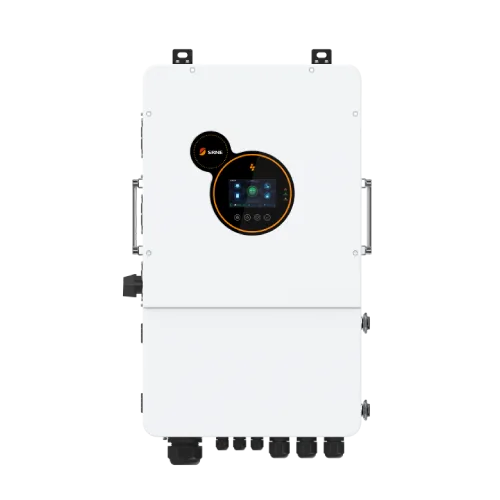
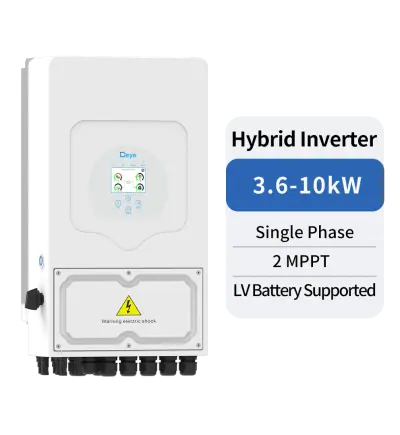
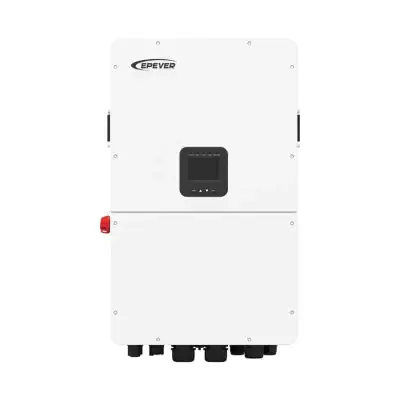
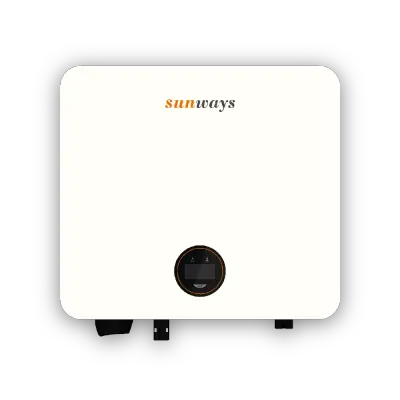
HESP 8-12kW
Single/Split Phase Low Voltage Hybrid Inverter
US | Split Phase | 2 MPPTs
Download PDF
Contact
Home
| Residential Hybrid Inverter | Single/Split Phase Low Voltage Hybrid Inverter
Native 120/240V Split-Phase Output
The HESP 8-12kW split phase hybrid inverter supplies native 120/240Vac for North American circuits and 240V loads, while parallel units can also form 120/208Vac three-phase output.
48V Battery and Up to 200A Hybrid Charging
The series uses a 48V nominal battery with a 40-60Vdc range and up to 200A hybrid charging. This 48V inverter platform suits larger residential storage banks and high household demand.
US Grid Standards and 2x Peak Power
UL1741, IEEE1547.1-2020 and other listed US standards support project screening. Up to 2x peak output helps start pumps and compressors, while the 240V inverter reaches 24kW peak at 12kW.
Whole-Home 120V and 240V Load Support
The split phase inverter can serve mixed household loads without an external step-up transformer, making it suitable for homes that combine standard 120V circuits with 240V appliances such as pumps, dryers or HVAC equipment.
Retrofit Storage for Existing Solar
AC coupling allows compatible grid-tied PV systems to add battery storage and backup without replacing the entire solar-side architecture. For retrofit projects, the 10kW hybrid inverter or 12kW hybrid inverter can be selected around household demand, while existing inverter compatibility and control topology are confirmed before installation.
Expandable Backup for Larger Residential Systems
One to six units can operate in parallel, allowing capacity to grow in stages. More than two units can form three-phase output, while two MPPTs support separate roof sections. This gives the hybrid inverter a path from a single-home system toward larger residential or light-commercial power requirements.
HESP 8-12kW Split Phase Hybrid Inverter OVERVIEW
Model
HESP4880U200-H
Rated Output Power
8800W
Max. Peak Power
17,600W
Load Motor Capacity
5HP
Rated Frequency
50/60Hz
Rated Battery Voltage
48Vdc
Battery Voltage Range
40~60Vdc
Max. PV Input Power
5500W/5500W
Model
HESP48100U200-H
Rated Output Power
10000W
Max. Peak Power
20000W
Rated Output Voltage
120/240Vac (Split-phase);120/208Vac (Three-phase)
Load Motor Capacity
6HP
Rated Frequency
50/60Hz
Rated Battery Voltage
48Vdc
Max. PV Input Power
6600W/6600W
Model
HESP48120U200-H
Rated Output Power
240V|12000W/208V|10400W
Max. Peak Power
240V|24000W/208V|20800W
Rated Frequency
50/60Hz
Load Motor Capacity
6HP
Rated Battery Voltage
48Vdc
Battery Voltage Range
40~60Vdc
Max. PV Input Power
6600W/6600W
Download
Datasheet
User Manual
SRNE_HESP_US_48V_8~12kW_120V&240V_Split-Phase_Hybrid_Solar Storage Inverter_Datasheet_V1.5
PDF - 5M - Updated Friday, September 5, 2025
SRNE_HESP48120U200-H(8-12kW)_US_Split-phase_hybrid_Solar hybrid inverter_User manual_V1.4
PDF - 5M - Updated Wednesday, June 10, 2026
FAQ
What is the main advantage of native 120/240V split-phase output?
It lets the inverter connect more naturally to the electrical architecture used in many North American homes. Standard 120V circuits and larger 240V loads can be supplied from the same split phase inverter platform without adding a separate transformer just to create the second voltage level. That simplifies system planning for homes with mixed loads, although the final panel configuration, neutral arrangement and protection devices should still follow local electrical requirements and the installation manual. It also aligns more naturally with common North American residential service layouts.
Does the 12kW model always deliver 12kW?
At 240V split-phase output, HESP48120U200-H is rated at 12,000W. In the 120/208Vac three-phase configuration, SRNE lists rated output at 10,400W and peak output at 20,800W. That is why a 12kW hybrid inverter should be evaluated according to the actual AC topology, not only the model name. Installers planning a three-phase configuration should use the output values for that configuration when calculating load capacity and system headroom.
Which US standards are listed for this HESP series?
SRNE lists UL1741 and IEEE1547.1-2020 together with CEC, Rule 21, HECO, FCC 15 Class B and RoHS on the product information for the HESP 8-12kW US series. These references can help installers screen a project before detailed permitting or interconnection review. They do not replace local approval. A 240V inverter installation may still be subject to utility rules, local code requirements and authority-having-jurisdiction review in the specific project location.
Can the HESP US series be added to an existing grid-tied solar system?
Yes, AC coupling is intended to support compatible retrofit projects where an existing solar inverter remains in place and battery storage or backup is added. The benefit is that the PV side may not need to be completely rebuilt. However, compatibility between the existing inverter, AC bus, export controls and operating logic must be checked first. A 10kW hybrid inverter should not be selected for a retrofit only from its power rating; the full system architecture needs to be reviewed.
How should the 48V battery bank be sized for an 8.8-12kW inverter?
Battery energy capacity and battery current capability both matter. The inverter operates from 40-60Vdc and supports up to 200A hybrid charging, so the battery, BMS, cabling and protection devices must be designed for the actual charge and discharge demand. A 48V inverter at this power level can draw substantial DC current under heavy AC loads. Battery capacity should therefore be based on desired backup duration, while current ratings should be checked against the largest expected load and charging mode. Current capability is therefore as important as battery kWh when the inverter is heavily loaded.
What does parallel operation change beyond adding more kW?
It can change both system capacity and AC configuration. SRNE supports 1-6 units in parallel, and more than two units can form three-phase output. This allows a project to begin with a single inverter split phase system and expand later if loads grow. Parallel design also affects battery current, conductors, protection, communications and load distribution, so expansion should be planned in the original installation rather than treated as simply adding another inverter at any time.
Italy - Italiano
Your Name
Your Country
Your Email
Your Phone
Your Company
Leave your message
Submit