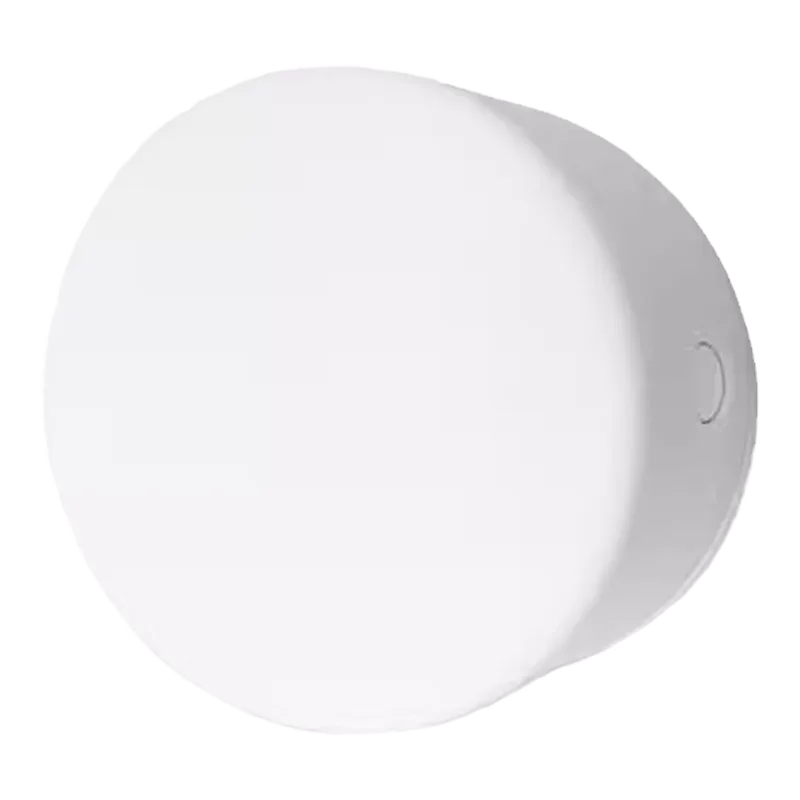
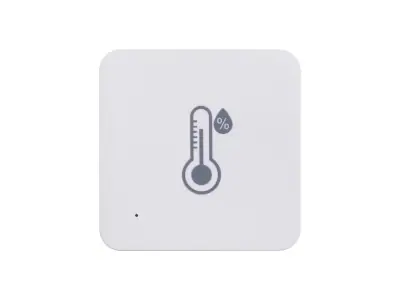
AtomSenses ASD7 fall detection sensor with 60 GHz radar, capturing no images, for bathrooms and bedrooms, sending alarms over LoRaWAN.
Operating Temperature-20°C - 60°C
ConfigurationUSB Type-C port
Dimension98*98*30 mm / 125*125*30 mm
Ingress ProtectionIP30
InstallationWall Mounting via 3M Tape or Screws
Power supply5V/1A by Type-C Port
Product overview
Overview. The AtomSenses ASD7 is a LoRaWAN fall detection sensor using 60 GHz millimeter-wave radar to detect falls without capturing any image. Its processing distinguishes a fall, the sudden descent followed by stillness, from sitting, bending and ordinary movement. It is suited to bathrooms and bedrooms, where cameras are prohibited and wearable buttons can come off. Main characteristics — The sensor uses LoRaWAN technology and supports OTAA/ABP Class C work modes. Its sensitivity is -137 dBm at 300 bps. It is available in two sizes, 98 x 98 x 30 mm or 125 x 125 x 30 mm. Interfaces and power — Configuration is done through a USB Type-C port, which also supplies 5V/1A power. In battery-powered versions, the large case takes 4 replaceable 4000 mAh ER18505 Li-SOCl2 batteries and the small case takes 2. Power and environment — The sensor is designed for an operating temperature range of -20°C to 60°C and a relative humidity of 10% to 90% non-condensing. Its ingress protection rating is IP30. It mounts on the wall with 3M tape or screws. Typical uses — It serves care homes and assisted-living facilities, providing coverage between staff rounds, and can also be installed in hospitals or for lone worker protection. Integration — Alarms cross the LoRaWAN network to nurse-call systems and family dashboards, with the room identified. The product is available on quotation from Atlas Electronics.
Check the exact pin assignment and the application circuit in the datasheet, or ask our experts.
Implementation checklist
Thermal : rated operating range -20°C - 60°C — check it against the installation environment.
Applications and use cases
Architectures in which ASD7 can play a role, derived from its category. This is not a compatibility statement: check the specifications against your requirements.
Diseases and water stress are noticed once the crop is already affected. A weather station, soil probes and sensor nodes in the field report conditions through an outdoor gateway
To check
Crops, plots and measurement depth of the soil probes
A LoRaWAN project needs sensors, gateways, a network server and an application that work together. Sensor nodes report to indoor or outdoor gateways, which forward the data to the network server and the customer’s platform
To check
Regional frequency plan (EU868, US915 and others)
Network server: public, private or embedded in the gateway
Milesight sensors, LoRaWAN gateways and cellular routers can be brought together on the Milesight Development Platform, which manages the devices and passes their data to other applications through an API and webhooks
To check
Development Platform for device management, API and webhooks, or another network server and application
Devices provisioned through Milesight RPS must have that provisioning removed before being added to the Development Platform
Data flows to the customer’s own application through webhooks
RAKwireless WisGate gateways run WisGateOS 2 and are managed from WisDM, RAKwireless’ cloud device management platform with a built-in network server, alongside RAK sensor nodes, radio modules and concentrators
To check
WisDM built-in network server, or a third-party one (ChirpStack, TTN/TTS, AWS IoT Core, Actility)
Remote configuration and updates of the gateways from WisDM
Regional frequency plan of the gateways and nodes
Associated system blocks
GatewaysSensors and modulesDevelopment boardsMounting
Seeed SenseCAP sensors connect to Seeed’s SenseCAP cloud platform and app, and Seeed edge computers, camera modules, Grove and XIAO boards complete the chain for custom devices and local processing
To check
SenseCAP cloud platform and app, or the customer’s own network server
Prototype on Grove and XIAO, then move to industrial versions
Local processing on the edge computers or in the cloud
Associated system blocks
SensorsEdge computingDevelopment boards
Need a complete solution?
Send a request for ASD7 and the other parts of your project.
Similar parts to answer your needs. Compare the main characteristics. A recorded replacement is a documented relation; a similar product is a similarity only, never a compatibility claim.
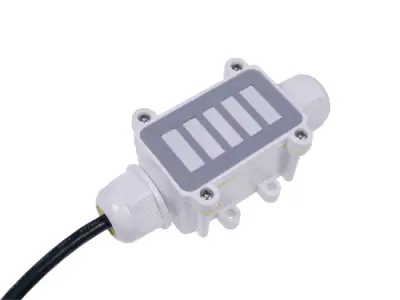
SenseCAP SOLO CO2 5000 (A1) - NDIR CO2 Sensor, MODBUS-RTU RS485 & SDI-12
A
The default output of the sensor is RS485 and the slave address is 1. If you need to use SDI-12 output, you need to open the cover and push the button on the board to ''1'' and ''2''. At the same time, check whether the wire sequence is correct.
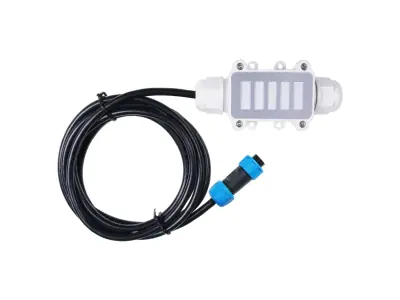
SenseCAP SOLO CO2 5000 (A2) - NDIR CO2 Sensor, MODBUS-RTU RS485 & SDI-12, with Waterproof Aviation Connector
A
The default output of the sensor is RS485 and the slave address is 1. If you need to use SDI-12 output, you need to open the cover and push the button on the board to ''1'' and ''2''. At the same time, check whether the wire sequence is correct.
What is recorded about the regulatory status and the life of this part.
Regulatory compliance
No compliance statement is recorded for this part. Ask the supplier for the RoHS and REACH declarations and, for a radio product, the EU declaration of conformity.
With your consent, we use Google cookies to measure the site’s audience and our advertising. Your quote basket and comparison stay in your browser either way. Details