SEN0134
Analog carbon monoxide and combustible gas sensor
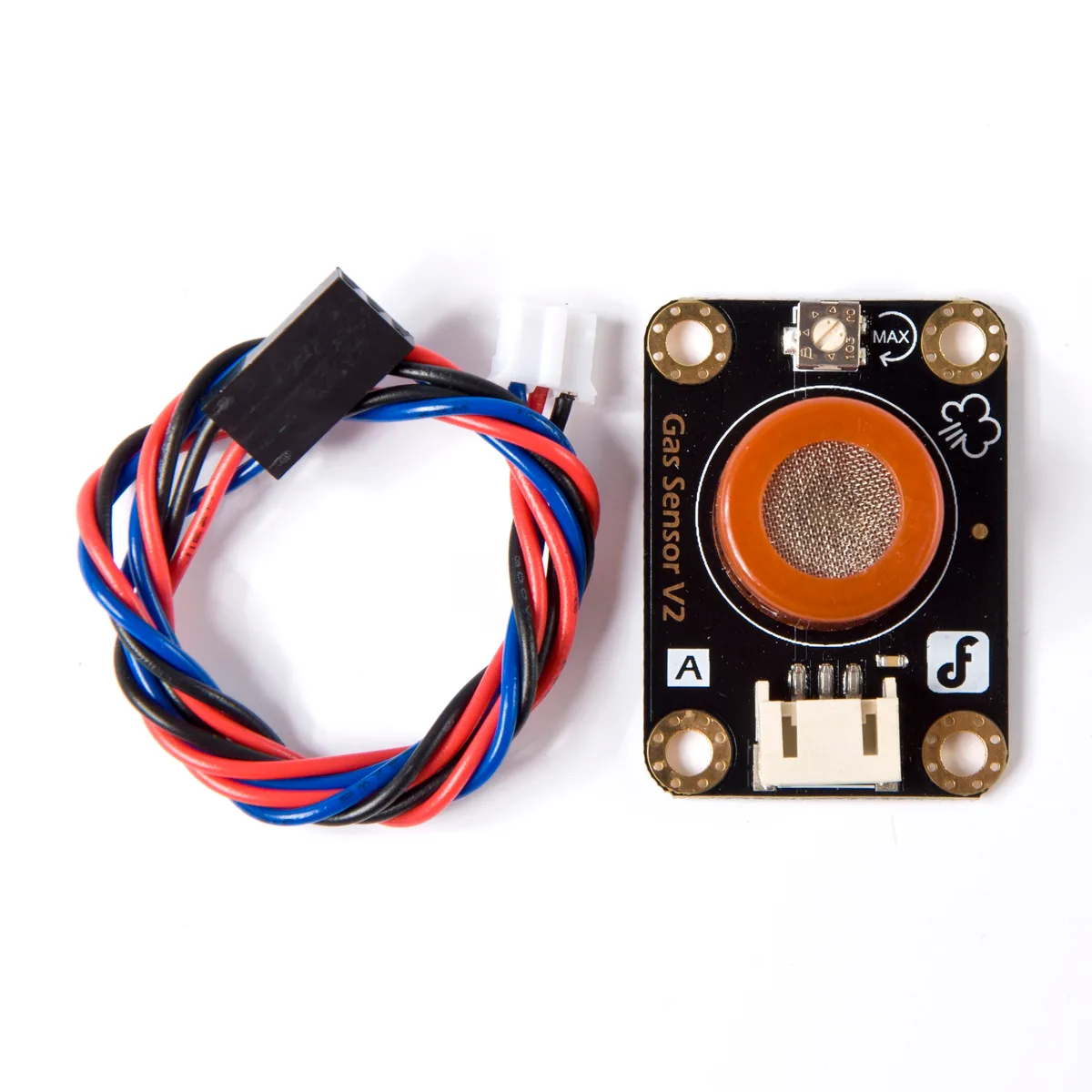
- Operating temperature
- -10°C to +50°C
- Dimensions
- 36.4×26.6mm (1.43×1.05")
- Response time
- <30s (CO), <10s (combustible)
- Operating Voltage
- 5V DC ±5%
Analog carbon monoxide and combustible gas sensor
DFRobot Gravity Sensor & Actuator System
SnO2 semiconductor carbon monoxide and combustible gas sensor module with 0-5V analog output, intended for environmental monitoring and embedded prototypes.
Overview. The DFRobot SEN0134 is a Gravity-series carbon monoxide and combustible gas sensor based on an SnO2 semiconductor element (MQ-9). It delivers an analog signal proportional to gas concentration.
Main characteristics. The module detects CO from 10 to 1000ppm and combustible gases from 100 to 10000ppm. Response time is less than 30 seconds for CO and less than 10 seconds for combustible gases. Dimensions are 36.4×26.6mm.
Interfaces and connectivity. The output is analog (0-5V) and connects through a 3-pin Gravity connector: 1-output, 2-VCC, 3-GND.
Power and environment. Operating voltage is 5V DC ±5%. Operating temperature ranges from -10°C to +50°C.
Typical uses. The dual-temperature detection mode, driven by the thermal cycling of the element, allows CO to be measured at low heater temperature and combustible gases at higher temperature. It suits safety monitoring, ventilation analysis and gas concentration experiments.
Integration. The analog output connects directly to a development board or data acquisition system.
No published question about this part yet. Questions are reviewed before publication.
Every characteristic recorded for SEN0134, with where it comes from. Use the filters to find one quickly.
| Characteristic | Value |
|---|---|
| Dimensions | 36.4×26.6mm (1.43×1.05") |
| Response time | <30s (CO), <10s (combustible) |
| Operating temperature | -10°C to +50°C |
| Detection range | CO: 10-1000ppm Combustible Gases: 100-10000ppm |
| Gravity | MQ9 CO & Combustible Gas Sensor (Analog, 10-1000ppm CO) |
| Operating Voltage | 5V DC ±5% |
| Output signal | Analog (0-5V) |
| Pin Definition | 1-Output 2-VCC 3-GND |
| Sensor Type | Semiconductor (SnO2) |
No specification matches.
Last verification : 2026-11-02
Official documents and the technical data recorded for SEN0134. For a missing document or a specific revision, our experts send it to you.
SnO2 semiconductor carbon monoxide and combustible gas sensor module with 0-5V analog output, intended for environmental monitoring and embedded prototypes.
| Parameter | Value |
|---|---|
| Dimensions | 36.4×26.6mm (1.43×1.05") |
| Response time | <30s (CO), <10s (combustible) |
| Operating temperature | -10°C to +50°C |
| Detection range | CO: 10-1000ppm Combustible Gases: 100-10000ppm |
| Gravity | MQ9 CO & Combustible Gas Sensor (Analog, 10-1000ppm CO) |
| Operating Voltage | 5V DC ±5% |
| Output signal | Analog (0-5V) |
| Pin Definition | 1-Output 2-VCC 3-GND |
| Sensor Type | Semiconductor (SnO2) |
Points to check before using SEN0134 in a design. They are derived from the recorded characteristics, not from the manufacturer's application circuits.
| Operating Voltage | 5V DC ±5% |
Check the exact pin assignment and the application circuit in the datasheet, or ask our experts.
Answers to the questions that the recorded characteristics of SEN0134 can answer. A question is not asked when nothing is recorded to answer it.
-10°C to +50°C (source: Operating temperature).
Similar parts to answer your needs. Compare the main characteristics. A recorded replacement is a documented relation; a similar product is a similarity only, never a compatibility claim.
Analog carbon monoxide and combustible gas sensor
Gravity: Analog Gas Sensor (MQ2)
Gravity: 1602 LCD Keypad Shield For Arduino
Gravity: Nano I/O Shield for Arduino Nano
Describe your application and constraints in a request.
What is recorded about the regulatory status and the life of this part.
No compliance statement is recorded for this part. Ask the supplier for the RoHS and REACH declarations and, for a radio product, the EU declaration of conformity.
| Current status | Status not stated |
| Key dates | Not recorded |
| Manufacturer part number | SEN0134 |
| Manufacturer | DFRobot |
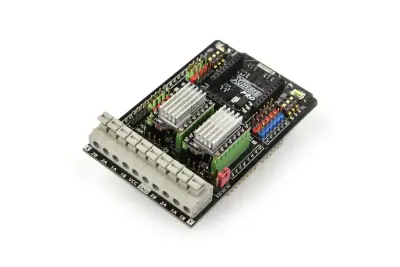
DFRobot Gravity Sensor & Actuator System
Dual bipolar stepper motor shield for Arduino with DRV8825 driver · Ref. : DRI0023
Price on request
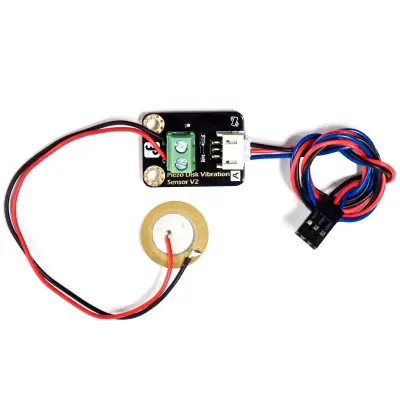
DFRobot Gravity Sensor & Actuator System
Analog Piezo Disk Vibration Sensor · Ref. : DFR0052
Price on request
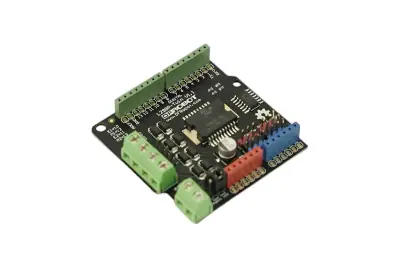
DFRobot Gravity Sensor & Actuator System
2x2A dual-channel motor shield for Arduino
Price on request
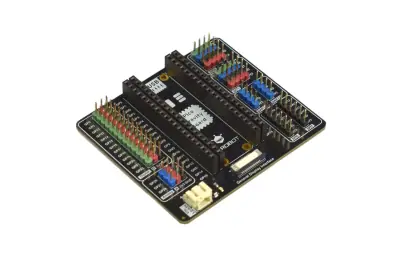
DFRobot Gravity Sensor & Actuator System
Expansion board for Raspberry Pi Pico and Pico 2 · Ref. : DFR0848
Price on request
No advertising or analytics cookies. A single, strictly necessary cookie is set only if you sign in to your account. Your quote basket and comparison stay in your browser. Details